


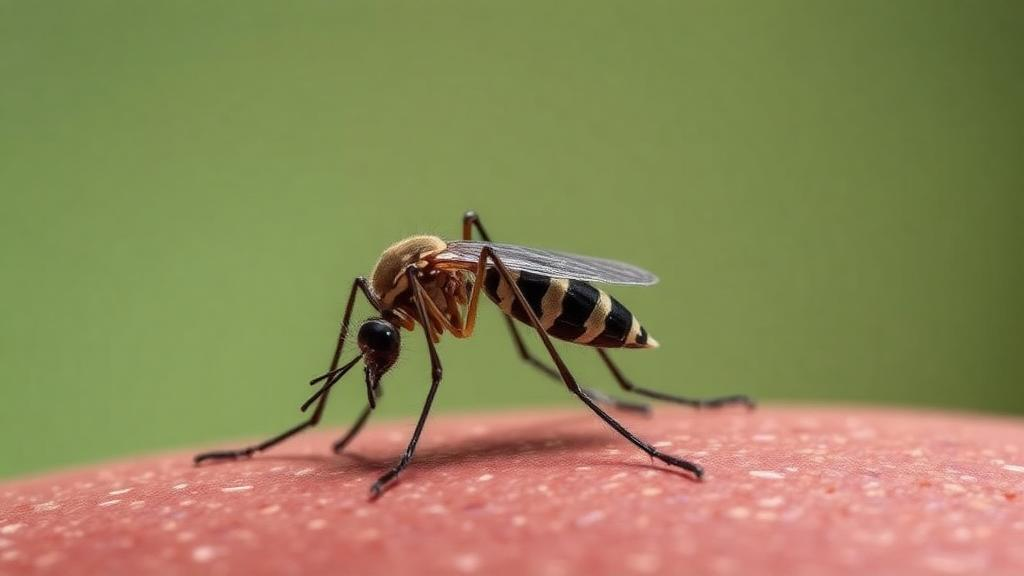
Malaria remains one of Rwanda’s most persistent public health challenges, and the country’s primary defense—killing mosquitoes with insecticides—is quietly eroding. A policy brief published in Frontiers in Tropical Diseases argues that the tools Rwanda relies on to fight malaria, chiefly insecticide-treated bed nets and indoor residual spraying, are being undermined by widespread pyrethroid resistance in Anopheles gambiae, the country’s principal malaria vector. The authors, led by Nzungize Lambert of the University of Rwanda together with colleagues at the Liverpool School of Tropical Medicine, contend that a uniform, nationwide insecticide deployment plan is no longer sufficient, and that genomic surveillance must become a routine part of the national entomology program.
The evidence base for this argument comes from resistance data collected between 2022 and 2023 across seven Rwandan districts. At sentinel sites including Bukora in Kirehe district, Gahini in Kayonza, Gashora in Bugesera, Kajevuba in Rulindo, Mubuga in Karongi, Nyagasambu in Rwamagana, and Rwanza in Musanze, Anopheles gambiae mosquitoes were collected during both rainy and dry seasons and tested with World Health Organization tube assays. The mosquitoes were exposed to two widely used pyrethroids, permethrin and alphacypermethrin, both alone and in combination with piperonyl butoxide, or PBO, a synergist that inhibits the cytochrome P450 enzymes mosquitoes use to detoxify insecticides.
The results were striking. Mortality from the pyrethroids alone was consistently below 80 percent at every site, and in some locations fell to between 40 and 50 percent—well below the WHO threshold of 98 to 100 percent mortality that defines a susceptible population. When mosquitoes were pre-exposed to PBO before the pyrethroid challenge, mortality rose significantly, indicating that a large share of the resistance is metabolic in origin, driven by overactive detoxification enzymes. Yet mortality still did not reach the 98 to 100 percent benchmark, which tells researchers something important: P450-mediated metabolic resistance explains only part of the problem, and additional resistance mechanisms must be operating in these populations.
Those additional mechanisms are diverse and, crucially, invisible to the standard bioassay. The policy brief lists target-site resistance—knockdown resistance mutations such as L1014F and L1014S in the voltage-gated sodium channel gene, the Ace-1 G119S mutation, and the N1575Y mutation—as likely contributors in some areas. Cuticular resistance, in which a thicker or chemically altered insect cuticle slows insecticide penetration, and behavioral resistance, in which mosquitoes shift their biting to earlier hours, move outdoors, or avoid sprayed surfaces, may also be present. Phenotypic testing with the WHO tube assay can confirm that resistance exists at a given site, but it cannot identify which mechanism is responsible, nor can it predict how resistance will spread over time. That diagnostic blind spot is the central technical argument of the brief.
This is where genomics enters the picture. The authors recommend integrating molecular and genomic tools into routine national entomological surveillance by 2027, including polygenic risk scores and targeted amplicon sequencing panels such as AgVampIR, which can screen mosquito populations for multiple resistance markers simultaneously. Such tools would allow the Rwanda Biomedical Centre’s Division of Malaria and Other Parasitic Diseases to detect emerging resistance earlier, track how resistance alleles move across the landscape, and build the evidence base for site-specific intervention decisions. The WHO itself supports routine entomological and insecticide-resistance surveillance using molecular and biochemical assays, emphasizing that accurate species identification and detection of resistance mechanisms require advanced molecular analysis.
The geographic heterogeneity documented in the 2022–2023 data carries a direct policy implication: interventions should be stratified by village or district rather than applied uniformly. Resistance levels vary significantly by district and ecological zone, and WHO guidelines recommend that surveillance be context-specific, reflecting those ecological differences. In practice, this means using village-level resistance profiles—including both the intensity of resistance and its molecular mechanisms—to select and rotate insecticides for each next malaria control campaign. The Rwanda Biomedical Centre would coordinate this at district, sector, and village levels, replacing the current one-insecticide-everywhere approach with a mosaic of locally matched interventions.
One immediate, evidence-backed recommendation is the prioritization of PBO-treated bed nets, or dual active-ingredient nets, in locations where metabolic resistance is confirmed. Because PBO restores susceptibility by blocking the detoxification enzymes, nets treated with the synergist perform better where P450-mediated resistance dominates. The brief calls for scaling up PBO net deployment in high-resistance villages and rotating non-pyrethroid insecticides where susceptibility allows, within two years, in line with WHO recommendations. The Ministry of Health, through the Rwanda Biomedical Centre, would handle procurement and distribution and establish an insecticide rotation schedule in collaboration with partners. The authors are careful to note, however, that PBO nets are not a permanent solution, since the residual mortality gap points to non-metabolic mechanisms that PBO cannot address.
Timing matters as much as tooling. Rwanda has two major malaria transmission seasons—the long rains from March to May and the short rains from September to December—which shape mosquito breeding and transmission intensity. The brief recommends expanding insecticide resistance surveillance to twice yearly at sentinel sites, collecting mosquitoes before and after the main rainy seasons to capture seasonal variation in mosquito abundance, insecticide exposure, and resistance levels. This cadence aligns with WHO guidance published in 2022 for routine, longitudinal resistance monitoring using consistent methods across different parts of the country, and it would give the national program an early-warning system for emerging resistance markers rather than a retrospective record of failure.
The economic framing of the brief is equally pointed. Citing the vision articulated by President Paul Kagame as the African Union champion for domestic health financing at the 34th African Union Summit, the authors argue that health investments should be judged by their impact on service coverage and health outcomes rather than by the amount spent. Indoor residual spraying, for example, may cost approximately two million dollars annually in a single district, and up to 24 million dollars when all target districts are included. If the insecticide deployed is ineffective against a resistant local mosquito population, that investment buys little protection. Strengthening resistance monitoring and targeting effective nets to the right locations, the authors argue, directly improves the efficiency of existing spending, reduces waste on ineffective interventions, and supports evidence-based resource allocation.
Finally, the brief stresses that insecticide resistance is not solely a public health problem. The same compounds used to kill mosquitoes are widely used in agriculture, and cross-sectoral pesticide use accelerates selection for resistance. The authors propose co-designing pesticide regulations with communities, coordinated by the health and agriculture sectors, and establishing by 2027 a joint task force spanning the Rwanda Agriculture and Animal Resources Development Board, the Rwanda Inspectorate, Competition and Consumer Protection Authority, the Ministry of Agriculture and Animal Resources, the Rwanda Environment Management Authority, the Rwanda FDA, the Rwanda Revenue Authority, the Rwanda Standards Board, and the University of Rwanda. The underlying message is that malaria elimination will not be achieved by traditional vector control tools alone: insecticide selection and rotation must be informed by regular genomic surveillance of mosquitoes, and pesticide stewardship demands collaboration among public health, agricultural, regulatory, and community stakeholders alike.
Subject of Research: Genomic surveillance of insecticide resistance in Anopheles gambiae mosquitoes to inform malaria vector control policy in Rwanda
Article Title: Genomic surveillance of mosquito resistance to guide cost-effective insecticide policy in Rwanda
Article References: Lambert, N., Dyer, N. A., Diane, U., Sherrard-Smith, E., & Leon, M. (2026). Genomic surveillance of mosquito resistance to guide cost-effective insecticide policy in Rwanda. Frontiers in Tropical Diseases, 7, Article 1887818. https://doi.org/10.3389/fitd.2026.1887818
Image Credits: AI Generated
DOI: 10.3389/fitd.2026.1887818
Keywords: Anopheles gambiae, insecticide resistance, genomic surveillance, malaria, Rwanda, pyrethroids, piperonyl butoxide, bed nets, indoor residual spraying, WHO tube assay, vector control, cytochrome P450
Cite Scienmag News
Juliet Wilcox. (October 15, 2026). Genomic surveillance reveals patchy mosquito resistance across Rwanda, reshaping malaria policy. Scienmag. https://scienmag.com/genomic-surveillance-reveals-patchy-mosquito-resistance-across-rwanda-reshaping-malaria-policy/
Juliet Wilcox. "Genomic surveillance reveals patchy mosquito resistance across Rwanda, reshaping malaria policy." Scienmag, 15 October 2026, https://scienmag.com/genomic-surveillance-reveals-patchy-mosquito-resistance-across-rwanda-reshaping-malaria-policy/. Accessed 15 October 2026.
Juliet Wilcox. "Genomic surveillance reveals patchy mosquito resistance across Rwanda, reshaping malaria policy." Scienmag. October 15, 2026. https://scienmag.com/genomic-surveillance-reveals-patchy-mosquito-resistance-across-rwanda-reshaping-malaria-policy/


