

Sunday, July 26, 2026
Science
No Result
View All Result
  • Login
  • HOME
  • SCIENCE NEWS
  • CONTACT US
  • HOME
  • SCIENCE NEWS
  • CONTACT US
No Result
View All Result
Scienmag
No Result
View All Result
Home Science News Archaeology

Genetically distinct Nicaraguan avocados reveal South American transport thousands of years ago

July 26, 2026
in Archaeology
Reading Time: 2 mins read
0
Genetically distinct Nicaraguan avocados reveal South American transport thousands of
65
SHARES
587
VIEWS
Share on FacebookShare on Twitter
ADVERTISEMENT

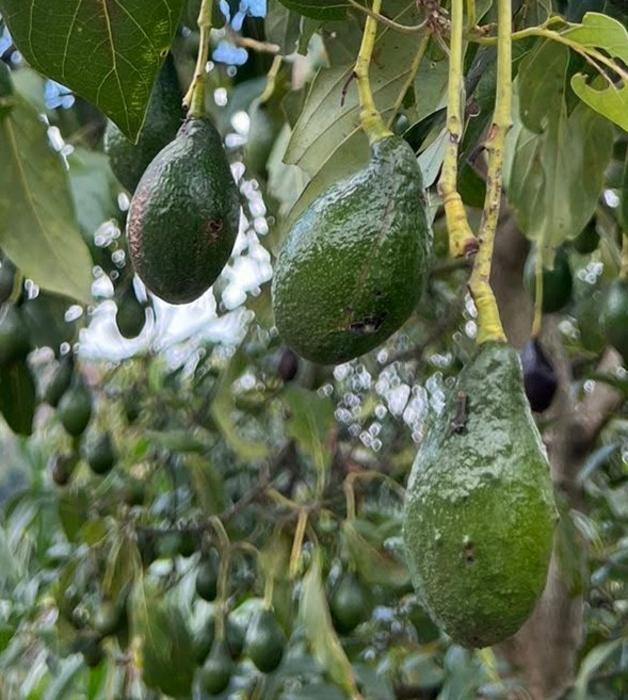
A Smithsonian-led team with Texas A&M researchers has traced ancient human movement through the genomes of Central American avocados. DNA signals preserved in leaves from Nicaragua reveal that, roughly 5,000 years ago, migrating people moving north from South America carried large avocado seeds into Central America’s humid lowlands. There, they hybridized with local plants, reshaping today’s diversity of landrace avocados.

The study focuses on Persea americana populations across Nicaragua, Honduras, and southern Mexico. Researchers extracted and analyzed DNA from 47 native landraces, comparing their genetic patterns with previously published data from more than 200 avocado lineages. The resulting phylogenetic relationships show clear geographic structure rather than random mixing across the region.

In southern Mexico, the samples cluster closely with ancestral highland populations and include links to commercial-like lineages. By contrast, Nicaragua’s lowland landraces connect genetically to groups found farther south, including coastal Colombia. This genetic continuity supports the interpretation that human transfers of local varieties repeatedly occurred along migration routes, rather than the result of independent, isolated domestication events.

To avoid treating avocados as purely biological objects, the team integrated ethnobotanical fieldwork. Farmers and gardeners helped map cultivation practices and highlighted how traditional management maintains robust local trees. The researchers also recorded adaptation patterns relevant to disease and climate resilience, including the importance of local lowland growing conditions.

A major implication is crop vulnerability. More than 80% of global commercial production relies on a single clonal variety, Hass, propagated through grafting. Clonal planting creates low genetic variability at the farm scale, making outbreaks and environmental shifts easier to spread and harder to contain.

Wann, an archaeobotanist who conducted the research as a museum fellow and later pursued a doctorate at Texas A&M, argues that Central America’s lowland reservoirs of genetic diversity may act as a practical defense strategy. Specifically, landraces appear better suited to warmer and wetter climates and may offer genetic tools for breeding programs targeting disease tolerance.

The paper also suggests a conservation urgency: some growers in Nicaragua are replacing older landraces with commercial trees, shrinking the pool of locally adapted diversity. Because genetic variation can buffer future climate or pathogen pressure, losing landraces could reduce avocado resilience as a species.

Overall, the work reframes avocado diversity as both a biological system shaped by selection and a cultural artifact carried by people. The ancient migrations recorded in DNA are now pointing to a modern necessity: safeguard landraces that commercial orchards alone cannot replicate.

Article Title: Ethnobotanical and genetic assessments of Central American avocado landraces reveal novel sources of biodiversity and ancient migration patterns
News Publication Date: 22-Jul-2026
Web References: https://nph.onlinelibrary.wiley.com/doi/10.1002/ppp3.70236
References: 10.1002/ppp3.70236
Image Credits: Kevin Wann, 2024 Missing Migrants Project

Keywords: avocado landraces, ancient migration, DNA phylogenetics, ethnobotany, crop diversity, clonal propagation, conservation genetics, Persea americana

Tags: ancient human migrationavocado domestication historyAvocado genome analysisavocado population geneticsCentral American landrace diversityethnobotanical studies of avocado cultivationgenetic phylogenetics of avocadoshybridization of native avocado varietiesimpact of human movement on crop diversitylong-distance plant transfer in pre-Columbian Americasprehistoric seed transportationSouth American plant dispersal
Share26Tweet16
Previous Post

Youth and Aging Populations Drive Global Dietary Emissions

Next Post

Modeling Study Finds Ancient Language Diversity Was Far Greater Than Today’s

Related Posts

Ceramic Vessels Show Social Inequality Was Baked into 19th-Century Brazil
Archaeology

Ceramic Vessels Show Social Inequality Was Baked into 19th-Century Brazil

July 26, 2026
Study Quantifies Damage to Historic Sites Across Syria
Archaeology

Study Quantifies Damage to Historic Sites Across Syria

July 26, 2026
Silkworm Farming in Southern Central Asia Preceded the Silk Road
Archaeology

Silkworm Farming in Southern Central Asia Preceded the Silk Road

July 26, 2026
Ancient Egyptian princesses from 4,000 years ago were skilled archers,
Archaeology

Ancient Egyptian princesses from 4,000 years ago were skilled archers, study finds

July 17, 2026
Precolonial Brazilian Cerrado Villages Grew Maize-Based Polyculture for Centuries
Archaeology

Precolonial Brazilian Cerrado Villages Grew Maize-Based Polyculture for Centuries

July 15, 2026
Hasmonean and Qumran calendars combine to solve a Dead Sea
Archaeology

Hasmonean and Qumran calendars combine to solve a Dead Sea Scrolls mystery

July 14, 2026
Next Post
Modeling Study Finds Ancient Language Diversity Was Far Greater Than Today’s

Modeling Study Finds Ancient Language Diversity Was Far Greater Than Today’s

  • Mothers who receive childcare support from maternal grandparents show more

    Mothers who receive childcare support from maternal grandparents show more parental warmth, finds NTU Singapore study

    27656 shares
    Share 11059 Tweet 6912
  • University of Seville Breaks 120-Year-Old Mystery, Revises a Key Einstein Concept

    1061 shares
    Share 424 Tweet 265
  • Bee body mass, pathogens and local climate influence heat tolerance

    682 shares
    Share 273 Tweet 171
  • Researchers record first-ever images and data of a shark experiencing a boat strike

    546 shares
    Share 218 Tweet 137
  • Groundbreaking Clinical Trial Reveals Lubiprostone Enhances Kidney Function

    531 shares
    Share 212 Tweet 133
Science

Embark on a thrilling journey of discovery with Scienmag.com—your ultimate source for cutting-edge breakthroughs. Immerse yourself in a world where curiosity knows no limits and tomorrow’s possibilities become today’s reality!

RECENT NEWS

  • Skin-Adhesive Bimodal Patch Measures Occlusal Function for Dental Assessment
  • In situ monazite isotopes trace mantle fluids fueling Jiaodong gold formation
  • Rocks from the Moon’s unexplored far side reshape lunar history
  • Open-Access Database Charts Pathogens and Antibiotic Resistance Risks in Coastal Waters

Categories

  • Agriculture
  • Anthropology
  • Archaeology
  • Athmospheric
  • Biology
  • Biotechnology
  • Blog
  • Bussines
  • Cancer
  • Chemistry
  • Climate
  • Earth Science
  • Editorial Policy
  • Marine
  • Mathematics
  • Medicine
  • Pediatry
  • Policy
  • Psychology & Psychiatry
  • Science Education
  • Social Science
  • Space
  • Technology and Engineering

Subscribe to Blog via Email

Enter your email address to subscribe to this blog and receive notifications of new posts by email.

Join 5,146 other subscribers

© 2025 Scienmag - Science Magazine

Welcome Back!

Login to your account below

Forgotten Password?

Retrieve your password

Please enter your username or email address to reset your password.

Log In
No Result
View All Result
  • HOME
  • SCIENCE NEWS
  • CONTACT US

© 2025 Scienmag - Science Magazine

Discover more from Science

Subscribe now to keep reading and get access to the full archive.

Continue reading
