


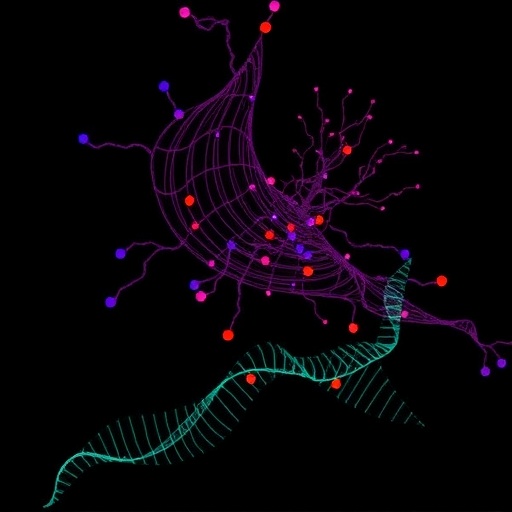
In a groundbreaking study set to revolutionize our understanding of protein misfolding diseases, Munanairi, Rudnick, Huang, and colleagues have uncovered a novel cellular mechanism termed the polymerized protein response (PPR), which is specifically activated by genetic variants that induce protein polymerization within the endoplasmic reticulum (ER). This discovery, soon to be published in Nature Communications, explores the intricate molecular pathways that safeguard cellular function when confronted with pathogenic protein aggregates, drawing a direct link between ER-localized protein polymerization and the activation of NFκBp50, a key transcription factor often associated with inflammation and stress responses.
The endoplasmic reticulum serves as the cell’s protein folding factory, where nascent polypeptides achieve their correct conformations. However, genetic mutations sometimes alter a protein’s structure, causing it to polymerize aberrantly within this compartment. Unlike traditional misfolded monomers or oligomeric aggregates, these polymerized proteins form elongated chains or fibrils, exerting distinct stresses on ER homeostasis. Until now, the cellular frameworks sensing and responding to such ER polymerized proteins were poorly understood, representing a pivotal gap in molecular biology and pathophysiology studies.
Munanairi and colleagues’ research elucidates that cells have evolved a specialized surveillance mechanism, the polymerized protein response, designed to detect and mitigate the deleterious consequences of these polymerized entities. Through meticulous biochemical assays, imaging techniques, and gene expression analyses, their work reveals that the PPR is not a mere extension of canonical unfolded protein response pathways but rather a discrete functional axis triggered specifically by polymerization-induced ER stress.
At the crux of this mechanism lies NFκBp50, a subunit of the nuclear factor kappa-light-chain-enhancer of activated B cells (NFκB) family, which is traditionally implicated in regulating immune responses, apoptosis, and inflammation. The study’s findings highlight that the activation of NFκBp50 is both necessary and sufficient for inducing the transcriptional program governing PPR. This association suggests a direct mechanistic bridge between proteostasis disturbances and immune signaling cascades, providing insights into how chronic ER stress might exacerbate inflammatory diseases.
The authors employed cutting-edge mutagenesis to introduce genetic variants known to induce protein polymerization specifically within the ER lumen. In cellular models expressing these variants, polymer formation precipitated a distinct gene expression signature that was abrogated upon NFκBp50 inhibition, indicating this factor’s central role. Further investigations revealed that PPR activation induces a tailored protective response designed to restore ER function and prevent irreversible damage, including upregulation of chaperones and modulation of protein degradation pathways.
Importantly, this study distinguishes PPR from the classical unfolded protein response (UPR), a well-characterized pathway triggered by a spectrum of misfolded proteins. Unlike UPR, which broadly responds to diverse forms of ER stress, PPR shows a highly selective activation by polymeric aggregates, mediated via unique signaling intermediates converging on NFκBp50. This specificity underscores the cell’s capacity to discern different proteotoxic insults and mount precise countermeasures.
The broader implications of this discovery extend into multiple realms of biomedical research. Numerous neurodegenerative diseases, such as Alzheimer’s, Parkinson’s, and Huntington’s disease, feature pathological protein aggregation. While these aggregates predominantly arise in the cytosol or extracellular space, intracellular ER-localized polymerization events might contribute to disease onset or progression in previously unappreciated ways. The PPR pathway offers new molecular targets for therapeutic intervention aimed at modulating aberrant polymerization and its downstream effects.
Furthermore, by delineating the molecular constituents and steps involved in PPR activation, this study opens avenues for the development of diagnostic biomarkers indicative of polymerization-specific ER stress. Such markers could greatly enhance early detection and monitoring of diseases linked to protein polymerization, enabling personalized medical strategies tailored to the underlying cellular pathology.
The discovery that NFκBp50 mediates the PPR also invites a reevaluation of NFκB’s roles beyond its traditional inflammatory paradigms. In the context of ER stress and protein polymerization, NFκBp50 seems to act as a cellular sentry, balancing protective responses against harmful chronic activation that could lead to inflammation or apoptosis. Future studies may elucidate how the temporal dynamics of PPR activation influence cell fate and organismal health.
Methodologically, the research integrated state-of-the-art proteomics and transcriptomics to map the comprehensive landscape of protein modifications and gene networks engaged during PPR. Complemented by super-resolution microscopy, these approaches uncovered the spatial dynamics of polymerized proteins within the ER and their interaction with sensor molecules upstream of NFκBp50 activation.
This work also prompts questions regarding the evolutionary conservation of PPR across species and its relevance in diverse tissue types. Given the fundamental importance of proteostasis in all eukaryotic cells, it is plausible that PPR represents a conserved protective strategy deployed in specialized cellular contexts prone to polymerization-induced stress, such as secretory cells in the pancreas or immune cells.
Clinical translation of these findings could revolutionize treatment modalities for conditions caused or aggravated by aberrant polymerization. Pharmacological agents designed to modulate NFκBp50 activity or enhance the cell’s capacity to resolve polymerized proteins might mitigate tissue damage and slow disease progression. Additionally, the work advises caution when targeting NFκB pathways indiscriminately, as they may inadvertently affect crucial proteostasis mechanisms.
In conclusion, the identification of the polymerized protein response as a distinct and vital cellular pathway mediated by NFκBp50 represents a significant conceptual advance in our understanding of cellular quality control. By illuminating how cells detect and respond to the unique challenge of ER-localized protein polymerization, Munanairi and colleagues have laid the groundwork for future research aimed at combating a broad spectrum of proteopathy-related diseases through novel molecular interventions.
Cite Scienmag News
Juliet Wilcox. (April 28, 2026). Genetic Variants Trigger PPR via NFκBp50 Activation. Scienmag. https://scienmag.com/genetic-variants-trigger-ppr-via-nf%ce%babp50-activation/
Juliet Wilcox. "Genetic Variants Trigger PPR via NFκBp50 Activation." Scienmag, 28 April 2026, https://scienmag.com/genetic-variants-trigger-ppr-via-nf%ce%babp50-activation/. Accessed 4 September 2026.
Juliet Wilcox. "Genetic Variants Trigger PPR via NFκBp50 Activation." Scienmag. April 28, 2026. https://scienmag.com/genetic-variants-trigger-ppr-via-nf%ce%babp50-activation/


