


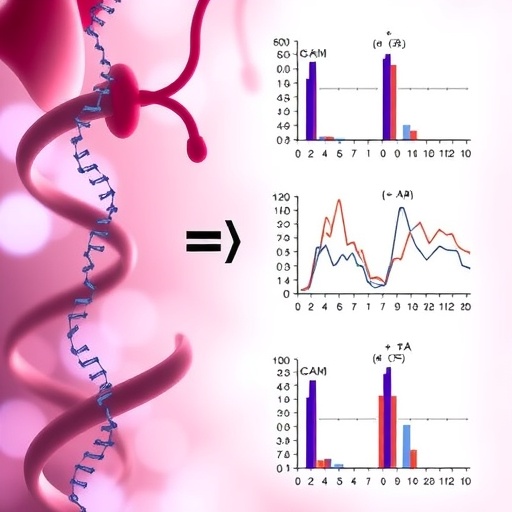
Recent preliminary findings published in the Journal of Medical Genetics have uncovered a pivotal genetic interplay that significantly influences the age at which breast cancer manifests in carriers of a prominent BRCA1 mutation. This study specifically highlights damaging missense variants in genes governing innate immune responses—particularly those activating natural killer (NK) cells—as potent accelerators of breast cancer onset among individuals harboring the pathogenic BRCA1 185delAG mutation. These insights herald a transformative shift toward more nuanced, personalized risk assessment models for BRCA1 mutation carriers, whose disease onset has long mystified clinicians due to broad variability.
The BRCA1 gene is a cornerstone of hereditary breast and ovarian cancer syndromes, notorious for carrying deleterious variants that intensify lifetime breast cancer risk to an estimated 60–80% and ovarian cancer risk to 30–40%. Notwithstanding this high penetrance, the age at diagnosis among BRCA1 mutation carriers varies significantly—a phenomenon that has challenged the clinical timing of high-stakes prophylactic surgeries such as mastectomies and salpingo-oophorectomies. The traditional binary understanding of BRCA1 mutations as deterministic has thus evolved, inviting exploration of modifying genetic and environmental factors that nuance penetrance and expressivity.
In this rigorous investigation, researchers leveraged whole exome sequencing to delve into the genetic architecture of 321 Ashkenazi Jewish women, a population exhibiting an elevated prevalence of the BRCA1 185delAG founder mutation—about 5 to 6 times higher than in other ethnic groups globally. Whole exome sequencing focuses on analyzing the protein-coding regions of the genome, representing approximately 1–2% of total DNA but encompassing around 85% of pathogenic mutations implicated in disease. This approach made it possible to uncover additional genetic variants that may synergize with or modulate the oncogenic potential of BRCA1 mutations.
Among the cohort, 98 women had developed breast cancer, with ages at diagnosis ranging wildly from 26 to 75 years. This heterogeneity, despite the shared BRCA1 mutation, provided a critical context to identify genetic variants influencing the timing of disease onset. The sequencing data revealed that women harboring damaging missense variants in innate immunity genes—genes orchestrating the body’s immediate, nonspecific defenses against malignancies and pathogens—tended to receive diagnoses markedly earlier.
Notably, genes involved in the activation and regulation of natural killer cells emerged as central players. Natural killer cells are integral to the innate immune system, wielding the ability to swiftly identify and eliminate virally infected and transformed cells without prior sensitization. The presence of damaging variants in these NK cell-activating genes conferred over a 3.5-fold increased risk of earlier breast cancer onset. Such strong associations between innate immune dysfunction and accelerated carcinogenesis underscore a previously underappreciated axis in cancer biology among BRCA1 mutation carriers.
This revelation has profound implications for understanding cancer pathogenesis in the context of germline mutations. While BRCA1’s canonical role involves DNA repair and genomic stability, these findings suggest that compromised immune surveillance potentiates tumor initiation and progression, particularly when coupled with inherent genetic instability. The interplay between immune evasion and genetic susceptibility constitutes a fertile ground for future basic and translational research.
The clinical ramifications are equally significant. Current guidelines for prophylactic surgery and surveillance in BRCA1 carriers often rely on average risks and age benchmarks that fail to capture interindividual variability driven by modifier genes. Incorporating innate immune gene variant profiles could refine risk stratification, enabling tailored preventive strategies that optimize timing and reduce unnecessary interventions or delayed diagnoses. This precision medicine approach aligns with broader trends in oncology and genomics, where integrative markers inform bespoke care plans.
However, the study authors prudently note that these results require validation across larger, ethnically diverse cohorts harboring heterogeneous BRCA1 pathogenic variants. The current focus on the Ashkenazi Jewish population and a specific BRCA1 founder mutation, while a powerful model, limits universal applicability. Further replication will elucidate whether these innate immune modifiers exert similar effects across diverse genetic backgrounds and BRCA1 allelic variants.
Collectively, these findings illuminate a compelling biological paradigm linking innate immunity dysfunction to the modulation of BRCA1 penetrance and breast cancer phenotypes. They invite a multidisciplinary approach encompassing immunology, molecular genetics, and clinical oncology to unravel the complex networks influencing cancer risk. Importantly, this research emphasizes the vital role of immune surveillance pathways in not only cancer progression but also in the variable expressivity of high-risk hereditary mutations.
Moving forward, the integration of immune gene variant screening into genetic counselling and risk prediction could revolutionize breast cancer prevention strategies among BRCA1 carriers. It also opens avenues for exploring immunomodulatory therapies as adjuncts to conventional treatments, potentially delaying onset or mitigating severity in predisposed individuals. As the biomedical community continues to decode the genomic and immunologic tapestry underpinning cancer, such insights promise to refine prognostic accuracy and therapeutic precision.
The expanding understanding of how modifying genetic factors influence BRCA1-related cancer risk underscores the necessity for personalized medicine frameworks. This study’s innovative use of whole exome sequencing to dissect the interplay between immune genetics and hereditary cancer risk heralds a new chapter in cancer genomics. Unraveling these intricate genetic interdependencies is critical to transforming cancer prevention, enhancing early detection, and, ultimately, saving lives.
Cite Scienmag News
Juliet Wilcox. (March 31, 2026). Genetic Variants Driving Rapid Immune Response Associated with Earlier Breast Cancer Onset in BRCA1 Mutation Carriers. Scienmag. https://scienmag.com/genetic-variants-driving-rapid-immune-response-associated-with-earlier-breast-cancer-onset-in-brca1-mutation-carriers/
Juliet Wilcox. "Genetic Variants Driving Rapid Immune Response Associated with Earlier Breast Cancer Onset in BRCA1 Mutation Carriers." Scienmag, 31 March 2026, https://scienmag.com/genetic-variants-driving-rapid-immune-response-associated-with-earlier-breast-cancer-onset-in-brca1-mutation-carriers/. Accessed 4 September 2026.
Juliet Wilcox. "Genetic Variants Driving Rapid Immune Response Associated with Earlier Breast Cancer Onset in BRCA1 Mutation Carriers." Scienmag. March 31, 2026. https://scienmag.com/genetic-variants-driving-rapid-immune-response-associated-with-earlier-breast-cancer-onset-in-brca1-mutation-carriers/


