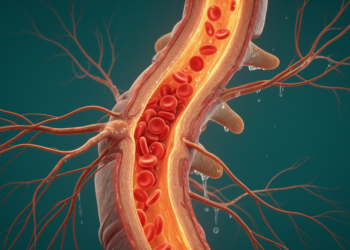
Decompression sickness, the potentially debilitating condition that strikes when dissolved inert gases form bubbles during ascent from a dive or exit from a pressurized environment, has long been treated as a problem of physics and physiology rather than genetics. That assumption is now under scrutiny. A recent review published in the Journal of Translational Medicine argued that individual genetic susceptibility to decompression sickness deserves systematic investigation, proposing that molecular mechanisms, genomic advances, and precision prevention strategies could reshape how the diving and aerospace communities protect their people. The review, which appeared on 10 August 2026, synthesized current concepts on individual susceptibility through omics technologies and molecular pathways, offering a forward-looking framework intended to stimulate innovative research in hyperbaric and aerospace medicine.
The proposal landed at a moment when the field is hungry for exactly this kind of synthesis. For decades, decompression safety has rested on statistical models built from population averages, dive tables, and ascent profiles that treat every diver as roughly equivalent. Yet anyone who has spent time around operational diving knows the reality is messier. Some individuals develop venous gas emboli, bubbles detectable in the bloodstream, after dives that leave others untouched, and the same person can respond differently on different days. If part of that variability is written into the genome, the argument goes, then genomic screening could one day identify who needs more conservative profiles before they ever enter the water. The review’s authors deserve credit, as a group of researchers led by Emmanuel Dugrenot of University Brest and the Lampe Joint Department of Biomedical Engineering at the University of North Carolina and North Carolina State University acknowledged, for tackling such a timely and important topic.
But the acknowledgment came with a warning. In a letter to the editor published in the same journal on 16 October 2026, Dugrenot and colleagues, including Emmanuel Gouin of Divers Alert Network, Clément Lévêque, Jérémy Orsat, and Frauke Tillmans, reported that they had identified several conceptual misattributions, literature inaccuracies, and improper terminology in the review. The letter’s authors suggested these problems may stem from automated text-generation or reference-management tools used without supplementary expert review. The observation matters far beyond one manuscript. Comprehensive review papers serve as foundational benchmarks for the hyperbaric medicine community, and if the primary literature they synthesize is misrepresented, the errors propagate into every downstream citation, guideline, and training document that relies on them.
The technical details of the dispute illustrate how easily misattribution can distort the scientific record. The review had cited a 2020 study by Lautridou and colleagues, published in the Journal of Applied Physiology, which examined physiological characteristics associated with increased resistance to decompression sickness in male and female rats. According to the letter, the review stated that females exhibited greater decompression sickness resistance associated with estrogen-mediated differences in anti-inflammatory cytokine profiles. The cited publication, however, reported no statistically significant difference in decompression sickness incidence between sexes, with a p-value of 0.29, and focused instead on specific single nucleotide polymorphisms, hematological parameters, vascular reactivity, and mitochondrial functions. The rat study did not measure estrogen levels or anti-inflammatory cytokine profiles at all. In other words, the review attributed a finding and a mechanism to a study that explicitly reported neither.
The misattributions extended to the study’s methods. The review credited Lautridou and colleagues with physiological assessments involving lung function and cardiac structure measurements, tests that were not performed in that particular rat study. Such systemic errors, the letter’s authors wrote, illustrate the significant risk of relying on automated tools for literature reviews, which could inadvertently introduce bibliographical misattributions. Their conclusion was blunt: line-by-line human expert verification remains indispensable to ensure the accuracy and integrity of all cited primary sources. For a field in which review articles may influence clinical practice and operational safety guidelines, the stakes of getting the underlying evidence right could hardly be higher.
A second dispute concerns venous gas emboli, the bubbles that form in the venous circulation during or after decompression and serve as one of the most widely used proxies for decompression stress in diving research. The review claimed that intra-individual variability in venous gas emboli is significantly lower than inter-individual variability, citing a 2023 study by David Doolette and Fiona Murphy published in Diving and Hyperbaric Medicine. That claim, the letter states, directly contradicts the cited study’s explicit conclusions. The distinction is not pedantic. Inter-individual variability, differences between divers, is precisely the signal that genomic screening would need to exploit; intra-individual variability, differences within the same diver across dives, is the noise that would undermine it. If the cited work actually found substantial within-diver variability following repeated dives, then the assumption that a diver’s bubble response is a stable personal trait is called into question, and with it the entire logic of precision prevention based on a single genomic profile.
The letter’s authors were careful to separate the critique of evidence from the vision itself. The goal of applying precision medicine to decompression physiology, they wrote, is inspiring and valuable and may ultimately improve operational diving and spaceflight safety. Their concern is narrower and more concrete: because translational review articles may influence clinical practice and operational safety guidelines, promoting precision prevention and genomic screening strategies based on misattributed evidence carries significant operational risks for human dives and spaceflight. A diver who trusts a screening strategy built on a misread study, or an astronaut selection protocol that weights a genetic variant whose association was overstated, faces consequences that no automated citation tool can repair after the fact.
The episode arrives as artificial intelligence tools are increasingly woven into the research workflow, from literature searches to drafting assistance to reference management. The failure mode the letter describes, plausible-sounding claims attached to real citations that say something different, is among the most dangerous because it defeats the usual defenses. A fabricated reference can be caught by checking whether it exists; a misattributed one survives because it does exist, and only a reader who goes back to the primary source and compares the actual findings with the review’s characterization will notice the gap. The letter’s authors offered their observations as representative examples rather than a comprehensive catalog, suggesting the issues may benefit from further clarification and refinement.
Their recommendation was constructive rather than dismissive. The letter was offered, the authors wrote, in the spirit of strengthening what is otherwise a promising and ambitious review, and they respectfully suggested that the authors undertake a comprehensive audit of their manuscript to align it with their bibliography. Careful refinement, they argued, will improve the manuscript’s clarity and accuracy and safeguard the academic rigor of the journal. The underlying scientific questions remain open and genuinely important. Whether genetic variants influence bubble formation, inflammatory responses to decompression, or the threshold at which asymptomatic emboli become symptomatic illness are questions worth answering with rigorous evidence, and the omics framework the review proposed could yet prove valuable if rebuilt on accurately cited foundations.
For the diving and spaceflight communities, the practical takeaway is a reminder that the path from genome to dive profile runs through the unglamorous work of verification. Precision prevention in decompression sickness is an idea whose time may come, but only if the evidence supporting it is what the literature actually says. Until then, the letter stands as a case study in why the human expert, reading the primary source line by line, remains the last and most important checkpoint between an automated draft and a published claim that divers, aviators, and astronauts may one day be asked to trust with their lives.
Subject of Research: Decompression Sickness Genetics
Article Title: Letter to the Editor regarding “Genetic susceptibility to decompression sickness: molecular mechanisms, genomic advances, and precision prevention strategies”
Article References: Dugrenot, E., Gouin, E., Lévêque, C., Orsat, J., & Tillmans, F. (2026). Letter to the Editor regarding “Genetic susceptibility to decompression sickness: molecular mechanisms, genomic advances, and precision prevention strategies”. Journal of Translational Medicine, 24(1), Article 1312. https://doi.org/10.1186/s12967-026-08937-x
Image Credits: AI Generated
DOI: 10.1186/s12967-026-08937-x
Keywords: decompression sickness, genetic susceptibility, venous gas emboli, hyperbaric medicine, precision prevention, automated literature review, diving safety, spaceflight medicine, Letter, Editor, regarding, Genetic
Cite Scienmag News
Juliet Wilcox. (October 16, 2026). Genetic Susceptibility to Decompression Sickness Sparks Scientific Debate. Scienmag. https://scienmag.com/genetic-susceptibility-to-decompression-sickness-sparks-scientific-debate/
Juliet Wilcox. "Genetic Susceptibility to Decompression Sickness Sparks Scientific Debate." Scienmag, 16 October 2026, https://scienmag.com/genetic-susceptibility-to-decompression-sickness-sparks-scientific-debate/. Accessed 16 October 2026.
Juliet Wilcox. "Genetic Susceptibility to Decompression Sickness Sparks Scientific Debate." Scienmag. October 16, 2026. https://scienmag.com/genetic-susceptibility-to-decompression-sickness-sparks-scientific-debate/