

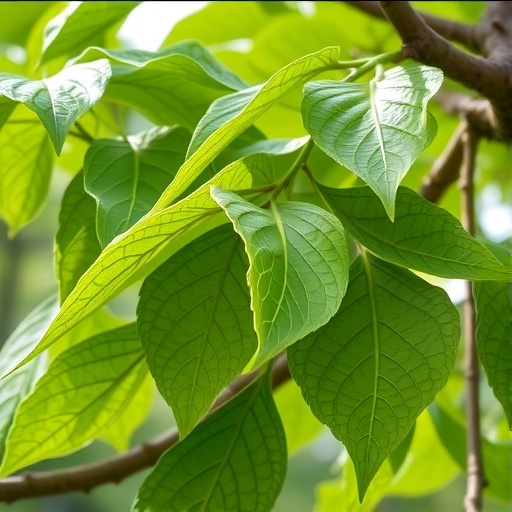
In the face of accelerating climate change and human encroachment, the future of many plant species teeters on the brink of uncertainty. Among these is the enigmatic and distinctly valuable Catalpa huangxin, a prized ornamental tree notable not only for its lush aesthetic appeal but also for its remarkably durable yellow heartwood. Native to a limited range within China, this species now faces critical threats due to shrinking wild populations and habitat fragmentation. A groundbreaking study utilizing Restriction-site Associated DNA Sequencing (RAD-Seq) has cast new light on the genetic intricacies of Catalpa huangxin, offering fresh hope and a strategic blueprint for its preservation and sustainable breeding.
Catalpa huangxin’s dwindling numbers have long worried conservationists, but until recently, the species’ precise genetic landscape remained largely enigmatic. The recent comprehensive analysis included 198 individual samples meticulously collected across its natural habitats, alongside specimens of its closest relatives, Catalpa duclouxii and Catalpa ovata. Through RAD-Seq, the researchers reconstructed detailed phylogenetic relationships, unraveling the genetic fabric that shapes these species and providing clarity on their evolutionary trajectories.
One of the most salient revelations of the study was the distinct but close genetic relationship between Catalpa huangxin and Catalpa duclouxii. Despite their close resemblance and geographical proximity, the two species exhibit clear genetic differentiation, reinforcing their classification as discrete taxa. This finding carries significant implications not only for taxonomy but also for conservation planning, underscoring the importance of tailored strategies that account for species-specific genetic identities.
Delving deeper into the population structure of Catalpa huangxin, the analysis unveiled five distinct subgroups within the species. These subgroups demonstrated moderate genetic diversity levels, quantified through parameters such as expected heterozygosity (He = 0.2935) and observed heterozygosity (Ho = 0.4401). This genetic heterogeneity, while moderate, is crucial for the species’ potential resiliency and adaptability in the face of environmental changes.
Among the five identified subgroups, Subgroup 5 emerged as a genetic reservoir, boasting the highest levels of diversity. This elevated genetic variation suggests that Subgroup 5 could serve as a keystone population for future conservation and genetic enhancement initiatives. Preserving this subgroup might be pivotal to ensuring the overall genetic health and evolutionary potential of Catalpa huangxin.
However, the study also betrayed a sobering reality: significant genetic differentiation, marked by an FST value of 0.1983 between subgroups, points to limited gene flow among these populations. This genetic isolation is symptomatic of ongoing habitat fragmentation, barriers to pollen and seed dispersal, and human-induced landscape modifications. Such restrictions on gene flow heighten the risk of inbreeding depression, reduce adaptive potential, and may ultimately impede the species’ long-term survival.
Understanding the factors behind this genetic differentiation is critical. The research highlighted anthropogenic impacts, such as deforestation and land development, as primary drivers exacerbating habitat fragmentation. Moreover, inherent reproductive traits of Catalpa huangxin, combined with ecological constraints, further hinder genetic exchange between populations, deepening genetic divides. These insights provide a nuanced understanding of the complex interplay between biology and environment shaping genetic structure.
The implications of these findings for conservation practice are profound. The study advocates prioritizing in-situ conservation—protecting Catalpa huangxin within its natural habitats—especially focusing on genetically rich subgroups like Subgroup 5. Such strategies ensure that the species can continue to evolve under natural selection pressures, preserving ecological dynamics and evolutionary processes critical for adaptation.
Complementing in-situ efforts, the researchers recommend artificial restoration of populations in fragmented areas. By facilitating gene flow through managed planting programs and habitat corridors, conservationists can mitigate genetic isolation and bolster population resilience. These approaches represent an integration of molecular insights into practical management, setting a model for future conservation endeavors.
The establishment of germplasm banks also stands out as a vital recommendation. By ex-situ conservation of seeds and genetic material, these repositories serve as genetic archives, conserving diversity that may be lost in the wild. Such collections support breeding programs aimed at enhancing traits like wood durability and ornamental value, linking conservation with economic and cultural benefits.
Extending the current distribution range of Catalpa huangxin emerges as another proactive measure. Restoring or creating habitats beyond existing populations can buffer the species against localized threats and promote genetic exchange across a broader landscape. This strategy requires coordinated efforts between conservationists, local communities, and policymakers, highlighting the need for integrative conservation frameworks.
Beyond the immediate survival of Catalpa huangxin, this research offers a broader paradigm for the conservation biology of narrowly distributed species worldwide. It underscores the critical role of population genomics in detecting subtle genetic patterns invisible to traditional field assessments. By integrating genomic tools such as RAD-Seq into conservation strategies, scientists and managers can design more effective, genetically informed interventions.
The study’s insights resonate particularly in an era of rapid climate shifts. Species confined to limited geographic ranges and exhibiting restricted gene flow are inherently vulnerable to environmental perturbations and stochastic events. By elucidating the genetic architecture of such species, research like this equips the conservation community with essential knowledge to anticipate and mitigate future risks.
Importantly, this work also bridges the gap between fundamental science and applied conservation. It demonstrates how genetic data can directly inform management options, from identifying priority populations to guiding restoration and breeding programs. This translational approach strengthens the effectiveness of biodiversity conservation in an increasingly human-dominated world.
Catalpa huangxin’s case exemplifies the urgent need for comprehensive, genetics-driven conservation frameworks tailored to species with limited and fragmented populations. As habitats continue to diminish globally, leveraging genomic technologies will become indispensable in safeguarding our planet’s botanical heritage. This study not only enhances understanding of Catalpa huangxin but also charts a viable path forward for many other threatened species.
In sum, the application of RAD-Seq has shed critical light on the genetic diversity and population dynamics of Catalpa huangxin, a tree of considerable ecological and economic value. The findings illuminate the challenges posed by genetic differentiation and restricted gene flow while offering actionable solutions centered on genetic conservation and sustainable management. This pioneering research underscores a hopeful message: through science-driven intervention, we can stem the tide of biodiversity loss even in the most vulnerable species.
As Catalpa huangxin’s future unfolds, the integration of genetic research, habitat preservation, and restoration efforts will be vital. This multifaceted approach not only aims to preserve a species but also enriches our overall understanding of evolutionary processes, fostering resilience in natural ecosystems. The lessons gleaned from this study resonate far beyond one tree, informing robust strategies to conserve global biodiversity amidst unprecedented environmental challenges.
Subject of Research: Genetic diversity, population structure, and conservation strategies for Catalpa huangxin using RAD-Seq.
Article Title: Genetic structure and conservation relevance in the narrowly distributed tree Catalpa huangxin revealed by RAD-Seq.
Article References:
Ge, W., Liu, Y., Wang, J. et al. Genetic structure and conservation relevance in the narrowly distributed tree Catalpa huangxin revealed by RAD-Seq. Heredity (2026). https://doi.org/10.1038/s41437-025-00818-1
Image Credits: AI Generated
DOI: 07 January 2026
Keywords: Catalpa huangxin, genetic diversity, RAD-Seq, population structure, conservation genetics, habitat fragmentation, gene flow, in-situ conservation, ex-situ conservation, germplasm bank, phylogeny, genetic differentiation, restoration ecology


