


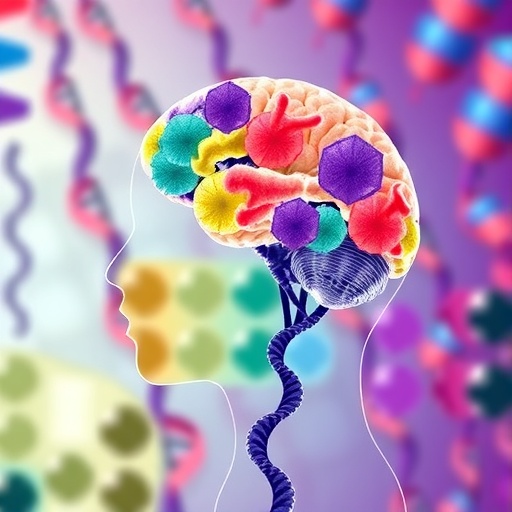
In a groundbreaking advance poised to reshape our understanding of neurodevelopmental disorders, a team of geneticists and neuroscientists has unveiled the intricate ways in which genetic background modulates the phenotypic expression of these complex conditions. Published in Nature Communications in 2026, the study by Sun, Noss, Smolen, and colleagues delves deep into the enigmatic variability that characterizes neurodevelopmental disorders, such as autism spectrum disorder (ASD), intellectual disability, and epilepsy, highlighting the significance of genetic context in determining clinical outcomes.
Neurodevelopmental disorders have long puzzled clinicians and researchers due to their striking heterogeneity: individuals carrying seemingly identical pathogenic mutations can exhibit vastly different symptoms and degrees of severity. Traditionally, much research focused on identifying specific genetic variants or single-gene mutations responsible for these disorders. However, this latest study pivots the spotlight from isolated genetic variants to the broader genomic landscape surrounding them, revealing how the “genetic background” profoundly influences the manifestation of disease.
The research team employed an innovative combination of whole-genome sequencing and sophisticated computational modeling to decipher the complex interactions between primary pathogenic mutations and the myriad of other genetic factors present within each individual. Their work demonstrates that these secondary genetic modifiers can enhance, mitigate, or even fundamentally alter the phenotypic consequences of known neurodevelopmental risk variants, thereby contributing to the observed variability among patients.
One of the key technical achievements of this study is the development and validation of a novel polygenic risk scoring system that integrates the effects of common and rare variants across the genome. By applying this system to a large cohort of patients with diagnosed neurodevelopmental disorders, the researchers were able to predict, with remarkable accuracy, the likelihood of severe versus mild phenotypic presentations based on the composite genetic landscape rather than a single mutation alone.
Intriguingly, the study reveals that some genetic backgrounds possess what the authors term “buffering capacity”—the ability to attenuate the deleterious consequences of high-impact mutations. This buffering appears to involve networks of genes that participate in key neurobiological pathways, including synaptic formation, neuronal signaling, and chromatin remodeling. These findings raise the possibility that certain individuals harbor protective genetic architectures that might be harnessed therapeutically in the future.
Moreover, the research provides compelling evidence that not all genetic modifiers operate in a straightforward additive manner. Instead, complex epistatic interactions—where the effect of one gene depends on the presence or absence of other genes—play a critical role in shaping the ultimate clinical phenotype. Disentangling these nonlinear interactions required the utilization of cutting-edge machine learning algorithms, capable of sifting through vast genetic datasets to identify subtle combinatorial effects.
Another fascinating aspect unearthed by this study concerns the temporal and tissue-specific nature of genetic background effects. The authors demonstrate that some modifiers exert their influence only during crucial windows of neurodevelopment, such as prenatal brain formation or early postnatal synaptogenesis. Furthermore, certain variants impact gene expression selectively in specific brain regions linked to cognition and behavior, highlighting the finely tuned spatial-temporal regulation involved.
The implications of these findings for precision medicine in neurodevelopmental disorders are profound. Clinicians could soon move beyond binary genetic diagnoses to embrace a more nuanced approach that incorporates the broader genomic context when assessing prognosis and tailoring interventions. This could transform counseling for affected families, enabling more accurate predictions of disease course and responsiveness to therapy.
In practical terms, the study underscores the need for comprehensive genomic profiling in both clinical and research settings. Isolating single causative mutations without considering the surrounding genetic milieu offers an incomplete picture that may overlook crucial modifiers influencing patient outcomes. Future diagnostic pipelines may therefore integrate polygenic and epistatic risk assessments as standard practice.
From a therapeutic perspective, the identification of genetic backgrounds with buffering properties opens exciting avenues for drug development. Targeting the pathways or networks involved in these protective effects might replicate their benefits in individuals who lack such advantageous genotypes. This could revolutionize treatments by shifting from symptom management to molecular correction of underlying network dysfunction.
Importantly, the authors caution that while genetic background plays a vital role, it is not the sole determinant of neurodevelopmental disorder variability. Environmental factors, epigenetic modifications, and stochastic developmental processes also contribute layers of complexity. Nonetheless, this study significantly elevates the status of genetic context as a pivotal piece of the etiological puzzle.
The team’s robust experimental design, leveraging multi-omic data integration, replication cohorts, and functional validations using cellular and animal models, lends high confidence to their conclusions. By combining human genetics with mechanistic biology, they bridge gaps between genomic data and phenotypic consequence, offering a holistic view that had previously eluded the field.
Looking ahead, the integration of this knowledge into large-scale population studies and personalized clinical workflows promises to generate a transformative impact. It sets the stage for refining risk stratification, enhancing early diagnosis, and personalizing interventions tailored to individual genetic architectures.
Sun and colleagues’ pioneering work thus represents a paradigm shift in neurogenetics, moving beyond reductionist views to embrace the rich complexity of genomic interplay. Their findings highlight the power and necessity of systems biology approaches in unraveling the enigmatic expressivity of neurodevelopmental disorders, ultimately bringing hope for improved patient care and targeted therapies.
Cite Scienmag News
Juliet Wilcox. (May 1, 2026). Genetic Background Shapes Neurodevelopmental Disorder Variability. Scienmag. https://scienmag.com/genetic-background-shapes-neurodevelopmental-disorder-variability/
Juliet Wilcox. "Genetic Background Shapes Neurodevelopmental Disorder Variability." Scienmag, 1 May 2026, https://scienmag.com/genetic-background-shapes-neurodevelopmental-disorder-variability/. Accessed 4 September 2026.
Juliet Wilcox. "Genetic Background Shapes Neurodevelopmental Disorder Variability." Scienmag. May 1, 2026. https://scienmag.com/genetic-background-shapes-neurodevelopmental-disorder-variability/


