


Gene drive organisms, engineered to spread synthetic genes through wild populations with the potential for global and permanent dispersal, cannot be adequately assessed with the environmental risk assessment framework that the European Union currently applies to genetically modified organisms. That is the central conclusion of a new analysis published in the journal BioRisk, which systematically compares the novel features of gene drive approaches with conventional GMOs and identifies six major challenges for the EU’s regulatory approval procedure. The authors argue that while EU GMO regulation is the most appropriate of the available frameworks for gene drive organisms, it was designed for single-generation GMOs with no intentional spread, and a scientifically sound environmental risk assessment is not possible for globally spreading gene drive organisms.
Gene drives work by enhancing the inheritance of a particular genetic element so that it is passed to more than the usual half of an organism’s offspring, causing the element to increase in prevalence through a sexually reproducing population. Different mechanisms can achieve this, including transposable elements, meiotic drives, toxin-antidote systems such as MEDEA or underdominance, and intracellular bacteria such as Wolbachia. In recent years, nuclease-based techniques have enabled the design of synthetic gene drives. Homing endonuclease genes express an enzyme that cleaves a specific target sequence in the host genome, after which the cut site is repaired using the gene-bearing chromosome as a template, converting a heterozygote into a homozygote. The discovery of CRISPR/Cas simplified and accelerated this concept by overcoming many of the targeting and stability problems observed in other nuclease-based techniques, with guide RNAs directing the nuclease to chosen genomic target sequences. Proof-of-concept studies have demonstrated synthetic CRISPR-based gene drives in yeast, the fruit fly Drosophila melanogaster, mosquitoes and partly also mammals.
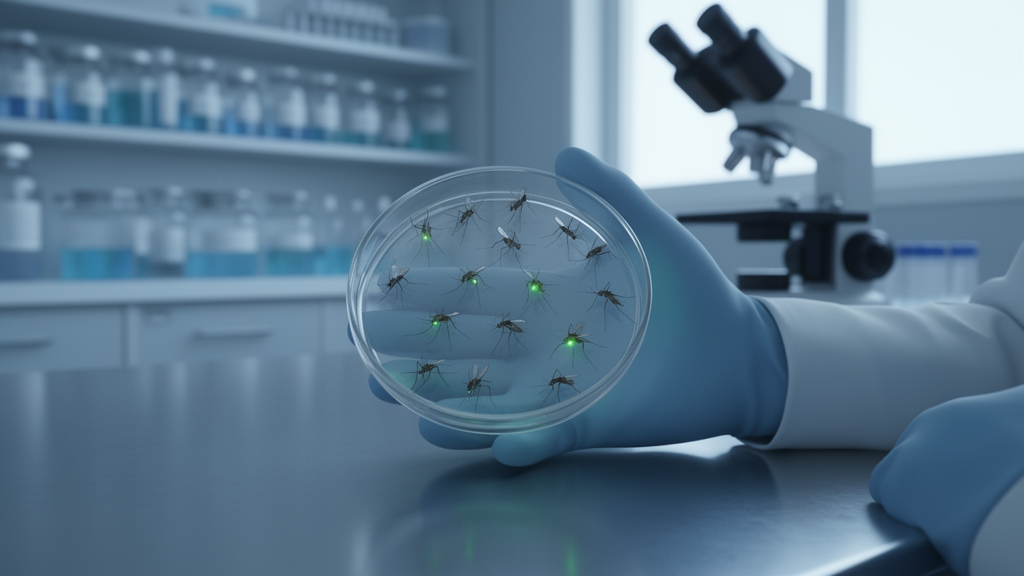
Proposed applications span three main fields: public health, such as vector control of human pathogens; agriculture, such as the control of weeds or pests; and environmental protection and nature conservation, such as the control of noxious non-native species. The potential of gene drives to combat insect-borne diseases such as malaria and dengue has fuelled much of the optimism. A research consortium, Target Malaria, intends to start with the release of genetically modified mosquitoes and ultimately adopt a gene drive approach to bias the sex ratio of Anopheles mosquito populations in order to drastically reduce the number of vectors. The analysis notes that the appropriate legal and regulatory conditions for such releases in sub-Saharan African countries are questionable, and that responsibilities for the efficacy and sustainability of such health interventions remain unclear.
The authors first evaluate which EU regulatory framework should apply. Regulation 1143/2014 on Invasive Alien Species covers only organisms outside their natural range and would therefore not cover native gene drive organisms. Invertebrate biological control agents are subject to differing national rules across EU Member States, with only basic information requirements for native species, which would be insufficient for organisms with the potential for global spread. By contrast, Directive 2001/18/EC on the deliberate release of GMOs covers all types of biological entities capable of replication or of transferring genetic material, with no restrictions regarding origin or taxonomy. It requires a pre-release environmental risk assessment, possible risk management measures and obligatory post-market monitoring, and assesses novel traits on a case-by-case basis considering the species, the specific genomic and phenotypic modification and the receiving environment. The authors conclude that only the GMO regulatory provisions provide such a case-by-case pre-release assessment together with post-release monitoring for any type of organism.
The analysis then identifies three novel features that distinguish gene drive organisms from conventional GMOs. First, gene drives intentionally alter wild populations, such as mosquitoes, rather than domesticated crop species with a history of safe use. Wild populations exhibit extensive plasticity in genotype, phenotype, behaviour and ecological niche use, and the traits introduced by gene drives are novel, aiming to change vectorial capacity or ecological behaviour, with the goal of introducing a permanent change in the ecosystem. Second, gene drives are designed for intentional and potentially unlimited spread of synthetic genes in wild populations and natural ecosystems. Threshold-independent drive systems spread at very low initial frequencies until fixation, and modelling has shown that even small releases of first-generation CRISPR/Cas-based gene drives are likely to result in global spread. For conventional GM crops, gene flow of modified traits to other species was viewed as an unintended consequence; deliberate transfer of synthetic genes is an unprecedented case for GMO risk assessment in the EU. Third, gene drives may introduce long-term, if not infinite, changes in populations through repeated genomic intervention in each subsequent generation.
Long-term risks are substantial and partly unpredictable. Resistance to gene drives has been shown in cage experiments with Anopheles gambiae, and if resistance occurs, the ultimate goal of the drive will not be achieved, with unknown epidemiological and ecological consequences. Gene drive applications aiming at population suppression could change ecological food webs by inducing a loss of prey populations, thereby impacting predators and diminishing food sources across trophic levels. Modelling of transgenic dengue control options showed that blocking disease transmission and mosquito biting increased the risk of enhancing the virulence of the pathogen to humans, and strong selection on pathogens may extend their host range to other species, a phenomenon known as vector switching. Changes in the relative abundance of different vectors due to relief from competition may also increase disease transmission. In addition, conventional control strategies such as insecticide application could compromise novel control methods based on population alteration or replacement.
Against this background, the authors derive six challenges for the EU environmental risk assessment. The first is that the receiving environment, a cornerstone of the case-by-case principle under Directive 2001/18/EC, cannot be defined for gene drive organisms with the ability to spread globally. Conventional GM crops are released into locally restricted production areas with defined climatic and agronomic conditions, whereas spread of gene drive organisms beyond a spatially defined location is highly likely, particularly for low-threshold drives. Genotype-environment interactions play a crucial role in the success of the drive and its risks, and fitness costs estimated by modelling may differ from predictions under realistic conditions. Field trials in locations where no vectors are naturally present, proposed as a means of ecological confinement, can only be of limited value because they ignore the dependence of the drive’s functionality on the environmental specificities of the release location.
The second challenge is that the safety of a gene drive organism cannot be established based on the comparative assessment that underpins the environmental risk assessment of GM plants and animals. Gene drives target wild populations with no genetic uniformity, familiarity or history of safe use, and identified differences between a gene drive organism and wild populations do not necessarily indicate a hazard but may reflect the phenotypic and ecological plasticity of the target population. For gene drives aiming at suppression and elimination of the target population, a comparative assessment would logically be redundant. The third challenge concerns gene flow: the deliberate and intended transfer of modified genetic elements may also spread to non-target populations through intra- and interspecific gene flow, as shown by hybridization between Anopheles gambiae and other vector species such as A. arabiensis. Large knowledge gaps regarding phylogenetic relatedness and hybridization ability in many wild species hamper the assessment of such risks, and environmental harm has not yet been assessed or determined in environmental risk assessment even for classic GMOs.
The fourth challenge is that field testing of gene drive organisms is hardly possible. The step-by-step principle of European GMO regulation envisages gradual reduction of containment, but a single release of gene drive organisms may have the potential for unlimited and global spread, and EFSA already recognises the difficulty of conducting field trials with GM insects due to their irretrievability. Potential irreversibility concerns not only the organisms themselves but also their environmental effects, which remain even if the organisms disappear after release. Self-limiting approaches such as locally fixed gene drives and precision drives, as well as reversal drives intended to undo previous genomic changes, remain theoretical, with proof-of-concept studies still lacking. As long as functional confinement strategies, employable marker systems and methods for monitoring and retrievability are missing, the authors state that the release of gene drive organisms for testing purposes should be avoided. The fifth challenge is that long-term risks at the population and ecosystem level cannot be assessed with current methods: there is no practical knowledge or empirical data from environmental releases of GM insects or GM animals in the EU, no GM animals have so far been notified, and mathematical models for the ecological processes affected by gene drive organisms still have to be developed. Experience with biological control organisms is only partly transferable, since long-term evaluations of such organisms are largely lacking.
The sixth challenge is that improved environmental monitoring and risk management must be operational before deploying gene drive organisms. Post-release monitoring in the EU currently serves to validate the environmental risk assessment and to detect unanticipated adverse effects, but post-market environmental monitoring carried out for classic GM crops is not functional with respect to its objectives, design, data analysis and standardised methodology. For gene drive organisms, monitoring must include the occurrence and prevalence of the organisms in the environmental compartments where they are expected, and long-term monitoring is particularly necessary if gene drives are deployed as a public health tool. The authors conclude that the current GMO regulatory provisions are aligned to single-generation GMOs with no intentional spread, with consent given for a maximum period of ten years, and that it will be difficult to handle gene drive organisms designed to disperse beyond a specific time frame, particularly if retrievability is not readily available. Uncertainties in assessing long-term effects on whole populations or ecosystems, including potential evolutionary changes, may result in highly speculative risk estimations. The decision on the first release will require solving the trade-off between gaining information on efficacy and biosafety and assessing risks based solely on data from confined environments, and the final decision to release gene drive organisms will not be a purely scientific question but will need broader stakeholder engagement and a commitment to specific protection goals for human health and the environment.
Subject of Research: Environmental risk assessment of gene drive organisms under EU GMO regulation
Article Title: Beyond limits – the pitfalls of global gene drives for environmental risk assessment in the European Union
Article References: Dolezel, M., Lüthi, C., & Gaugitsch, H. (2020). Beyond limits – the pitfalls of global gene drives for environmental risk assessment in the European Union. BioRisk, 15, 1-29. https://doi.org/10.3897/biorisk.15.49297
Image Credits: AI Generated
Keywords: gene drive, CRISPR/Cas, environmental risk assessment, GMO regulation, European Union, Directive 2001/18/EC, wild populations, ecosystem effects, resistance, post-release monitoring, Target Malaria, biocontainment
Cite Scienmag News
Juliet Wilcox. (October 26, 2026). Gene drive organisms expose a blind spot in EU environmental risk assessment. Scienmag. https://scienmag.com/gene-drive-organisms-expose-a-blind-spot-in-eu-environmental-risk-assessment/
Juliet Wilcox. "Gene drive organisms expose a blind spot in EU environmental risk assessment." Scienmag, 26 October 2026, https://scienmag.com/gene-drive-organisms-expose-a-blind-spot-in-eu-environmental-risk-assessment/. Accessed 26 October 2026.
Juliet Wilcox. "Gene drive organisms expose a blind spot in EU environmental risk assessment." Scienmag. October 26, 2026. https://scienmag.com/gene-drive-organisms-expose-a-blind-spot-in-eu-environmental-risk-assessment/


