


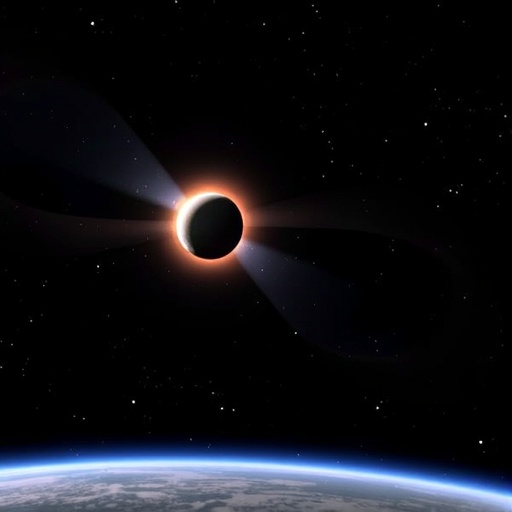
In an extraordinary development within the realm of planetary science, researchers have turned their gaze to the enigmatic asteroid known as 1998 KY26. A recent series of observations conducted using powerful observatories around the globe, including the cutting-edge Gemini South telescope, have revealed groundbreaking insights regarding this tiny celestial body. Formerly estimated at around 30 meters across, it has now been determined that 1998 KY26 measures a mere 11 meters in width. This significant reduction in size alters our understanding of the asteroid’s characteristics and dynamics, making it a pivotal subject for ongoing studies.
The initial findings indicate that 1998 KY26 not only boasts a smaller diameter than previously believed, but it also spins with surprising rapidity. Astronomers report that a single rotation of the asteroid takes only five minutes, which is nearly double the prior expectations. Such revelations about the asteroid’s mass and rotational speed challenge assumptions and necessitate a reevaluation of models used for asteroid dynamics. The implications of these findings extend far beyond mere metrics; they hold the potential for impacting future missions targeting this specific asteroid and similar small celestial bodies.
The Gemini South telescope played a central role in capturing the essential data needed to unveil the true nature of 1998 KY26. Equipped with a suite of advanced instruments, the observatory allowed for prolonged observations through multiple filters. This technique enabled researchers to monitor the asteroid while it remained fixed in the telescope’s view, recording the positions of distant stars as they shifted, thus creating colorful streaks in the final image. This innovative observational approach has proven crucial for characterizing the asteroid and has set the groundwork for future research methodologies in this field.
As 1998 KY26 is scheduled to be the final target for JAXA’s Hayabusa2 extended mission in 2031, the new data adds vital information for planning the spacecraft’s landing strategy. The challenges of navigating a spacecraft to such a small and fast-spinning target cannot be underestimated, particularly given that this will mark the first instance of a spacecraft attempting to touch down on an asteroid of such a diminutive scale. Previous asteroid missions focused on much larger bodies, with diameters often exceeding several hundred meters, making the 1998 KY26 mission a unique undertaking.
The observations also provide insights into the composition of 1998 KY26, suggesting that its surface is bright and likely consists of solid rock. This raises intriguing questions regarding its origin—whether it formed from debris ejected from a larger planetary body or if it is a remnant of a fragmented asteroid. However, caution is warranted; the research team has not entirely ruled out the possibility that it could also be a loosely-bound collection of rubble, which would complicate landing strategies further. As scientists keep refining their methods for detecting and characterizing such tiny asteroids, the knowledge garnered from 1998 KY26 will serve as a benchmark for upcoming explorations.
Team leader Toni Santana-Ros emphasizes the significance of these findings, stating that they highlight the disparity between previous assumptions and the new observations made with advanced telescopic technology. The new dimensions and rotation speed discovered inform not only the scientific community about the complexities of small body dynamics but also present challenges for future manned or robotic missions that may target similar objects in their cosmic journeys.
This discovery undoubtedly represents a leap forward for the field of planetary science. The ability to accurately characterize small asteroids like 1998 KY26 opens doors to a better understanding of their formation and evolution. The methods employed during this study, particularly relying on high-caliber telescopes for close astronomical observations, could revolutionize our approach for characterizing other faint near-Earth objects. Importantly, this expertise may not only be relevant for planetary science but could also have practical implications for asteroid mining in the future.
The stellar collaboration between astronomers across various institutions, aided by high-resolution observations from sophisticated telescopes, showcases the potential of global teamwork in unraveling the secrets of our solar system. With large telescopes like the Very Large Telescope and American facilities like the SOAR telescope contributing to this shared scientific goal, the research builds a foundation for further international collaborations in exploring the vastness of space and its many mysteries.
As we look to the future and anticipate the Hayabusa2’s encounter with 1998 KY26, the research team remains hopeful that their findings will yield even greater insights into the geology and behavior of these small Solar System bodies. Indeed, the revelations surrounding 1998 KY26 serve not only as a testament to the capabilities of modern astronomy but also promise to deepen our understanding of the complex processes that govern celestial bodies throughout the cosmos.
By employing advanced technologies and fostering international collaboration, astronomers are on the brink of embarking on new adventures in space exploration. The observations of 1998 KY26 exemplify a bridge connecting the scientific community to fundamental questions about our solar system’s history and the formation of its constituent bodies. As we stand at this astonishing intersection of technology and exploration, the narrative of 1998 KY26 continues to unfold, promising to captivate both researchers and the public alike.
In this exciting era of space exploration, each new finding offers another link in the chain of our understanding of asteroids, their compositions, and their significance in the grand narrative of our solar neighborhood. The work surrounding 1998 KY26 establishes a model for how we might encounter other tiny bodies in our quest to unlock the secrets of the universe, ultimately shaping the future of planetary exploration and research.
Keywords
Asteroid 1998 KY26, Gemini South telescope, Hayabusa2 mission, asteroid dynamics, planetary science, near-Earth object, rotational speed, celestial mechanics, international collaboration, space exploration, small body characterization, asteroid mining.
Cite Scienmag News
Grant Pearson. (September 18, 2025). Gemini Data Sheds Light on Hayabusa2’s Target: Smaller and Faster Than Previously Estimated. Scienmag. https://scienmag.com/gemini-data-sheds-light-on-hayabusa2s-target-smaller-and-faster-than-previously-estimated/
Grant Pearson. "Gemini Data Sheds Light on Hayabusa2’s Target: Smaller and Faster Than Previously Estimated." Scienmag, 18 September 2025, https://scienmag.com/gemini-data-sheds-light-on-hayabusa2s-target-smaller-and-faster-than-previously-estimated/. Accessed 6 September 2026.
Grant Pearson. "Gemini Data Sheds Light on Hayabusa2’s Target: Smaller and Faster Than Previously Estimated." Scienmag. September 18, 2025. https://scienmag.com/gemini-data-sheds-light-on-hayabusa2s-target-smaller-and-faster-than-previously-estimated/


