


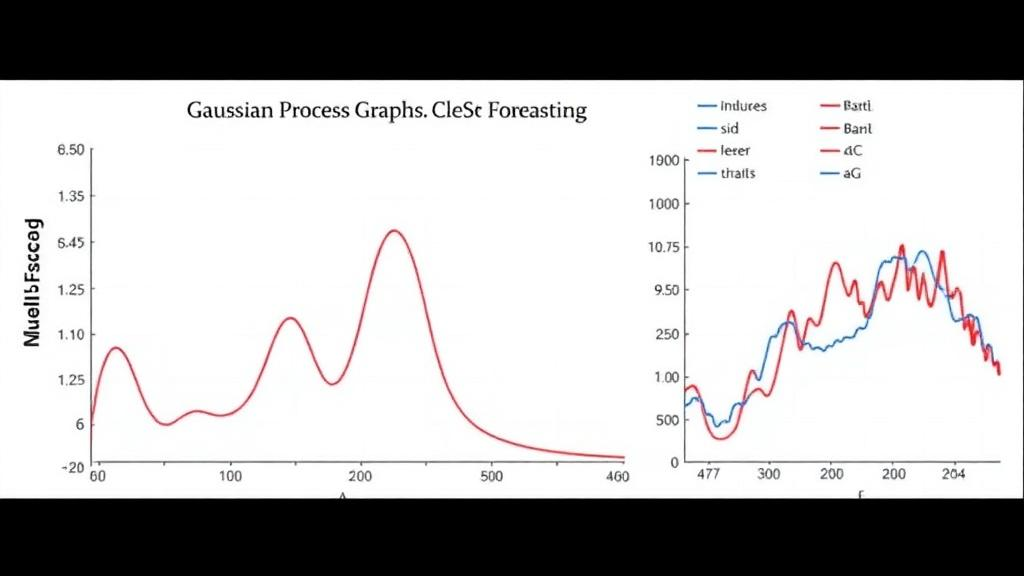
A new machine learning framework called StructGP promises to make forecasts from messy electronic health records both more accurate and more interpretable, according to a study published in BioData Mining. Developed by Ivan Lerner, Jean Feydy, Alexandre Kalimouttou, Anita Burgun and Francis Bach, the method treats clinical time series not as grids of filled-in numbers but as continuous-time processes, and it learns an explicit, sparse map of how one patient variable influences another while keeping its uncertainty honest.
Most forecasting approaches handle this awkwardness in one of two ways, the authors note. Either they impute the data onto a regular grid, which can distort the underlying physiology, or they adopt flexible black-box models that sacrifice any ability to explain why a prediction was made. StructGP, a continuous-time multi-task Gaussian process, avoids both traps by coupling process convolutions with differentiable structure learning.
The core idea is that the model simultaneously forecasts multiple clinical variables and learns a directed acyclic graph, a DAG, describing ordered dependencies among those variables. Sparsity and acyclicity constraints, enforced through an augmented Lagrangian scheme and trained with Adam, keep the graph small and readable rather than a tangle of spurious connections. Scalable low-rank updates make training feasible: StructGP optimizes the exact marginal likelihood, while an extended variant, LP-StructGP, optimizes an online conditional marginal-likelihood objective.
LP-StructGP adds what the authors call latent pathways: shared, temporally shifted trajectories that capture how groups of patients tend to progress. These pathways are inferred through subject-specific coupling filters combined with a softmax gating mechanism, allowing each patient to be softly assigned to common progression patterns rather than modeled in isolation. The result is a model that can borrow strength across a cohort while still adapting to the individual.
A key theoretical contribution is an identifiability result. The authors establish that the ordered StructGP graph can be recovered from the population marginal likelihood under the stated model, observation-design and noise assumptions. For LP-StructGP, the corresponding result identifies the shared ordered inter-task graph conditionally on fixed subject-level pathway filters. In other words, under the stated assumptions, the interpretable structure the model reports is not an arbitrary artifact of training but something the data can, in principle, pin down.
Controlled, correctly specified simulations supported this claim. Graph recovery improved as cohort size grew, and the median Structural Hamming Distance, a measure of how many edges a learned graph gets wrong, reached zero at the largest cohort size tested. Pathway assignments also showed high Adjusted Rand Index, indicating that the model grouped patients into progression patterns consistently. The picture was less rosy under more realistic conditions: when the simulations used observation schedules derived from MIMIC-IV, graph-recovery performance dropped, a reminder that irregular, clinically driven sampling makes structure learning harder.
The real-data tests focused on a MIMIC-IV septic shock cohort of 1,008 patients, tracking norepinephrine, creatinine and mean blood pressure. For short-horizon forecasting six hours ahead, StructGP improved on independent-task baselines, with an average RMSE of 0.68 (95% CI 0.63 to 0.74) versus 0.88 (0.83 to 0.94). With 15 additional inputs, the gap widened dramatically: StructGP reached an RMSE of 0.63 (0.58 to 0.69) against 3.02 (2.85 to 3.18) for unstructured kernels, while also showing superior calibration, with prediction-interval coverage of 0.96 versus 0.84.
For long horizons stretching up to six days, LP-StructGP further reduced error for creatinine, with an RMSE of 0.95 (0.88 to 1.03) compared with 1.17 (1.08 to 1.25), and improved overall coverage to 0.93 (0.93 to 0.94) versus 0.91 (0.91 to 0.92). On the PhysioNet Challenge dataset, covering 12,000 patients and 41 variables, StructGP attained competitive accuracy, with a mean absolute error of 3.72 multiplied by 10 to the power of minus 2, relative to a strong published comparator graph neural model.
The authors conclude that structured process convolutions combined with latent pathways deliver interpretable, scalable and well-calibrated forecasting for irregular clinical time series. The work is published open access, and the article is being shared early as a peer-reviewed, accepted version of record that remains subject to further edits. As with any retrospective modeling study, the reported gains apply to the benchmark cohorts and settings evaluated, and the identifiability guarantees hold under the specific assumptions the authors state; translating these calibrated, graph-structured forecasts into bedside decision support would require prospective validation. Still, the combination of explicit dependency graphs, principled uncertainty and competitive accuracy marks a notable step toward clinical forecasting models that clinicians can actually inspect.
Subject of Research: Interpretable continuous-time Gaussian process forecasting with learned dependency graphs for irregular clinical time series
Article Title: Differentiable latent structure discovery for interpretable forecasting in clinical time series
Article References: Lerner, I., Feydy, J., Kalimouttou, A., Burgun, A., & Bach, F. (2026). Differentiable latent structure discovery for interpretable forecasting in clinical time series. BioData Mining. https://doi.org/10.1186/s13040-026-00606-5
Image Credits: AI Generated
DOI: 10.1186/s13040-026-00606-5
Keywords: Gaussian processes, electronic health records, clinical time series, structure learning, directed acyclic graph, MIMIC-IV, septic shock, uncertainty quantification, latent pathways, forecasting, interpretability, machine learning
Cite Scienmag News
Gregory Coleman. (October 29, 2026). Gaussian Process Model Learns Interpretable Graphs for Clinical Forecasting. Scienmag. https://scienmag.com/gaussian-process-model-learns-interpretable-graphs-for-clinical-forecasting/
Gregory Coleman. "Gaussian Process Model Learns Interpretable Graphs for Clinical Forecasting." Scienmag, 29 October 2026, https://scienmag.com/gaussian-process-model-learns-interpretable-graphs-for-clinical-forecasting/. Accessed 31 October 2026.
Gregory Coleman. "Gaussian Process Model Learns Interpretable Graphs for Clinical Forecasting." Scienmag. October 29, 2026. https://scienmag.com/gaussian-process-model-learns-interpretable-graphs-for-clinical-forecasting/









