


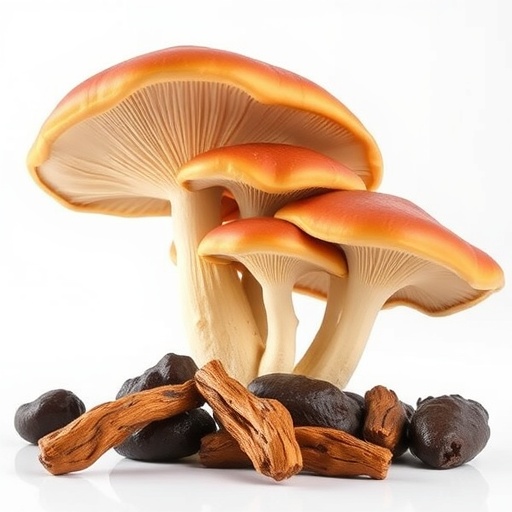
Recent research conducted by a team of scientists led by Chen, Y., and colleagues has brought to light the substantial role of Ganoderma lucidum polysaccharide in ameliorating learning and memory impairments associated with aging. This study, published in the prestigious journal Scientific Nature, sheds light on the potential of natural compounds to counteract age-related cognitive decline, particularly emphasizing the significance of the gut microbiota’s functionality. Remarkably, it has been established that, within the context of aging, the gut microbiome presents profound influences on neurological health, paving the way for innovative approaches to treating cognitive impairments.
Ganoderma lucidum, commonly referred to as reishi mushroom, has been traditionally celebrated for its myriad health benefits, including immune modulation, anti-inflammatory properties, and promoting longevity. This study extends its therapeutic potential, exploring the polysaccharide component specifically. Known for its bioactive constituents, the polysaccharides extracted from Ganoderma lucidum are investigated for their neuroprotective effects, particularly in preclinical trials involving mouse models subjected to cognitive and memory challenges induced by D-galactose.
D-galactose, a sugar molecule, has been employed in various research endeavors to replicate certain aspects of the aging process. When administered in high doses, it can induce oxidative stress, thereby triggering a cascade of neurodegenerative changes. Employing this model allowed researchers to focus on not only the cognitive performance of the mice but also the biochemical mechanisms at play within their neural architecture. The findings demonstrated a notable improvement in memory function and learning capabilities among the subjects receiving Ganoderma lucidum polysaccharide.
One of the striking outcomes of the research revolves around the intricate link between cognition and the gut microbiome. Each mouse was evaluated based on behavioral assessments, including maze tests to gauge spatial memory and learning proficiency. Concurrently, microbial profiling was performed to elucidate the alterations occurring in intestinal flora upon polysaccharide administration versus a control group. The results depicted a significant reinvigoration of beneficial bacteria, which correlated positively with improved cognitive functions.
The polysaccharides were found to mediate neuroprotective mechanisms through antioxidant activity, subduing oxidative stress levels and, importantly, modifying the gut microbiota composition. As we delve deeper into understanding how intestinal flora affects the brain, the gut-brain axis emerges as a pivotal element. This pathway underlines how microbial metabolites can influence brain function, with implications for health and cognitive resilience in aging populations.
Furthermore, the exploration of Ganoderma lucidum polysaccharide offers exciting prospects for developing supplementary treatments for age-related cognitive decline. With a burgeoning interest in functional foods and herbal medicine, the findings prompt a reevaluation of how natural extracts can deliver cognitive benefits. While pharmacological interventions have dominated the narrative of cognitive enhancement, this research proposes that nature may hold the answers through functional compounds in plant-based sources.
Potential pathways around the interactions between polysaccharides and cognitive benefits demand further exploration. As we expand our understanding, it is crucial to address the biochemical pathways influenced by polysaccharides from Ganoderma lucidum and how they can initiate a cascade to mitigate memory impairment. Addressing these connections could lead to novel strategies targeting therapeutic advancements for neurodegenerative diseases.
Safety and bioavailability remain critical components in the appraisal of any polysaccharide-based therapeutic regimen. Within the study, no adverse effects were reported, indicating that Ganoderma lucidum polysaccharide could be a viable candidate for further clinical studies. Given the growing elder demographic worldwide, research focused on natural and safe interventions could yield significant socio-economic benefits, coinciding with public health agendas aiming to enhance the quality of life for aging populations.
The implications of these findings extend beyond mere cognitive performance. They invite a holistic view of health, intertwining mental capacities with digestive health and suggesting that a balanced gut flora may be paramount in aging well. The potential cognitive enhancement through diet and naturally sourced compounds could shift the societal perspective on how we approach aging and cognitive decline.
In an age where medical industries frequently herald biopharmaceuticals, this study signifies a renewed interest in natural remedies devoid of side effects commonly associated with synthetic drugs. Mobilizing a return to our roots in herbalism could not only benefit individual health outcomes but also represent a sustainable approach to medicine.
As the landscape of neurological health evolves with ongoing research, this study underscores the necessity for interdisciplinary approaches. By integrating perspectives from fields such as nutrition, neurology, and microbiology, we can foster a comprehensive understanding of how compounds like those found in Ganoderma lucidum can lead to age-resilient strategies.
In conclusion, this promising research elucidates the capabilities of Ganoderma lucidum polysaccharide in not only preserving cognitive function but also positively influencing the gut microbiome. The emerging knowledge beckons further investigations, inviting academia and practitioners to collaborate in advancing our understanding of the relationship between natural compounds and neurological longevity.
The future of aging with grace may lie in our understanding of the complex interactions between diet, microbiota, and cognitive health, making this a critical area for ongoing exploration.
Cite Scienmag News
Beatrice Stafford. (August 24, 2025). Ganoderma Lucidum Polysaccharides Boost Memory, Gut Health. Scienmag. https://scienmag.com/ganoderma-lucidum-polysaccharides-boost-memory-gut-health/
Beatrice Stafford. "Ganoderma Lucidum Polysaccharides Boost Memory, Gut Health." Scienmag, 24 August 2025, https://scienmag.com/ganoderma-lucidum-polysaccharides-boost-memory-gut-health/. Accessed 5 September 2026.
Beatrice Stafford. "Ganoderma Lucidum Polysaccharides Boost Memory, Gut Health." Scienmag. August 24, 2025. https://scienmag.com/ganoderma-lucidum-polysaccharides-boost-memory-gut-health/


