


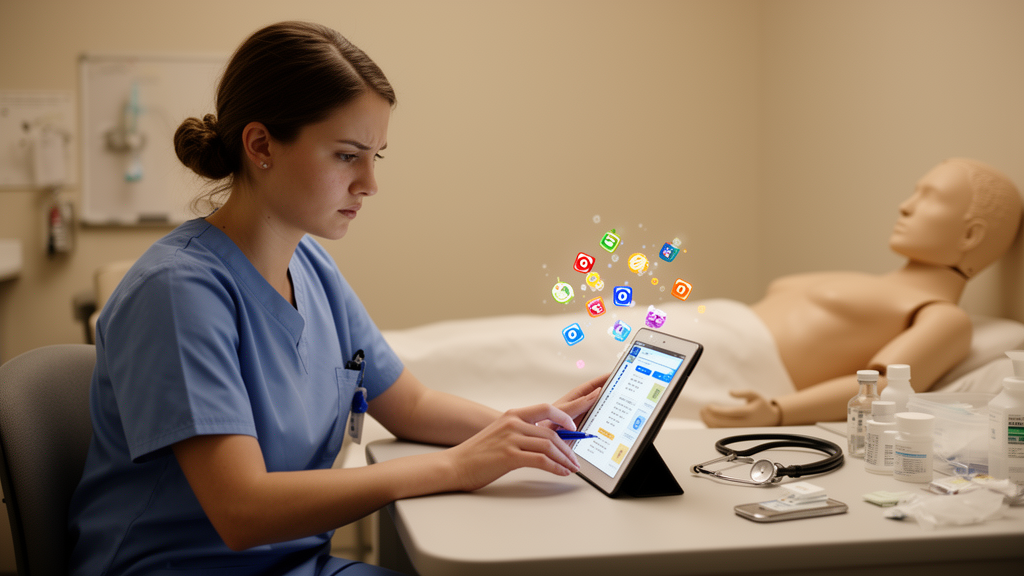
A multicenter quasi-experimental study of 90 third-year undergraduate nursing students found that those using the EducaPlay gamified digital assessment package had higher immediate case-based learning scores than students assessed with traditional paper-based methods. The participants came from three nursing institutes and remained in their existing classroom assignments, with 45 students in each condition rather than individual randomization. After adjustment for baseline satisfaction, the estimated mean case-based learning score was 89.20 in the EducaPlay condition and 69.07 in the traditional condition. The adjusted difference was 20.13 points, with a 95% confidence interval of 17.12 to 23.14 and p<0.001.
Both assessment conditions used the same pediatric cases, learning objectives, assessment content and scoring criteria. The main difference was how those materials were delivered and reviewed. EducaPlay combined tablet-based delivery, interactive clinical decisions, game elements, automated feedback and instructor-facilitated review. Traditional assessment used paper-based cases, written responses and instructor-led review. The primary outcome was the immediate post-assessment case-based learning score, analyzed using analysis of covariance adjusted for baseline satisfaction. Changes from pre-assessment to post-assessment in satisfaction, perceived stress, motivation and interaction with educational content were secondary outcomes, analyzed with Mann–Whitney U tests and Bonferroni correction.
The assessment-experience results were mixed. EducaPlay was associated with more favorable changes in satisfaction, motivation and interaction with educational content than traditional assessment, with p<0.001 for each comparison. Perceived stress, however, moved in the opposite direction: it increased among students using EducaPlay and decreased among those receiving traditional assessment, with p<0.001 for the comparison. Because EducaPlay combined several features, the study assessed the package as a whole and did not establish which individual feature was associated with any particular outcome. The results therefore demonstrate differences between the two study conditions, not that gamification alone produced the score or experience differences.
The findings also require cautious interpretation because participants were not randomly assigned. Existing classroom assignments determined which assessment condition they experienced, leaving potential for selection differences and other confounding influences. The score contrast was measured immediately after assessment, and the supplied study abstract does not establish whether the differences persisted beyond that period. In addition, the population was limited to third-year nursing students in three institutes, and the assessed content consisted of pediatric cases. The findings consequently apply most directly to the educational setting and assessment package examined in this study.
Overall, the study associated the multicomponent EducaPlay package with higher immediate case-based learning scores and more favorable changes in satisfaction, motivation and interaction with educational content than traditional paper-based assessment. Its simultaneous association with increased perceived stress shows why performance and students’ assessment experiences should be evaluated together. The authors called for further evaluation of EducaPlay as an interactive approach to undergraduate nursing assessment, while the reported evidence supports that further assessment rather than a claim that the package should replace conventional methods. No individual component, including automated feedback, game elements, tablet delivery or instructor-facilitated review, was shown to explain the observed differences on its own.
Subject of Research: Comparison of gamified digital and traditional assessment in third-year undergraduate nursing education
Article Title: EducaPlay gamified digital assessment versus traditional assessment in undergraduate nursing education: a quasi experimental study
Article References: Shamsi, A., Zaeri, R., Raei, M., Pourebrahimi, M., & Delfani, F. (2026). EducaPlay gamified digital assessment versus traditional assessment in undergraduate nursing education: a quasi experimental study. BMC Medical Education. https://doi.org/10.1186/s12909-026-10328-1
Image Credits: AI Generated
DOI: 10.1186/s12909-026-10328-1
Keywords: nursing education, gamified assessment, digital learning, case-based learning, undergraduate nursing, student motivation, perceived stress, assessment satisfaction, quasi-experimental study, EducaPlay, gamified, digital
Cite Scienmag News
Courtney Benton. (October 26, 2026). Gamified Nursing Assessment Linked to Higher Scores and More Stress. Scienmag. https://scienmag.com/gamified-nursing-assessment-linked-to-higher-scores-and-more-stress/
Courtney Benton. "Gamified Nursing Assessment Linked to Higher Scores and More Stress." Scienmag, 26 October 2026, https://scienmag.com/gamified-nursing-assessment-linked-to-higher-scores-and-more-stress/. Accessed 26 October 2026.
Courtney Benton. "Gamified Nursing Assessment Linked to Higher Scores and More Stress." Scienmag. October 26, 2026. https://scienmag.com/gamified-nursing-assessment-linked-to-higher-scores-and-more-stress/


