


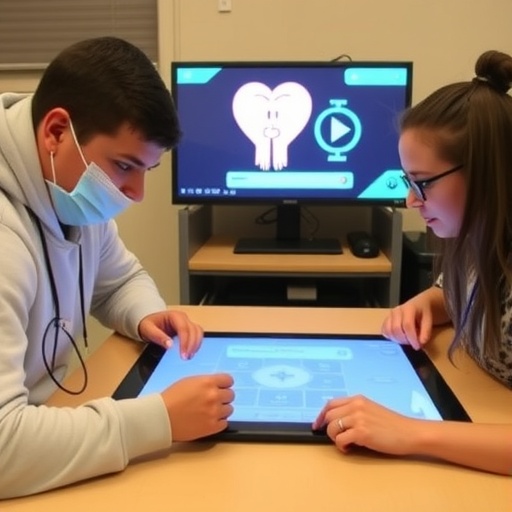
In recent years, the landscape of education has been transformed by innovative approaches designed to enhance learner engagement and knowledge retention. One of the most intriguing developments in this area is the use of gamification, which involves incorporating game-like elements into non-game contexts. A recent study sheds light on the significant impact of gamification in the education of health professions students, particularly focusing on critical subjects such as infertility and abortion. This research, led by Bahrami, Azizi, and Siyah Mansoory, underscores the potential of gamified learning environments to not only inform but also empower future healthcare providers.
As educational institutions strive to create meaningful learning experiences, traditional methods often fall short in cultivating interest among students, especially when they encounter sensitive topics like infertility and abortion. The study illustrates that gamification can bridge this gap by making learning more interactive and engaging. By turning complex and emotionally charged subjects into interactive, game-like scenarios, the research demonstrates that students are more likely to absorb important content and develop a deeper understanding of these critical issues.
Health professions students face numerous challenges in their education, particularly when it comes to subjects that may be perceived as taboo or difficult to discuss. Infertility and abortion are loaded topics that require not only factual knowledge but also empathy and understanding. The study found that gamification reduces the anxiety often associated with these subjects, creating a safe environment for students to explore and learn without the traditional stigmas attached. By presenting information in a game format, the study suggests that students are more willing to engage and express their thoughts, leading to enhanced discussions and learning outcomes.
The findings of this research are particularly relevant given the current global discourse surrounding reproductive health and rights. As society grapples with these contentious issues, well-informed healthcare providers are crucial for delivering compassionate care and support. The study indicates that gamification not only enhances factual retention but also equips students with the necessary skills to approach such sensitive topics with greater confidence. This transformational approach in education may ultimately contribute to better patient care, as healthcare professionals who are well-versed in these subjects will be more effective in their roles.
Moreover, the study presents compelling data that showcases the effectiveness of gamified learning over traditional classroom settings. Students engaged in gamified environments demonstrated higher levels of motivation and satisfaction, suggesting that this method of teaching cultivates an intrinsic drive to learn. Such motivation is essential for fostering lifelong learning, which is vital in the continually evolving field of healthcare. The researchers argue that incorporating gamification into health education aligns with the broader trend towards experiential learning, where students learn through doing rather than passive observation.
The gamified learning strategies employed in the study included various interactive elements such as quizzes, simulations, and scenario-based learning activities. These components allowed students to engage with the material in a hands-on manner, fostering a deeper connection to the subject matter. The researchers noted how these elements work synergistically to create a rich learning experience that resonates with students, who are more inclined to participate actively in their education. As a result, gamification emerges not merely as an alternative teaching method but as a necessary evolution in educational practice.
In practice, the implications of this research are vast. Institutions looking to enhance their curriculum can draw inspiration from these findings, applying gamified learning principles to a range of subjects. This approach not only promises to elevate student engagement but also prepares healthcare providers to navigate the complexities of real-world medical scenarios. As healthcare continues to adapt to new challenges, equipping professionals with robust educational tools becomes more critical than ever.
The incorporation of technology into education also plays a significant role in the efficacy of gamification. The study highlights how digital platforms can facilitate gamified learning experiences, allowing students to engage with content anytime and anywhere. This accessibility is particularly beneficial in the field of health professions education, where students often balance demanding schedules. The flexibility of online gamified platforms increases accessibility and ensures that all students have the opportunity to benefit from this innovative educational approach.
Ultimately, the research conducted by Bahrami and colleagues raises important questions about the future of educational methodologies in health professions training. As educators seek effective ways to address sensitive health topics, gamification stands out as a promising alternative. The study’s findings advocate for a shift towards more interactive, engaging, and student-centered learning environments that empower healthcare students to approach complex subjects with confidence and empathy.
Moreover, as the study suggests, this shift is not merely about enhancing student engagement; it reflects a deeper understanding of the changing dynamics within healthcare education. As society evolves, so too must the approaches to training future healthcare providers. Leveraging gamification can help to meet the needs of the current generation of learners, who often seek immersive and interactive educational experiences. By embracing these changes, educational institutions can ensure that they prepare their graduates not only to possess knowledge but also to exhibit the compassion and understanding required in the practice of medicine.
In conclusion, the research on the effectiveness of gamification in the education of health professions students regarding infertility and abortion provides a robust framework for future educational practices. By reimagining how sensitive topics are taught, educators can create a culture of openness and understanding that benefits both students and patients alike. This innovative approach not only enhances the educational experience but also plays a crucial role in shaping future generations of healthcare providers who are well-equipped to meet the demands of modern medical practice.
As the educational landscape continues to evolve, it will be crucial for educators, administrators, and policymakers to evaluate and implement strategies that foster engagement and understanding in their curriculums. Gamification stands at the forefront of these strategies, promising not only to revolutionize teaching methods but also to ultimately improve patient outcomes through better-prepared healthcare professionals. The future of health education is bright, with gamification paving the way for a more engaging and effective learning environment.
Bahrami, M., Azizi, S.M. & Siyah Mansoory, M. The effectiveness of gamification on learning topics related to infertility and abortion among health professions students.
BMC Med Educ 25, 1470 (2025). https://doi.org/10.1186/s12909-025-08049-y
Cite Scienmag News
Courtney Benton. (October 22, 2025). Gamification Boosts Health Students’ Understanding of Infertility. Scienmag. https://scienmag.com/gamification-boosts-health-students-understanding-of-infertility/
Courtney Benton. "Gamification Boosts Health Students’ Understanding of Infertility." Scienmag, 22 October 2025, https://scienmag.com/gamification-boosts-health-students-understanding-of-infertility/. Accessed 4 September 2026.
Courtney Benton. "Gamification Boosts Health Students’ Understanding of Infertility." Scienmag. October 22, 2025. https://scienmag.com/gamification-boosts-health-students-understanding-of-infertility/


