

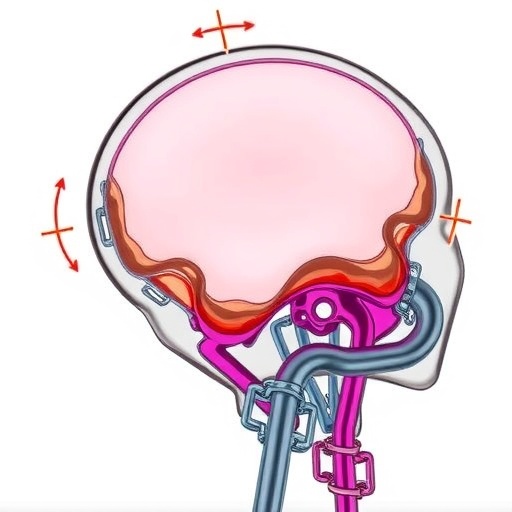
In a groundbreaking advancement for the future of human-machine interaction, gallium-based liquid metals (Ga-LMs) have emerged as extraordinary materials that promise to revolutionize the design and functionality of next-generation interfaces. Unlike traditional rigid conductors, Ga-LMs are unique in their ability to remain liquid at room temperature while exhibiting exceptional electrical conductivity and a natural fluidity that allows them to flow and deform similarly to water. This rare combination offers unprecedented opportunities for constructing highly adaptive and biomimetic interfaces that seamlessly integrate with complex biological tissues, potentially redefining the landscape of wearable technology, soft robotics, and implantable medical devices.
The physical properties of Ga-LMs distinguish them from conventional solid metals and synthetic polymers. Their liquid state enables them to effortlessly conform to soft, dynamic surfaces, such as human skin or internal organs, overcoming the fundamental mechanical mismatches faced by traditional materials. This fluidic nature not only endows Ga-LMs with mechanical flexibility but also facilitates self-healing properties in electronic circuits. When subjected to mechanical damage, circuits leveraging Ga-LM interconnects can autonomously restore electrical pathways, drastically enhancing device longevity and reliability without external intervention.
Intrinsically biocompatible, Ga-LMs have demonstrated low toxicity levels, making them suitable candidates for direct contact with living tissues over extended periods. This safe integration is critical for developing next-generation wearable health monitoring systems that continuously track physiological signals without causing irritation or damage. By embedding Ga-LMs into stretchable sensors, engineers can capture vital data such as heart rate, muscle activity, and temperature with a precision comparable to that of traditional rigid sensors but with the added benefit of unparalleled comfort and adaptability to body movements.
Fabricating Ga-LM structures involves sophisticated patterning techniques, with cutting-edge methods like 3D printing and microfluidic channel integration enabling precise control of circuit geometry and complexity. These advanced manufacturing approaches allow for the creation of intricately designed, high-performance electronic systems that retain fluidity and robustness. The accurate deposition and molding of Ga-LM components facilitate scalable production of multifunctional devices that are not only flexible but also capable of performing complex sensing and actuation tasks simultaneously.
Beyond their mechanical and electrical advantages, Ga-LMs serve as essential platforms for integrating additional functionalities through the incorporation of novel additives. Embedding magnetic nanoparticles or piezoelectric materials into Ga-LM matrices can bestow these liquid metals with active capabilities such as energy harvesting and responsive shape transformation. Such hybrid systems open exciting avenues for autonomous devices capable of sensing environmental stimuli, harvesting ambient energy sources, and adapting their form or function in real time—a step toward truly intelligent and self-sustaining human-machine interfaces.
Despite these promising developments, the technology faces several critical challenges that must be addressed to unlock its full potential. Researchers emphasize the need for improvements in long-term stability, ensuring that Ga-LM based systems maintain performance and reliability under continuous mechanical strain and environmental exposure. Biosafety concerns also necessitate extensive studies to confirm the non-toxicity of Ga-LMs and their composites over prolonged implantation or wearable use. Moreover, scalable manufacturing processes remain a formidable hurdle, requiring innovation in materials science and engineering to enable mass production without sacrificing precision or material integrity.
The versatility of Ga-LMs extends to their use in soft robotics, where their ability to freely deform and electrically conduct makes them ideal candidates for building actuators and sensors that mimic natural muscle movements. Liquid metal circuits embedded in soft robotic components can adapt to dynamic mechanical loads, allowing robots to interact more fluidly with unpredictable environments or delicate objects. This capability holds tremendous promise for medical robotics, prosthetics, and adaptive manufacturing systems that require compliant and sensitive physical interfaces.
In medical implant applications, the fluidic and biocompatible features of Ga-LMs facilitate the creation of devices that not only monitor physiological parameters but also actively interface with nervous systems or tissues. Artificial nerves constructed with Ga-LM elements can potentially restore or enhance sensory and motor functions by transmitting signals with high fidelity while conforming seamlessly to biological contours. Such integration paves the way for therapeutic devices that improve patient outcomes in neurology and regenerative medicine, providing more effective and long-lasting solutions.
Key to advancing Ga-LM technologies is the development of closed-loop systems where sensing, power supply, decision-making, and execution are tightly integrated. The unique electrical and mechanical properties of Ga-LMs enable circuits capable of self-powered operation through energy harvesting from physiological or environmental movements. These systems could autonomously perceive stimuli, process information, and deliver appropriate responses without external control, embodying a new paradigm of intelligent machines that function more like living organisms than traditional electronics.
Future research directions include refining material compositions to enhance magnetic, optical, or thermal functionalities and engineer responsive behaviors such as shape-memory effects or controlled drug release. By exploiting the multifunctionality of Ga-LMs, scientists aim to build interfaces that learn and adapt to user needs, environmental conditions, and task requirements. Such adaptability could result in biomedical devices that personalize therapeutic regimens or wearable technologies that optimize user experience dynamically, marking a significant leap toward personalized medicine and smart environments.
Collectively, the transformative properties of gallium-based liquid metals are poised to redefine the concept of embodied intelligence in machines. By enabling energy harvesting, flexible information transmission, and autonomous operation, Ga-LMs support the construction of sophisticated human-machine ecosystems marked by seamless integration and fluid collaboration. This emerging class of materials heralds a future where machines are not merely tools but partners endowed with perception, self-adaptation, and learning capabilities, revolutionizing industries ranging from healthcare and robotics to consumer electronics and beyond.
This scientific review published in Science Bulletin underscores the pivotal role interdisciplinary collaboration will play in surmounting current limitations and accelerating the translation of Ga-LM technologies from laboratory concepts to real-world applications. Through continued innovation in material science, bioengineering, and manufacturing, the vision of a fully integrated intelligent interface—where machines perceive, adapt, and evolve in harmony with human users—draws ever closer to realization, heralding a new era of human-machine synergy.
Subject of Research: Gallium-based liquid metals for advanced human-machine interfaces and multifunctional applications
Article Title: Advances in Ga-LMs: design strategies, fabrication techniques, and multifunctional application
Web References: http://dx.doi.org/10.1016/j.scib.2026.01.073
Image Credits: ©Science China Press
Keywords
Gallium liquid metals, human-machine interfaces, wearable electronics, soft robotics, biocompatibility, self-healing circuits, energy harvesting, flexible sensors, advanced fabrication, multifunctional devices, embodied intelligence, intelligent ecosystems


