

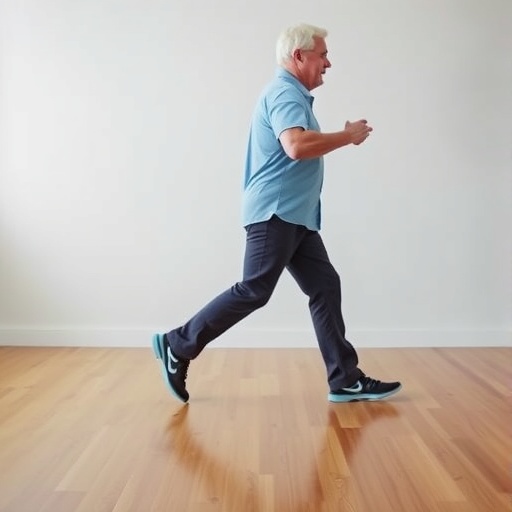
In recent years, the management of Parkinson’s disease (PD) has gained significant traction within the sphere of complementary and alternative medicine. The gradual decline of motor skills and balance associated with this degenerative neurological disorder poses substantial challenges to patients. To address these challenges, innovative treatments that emphasize movement and rehabilitation techniques are being explored. One such approach has emerged from a recent clinical trial focusing on a novel gait training program, specifically utilizing the Fisior® sequential square mat, which appears to enhance balance and improve gait among individuals with Parkinson’s disease.
The randomized clinical trial, conducted by a team of researchers including Alegre-Tamariz, Ramirez, and Runzer-Colmenares, aimed to evaluate the efficacy of the Fisior® mat as an intervention in a cohort of patients diagnosed with Parkinson’s disease. This multi-center study involved a diverse population representative of various stages of the disease, ensuring comprehensive data collection and analysis. The trial participants were randomly assigned into two distinct groups: one receiving tailored gait training using the Fisior® mat, while the control group engaged in standard physical therapy exercises without the innovative equipment.
Through this randomized approach, the researchers sought to mitigate biases that can often skew clinical findings. The Fisior® mat, designed with a unique sequential square pattern, encourages patients to engage in various locomotive tasks that challenge their balance. This hands-on training, integrated with guided supervision, strives to create an environment where patients not only improve their gait but also enhance overall stability, a critical factor in preventing falls.
The results of the study revealed promising outcomes for participants utilizing the Fisior® mat. Quantitative assessments of balance and gait indicated statistically significant improvements in the experimental group when compared to their counterparts in standard physical therapy. Patients reported a heightened sense of confidence while walking and a reduction in the frequency of falls, a well-documented hazard for those living with Parkinson’s disease. This enhancement in functional mobility highlights the potential of targeted rehabilitation programs in improving quality of life for these individuals.
Furthermore, the intervention was well received by participants, with many expressing their enthusiasm for the novel training regimen. Engaging exercises using the Fisior® mat not only provided a structured routine but also introduced an element of enjoyment, which is often lacking in traditional therapy settings. The researchers noted that patient adherence to the program was notably high, a critical aspect of rehabilitation success. This factor underscores the importance of patient-centered approaches when implementing treatment modalities for chronic conditions like Parkinson’s.
The study’s outcomes align with existing literature that supports the integration of innovative rehabilitation techniques in Parkinson’s disease management. Prior research has demonstrated the benefits of physical activity in mitigating some of the motor symptoms associated with the disease. The Fisior® mat capitalizes on these principles by fostering dynamic movements that engage multiple muscle groups simultaneously, thereby enhancing both muscle strength and coordination.
In analyzing the neurophysiological underpinnings of the observed benefits, the researchers posited that the structured yet diverse range of exercises provided through the Fisior® mat may stimulate neuroplasticity, the brain’s ability to reorganize itself by forming new neural connections. This phenomenon has been identified as a key factor in recovery processes following neurological insult and could potentially explain the improvements noted in gait and balance. By challenging the participants in a controlled manner, the mat promotes adaptive responses essential for those combating the progressive nature of Parkinson’s disease.
However, while the findings from this trial are encouraging, they also raise questions for future directions in research. The relative short duration of the study, combined with the need for long-term follow-up, suggests that further investigations are necessary to determine the enduring effects of the Fisior® gait training program. It remains crucial to understand how sustained engagement with such therapeutic interventions can translate into long-term benefits for movement and quality of life in Parkinson’s patients.
Moreover, expanding the sample size and diversifying participant demographics could shed light on the generalizability of these findings. It is important to assess whether the improvements observed across a homogeneous group extend to a broader population of individuals living with varying degrees of Parkinson’s disease.
In final consideration, the textual narrative surrounding this research is testimony to the transformative potential of novel rehabilitative strategies in chronic disease management. With rehabilitation practices continuously evolving, the outcomes from the trial conducted by Alegre-Tamariz and colleagues signify a step forward in reinforcing the viability of complementary therapies alongside conventional treatment options. The Fisior® sequential square mat exemplifies how integrating innovative methodologies into rehabilitation can foster not just physical improvements but also enhance the emotional and psychological well-being of patients afflicted by Parkinson’s disease, paving the way for holistic health advancements in the field.
The implications of this research extend beyond clinical boundaries, suggesting a new paradigm for viewing physical exercise as integral to the management of chronic diseases. As ongoing discussions about effective PD interventions advance, the importance of research that provides actionable insight and practical applications will continue to resonate across both clinical and community settings. By championing innovation like the Fisior® mat, researchers and practitioners alike can forge meaningful paths toward elevating care standards for those affected by Parkinson’s disease.
In conclusion, the work of Alegre-Tamariz, Ramirez, and Runzer-Colmenares underlines the necessity of adaptation and ingenuity within therapeutic practices for Parkinson’s disease. By embracing a more dynamic and engaging approach to rehabilitation through programs like the Fisior® mat, we stand on the brink of redefining expectations for patient outcomes, elevating both mobility and dignity for individuals battling this challenging condition.
Subject of Research: Effects of gait training with the Fisior® sequential square mat on balance and gait in patients with Parkinson’s disease.
Article Title: Effects of a gait training program with the Fisior® sequential square mat on balance and gait in patients with Parkinson’s disease: a randomized clinical trial.
Article References:
Alegre-Tamariz, J., Ramirez, C., Runzer-Colmenares, F.M. et al. Effects of a gait training program with the Fisior® sequential square mat on balance and gait in patients with Parkinson’s disease: a randomized clinical trial.
BMC Complement Med Ther (2026). https://doi.org/10.1186/s12906-026-05252-2
Image Credits: AI Generated
DOI: 10.1186/s12906-026-05252-2
Keywords: Parkinson’s disease, gait training, Fisior mat, balance, rehabilitation, clinical trial.


