

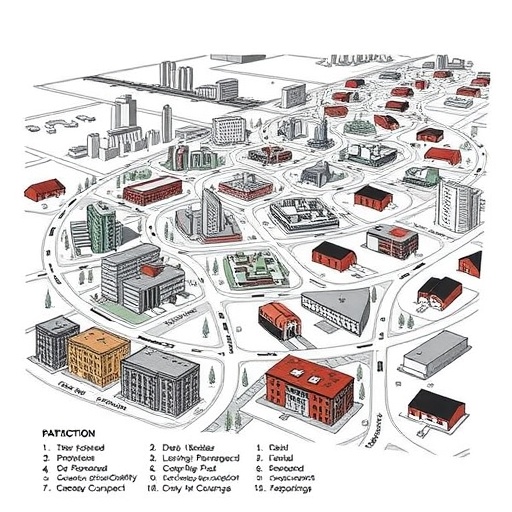
The urban landscape of many cities has been challenged by the persistence of brownfield sites—abandoned or under-used properties that are often complicated by contamination. These locations not only pose environmental hazards, but they also represent significant opportunities for regeneration and economic revitalization. A recent study sheds light on the intricacies of urban brownfield redevelopment in China, employing an innovative approach through the fuzzy Delphi method. This research paves the way for a deeper understanding of the multifaceted determinants that influence the successful transformation of these neglected sites.
In the ever-evolving narrative of urban development, brownfield sites are critical focal points for sustainable practices. As cities expand and populations grow, the demand for space often leads to the neglect of areas that could be revitalized instead of being developed anew. The study by Jie et al. emphasizes the importance of identifying the key factors that drive redevelopment efforts, focusing on a unique methodology to derive insightful conclusions about the processes involved.
The fuzzy Delphi method, which combines expert opinions and fuzzy logic, was the cornerstone of this research. By leveraging the knowledge of professionals entrenched in the field of urban development, the authors were able to discern a range of determinants that contribute to successful brownfield redevelopment. The application of fuzzy logic allows for a nuanced analysis of these factors, accommodating the inherent uncertainties present in urban redevelopment scenarios.
In the context of China, where urbanization is at an unprecedented scale, the study highlights several pressing issues. The rapid pace of urban growth has left behind numerous brownfield sites, many of which are in prime locations but burdened by pollution and socio-economic challenges. The need for a cohesive redevelopment strategy is dire, calling for multi-stakeholder involvement and innovative approaches to land use. The findings from this research underscore the necessity of addressing these challenges through collaborative efforts and informed decision-making.
One of the significant findings from Jie and colleagues is the role of environmental assessments in the redevelopment process. Comprehensive evaluations can ascertain the extent of contamination present at brownfield sites, ultimately guiding remediation efforts. The study suggests that transparency in environmental data is crucial to gain public trust and attract potential investors interested in redevelopment opportunities.
Community engagement emerges as another vital element in fostering successful redevelopment initiatives. The research illustrates the need for involving local populations in the redevelopment dialogue. By integrating community voices, developers and policymakers can better align their projects with the actual needs and desires of those who live in proximity to brownfield locations. This approach not only enhances project acceptance but also fosters a sense of ownership among residents, which is essential for long-term success.
Furthermore, the economic aspects of brownfield redevelopment cannot be overstated. The study denotes the importance of financial incentives and public-private partnerships as mechanisms that can drive the revitalization of these sites. By establishing a framework that encourages investment, cities can effectively harness the potential of brownfield areas, transforming them into vibrant urban spaces that contribute to economic growth.
Political will is another determinant identified in the study. The commitment from government entities at various levels can significantly influence the pace and efficacy of brownfield redevelopment efforts. Policy frameworks that are supportive and inclusive can create conducive environments for innovation and execution. The study emphasizes the significance of lobbying for legislative frameworks that facilitate easier processes for redevelopment, minimizing bureaucratic hurdles that often stall projects.
Equally critical is the integration of sustainable practices in the design and implementation of redevelopment strategies. The research discusses how sustainability not only addresses environmental concerns but also enhances the overall quality of life in urban areas. Redevelopment projects that prioritize green spaces, efficient energy use, and ecological restoration have the potential to foster healthier urban environments.
The study also identifies the importance of technological advancements in facilitating brownfield redevelopment. The rise of smart technologies offers new avenues for monitoring, managing, and remediating contaminated sites more effectively. The use of geographic information systems (GIS), for instance, allows stakeholders to visualize data related to brownfield locations, enhancing strategic planning efforts and decision-making processes.
Moreover, the role of education and awareness is highlighted as a crucial factor in shaping public perception and fostering proactive attitudes towards brownfield redevelopment. Engaging educational institutions and community organizations can cultivate a culture of sustainability, wherein individuals are informed about the implications of living near brownfield sites and the benefits of their redevelopment.
The findings and methodologies outlined in the study present a valuable contribution to the existing body of knowledge surrounding urban redevelopment. By articulating a clearer picture of the determinants that guide the successful reclamation of brownfield sites, the authors provide a useful framework for other researchers and practitioners involved in urban development initiatives both in China and around the world.
In conclusion, as urban centers grapple with the pressing need to revitalize brownfield sites, Jie et al.’s research emerges as a guiding beacon. The study encapsulates the complex web of factors involved in transforming neglected spaces into thriving community assets. Ultimately, the insights gained from this research invite stakeholders to rethink their approaches and consider innovative methodologies to shape the future of urban landscapes. As cities continue to grow and evolve, the successful reclamation of brownfields will play a crucial role in leading the charge towards sustainable urban development initiatives.
Addressing challenges through research and collaboration, the exploration of the fuzzy Delphi method in determining factors for brownfield redevelopment serves to underscore the ongoing conversation about sustainability and urban renewal. With continued focus and action, it is possible to turn many brownfield sites into vibrant areas that not only house businesses and residences but also foster a sense of community and environmental stewardship.
Subject of Research: Determinants of urban brownfield redevelopment in China
Article Title: Constructing determinants of urban brownfield redevelopment in China through the fuzzy Delphi method
Article References:
Jie, Z., Omar, W.R.W., Masrom, S. et al. Constructing determinants of urban brownfield redevelopment in China through the fuzzy Delphi method. Discov Sustain (2026). https://doi.org/10.1007/s43621-025-02339-7
Image Credits: AI Generated
DOI: 10.1007/s43621-025-02339-7
Keywords: Urban redevelopment, brownfield sites, fuzzy Delphi method, sustainability, community engagement, environmental assessment, economic incentives, policy frameworks, technological advancement.


