


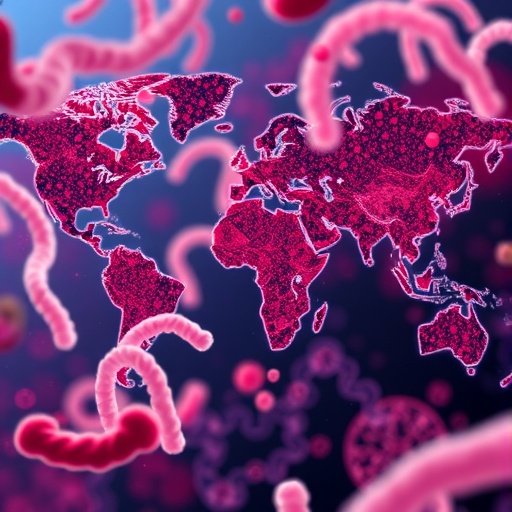
In a groundbreaking exploration of the unseen microbial networks that form the backbone of our global food systems, a consortium of leading scientists has unveiled how these microscopic communities play a crucial role in sustaining not only agriculture but also human and environmental health. Using cutting-edge omics technologies, the collaborative work spearheaded by Prof. Paul Cotter, Dr. Tanja Kostic, and Dr. Paula Fernández Gómez elucidates the intricate web of interactions within microbiomes that uphold the resilience and productivity of agri-food systems worldwide. This research propels a paradigm shift in how we understand and manage the microbiological dimension of food security and sustainability.
Microbiomes, the collective genomes of microorganisms inhabiting various environments, have long been recognized for their multifaceted contributions to nutrient cycling, pathogen resistance, and ecosystem stability. However, this new integrative study systematically maps these microbial communities across terrestrial and aquatic agricultural landscapes, revealing their hidden interconnectedness and functional attributes. By leveraging omics methodologies—such as metagenomics, metatranscriptomics, and metabolomics—the research team has pieced together the dynamic relationships that sustain soil fertility, crop health, and animal microbiota, which in turn influence human nutrition and immunity.
The agricultural sector is facing a formidable crisis precipitated by climate change, excessive antibiotic use, and the reliance on chemical pesticides, all of which erode the beneficial microbial diversity critical for ecosystem function. The study details how these anthropogenic stressors disrupt native microbiomes, leading to diminished soil quality, increased vulnerability to plant diseases, and the proliferation of antimicrobial resistance. Such disturbances jeopardize sustainable food production and necessitate innovative strategies to restore and maintain healthy microbiomes.
One of the study’s most compelling contributions is its call for an integrated, systems-based approach to microbiome management. Recognizing that the microbiome extends beyond isolated scientific domains, the authors advocate for collaborative networks involving researchers, policy makers, innovators, educators, and consumers. This collective framework is essential to address the complex challenges threatening agri-food microbiomes and to translate scientific discoveries into practical solutions that promote ecological balance and food system resilience.
The deployment of omics technologies has been pivotal in capturing the complexity of microbial consortia at unprecedented resolution. By combining genetic sequencing data with functional analyses, the researchers have identified keystone microbial taxa and metabolic pathways that underpin nutrient assimilation and disease suppression in crops and livestock. This granular understanding enables the design of microbiome-based interventions—such as targeted probiotics, biofertilizers, and biocontrol agents—that can enhance productivity and reduce dependency on synthetic inputs.
Furthermore, the study underscores the bidirectional relationship between human health and agri-food microbiomes. The microbiota associated with food not only affects nutritional quality but also influences the human gut microbiota, which plays a critical role in immune function and disease prevention. As such, preserving microbiome integrity across the food supply chain emerges as a vital strategy for safeguarding public health in tandem with environmental sustainability.
The researchers emphasize that current regulatory frameworks and agricultural practices often overlook the importance of microbiomes. The webinar and subsequent discussions call for the incorporation of microbiome considerations into policy making, standard-setting, and educational curricula. Engaging consumers through awareness campaigns about microbiome-friendly practices can drive demand for sustainable products and support ecosystem stewardship at the grassroots level.
Technical insights from the project reveal that microbial networks exhibit redundancy and adaptability, allowing food systems to buffer environmental fluctuations to some extent. However, when stressors accumulate beyond thresholds, microbiome collapse can occur, resulting in system instability. Therefore, monitoring microbial indicators through high-throughput sequencing and bioinformatics becomes crucial for early detection and intervention, enabling precision agriculture aligned with microbiome health.
Aquaculture and fisheries, often neglected in microbiome research, feature prominently in the study’s scope. The investigators describe how microbial communities in aquatic environments regulate nutrient cycling and pathogen suppression, vital for maintaining fish stock health and water quality. This broadens the concept of the agri-food system to include all food production realms, facilitating holistic management practices that consider both land and water ecosystems.
In parallel, the study brings attention to probiotics as a promising avenue for microbiome enhancement. Unlike conventional probiotics limited to human health, the approach extends to the application of specialized microbial strains in crops and animals, tailored to bolster resilience and nutrient efficiency. This cross-domain probiotic strategy opens new frontiers in sustainable agriculture and food safety.
The convergence of microbiology, ecology, and technological innovation presented in this work signals an emergent frontier where microbiome science can drive transformative changes in food systems worldwide. It calls on the global scientific community and stakeholders to prioritize microbiomes in research funding, cross-sector partnerships, and innovation pipelines. Ultimately, preserving and harnessing agri-food system microbiomes stands as a keystone for feeding a growing population within planetary boundaries, ensuring a healthier future for people and the planet.
This landmark research will be further discussed in detail during the upcoming Frontiers Forum Deep Dive webinar on 11 September 2025, where the article authors will delve into the implications of their findings and outline pathways for future action. The event promises to galvanize momentum toward embedding microbiome-based strategies into global sustainability agendas, reinforcing the critical nexus between microbial ecology and human prosperity.
Cite Scienmag News
Morgan Morrow. (July 31, 2025). Frontiers Forum Deep Dive: Microbial Map Uncovers Hidden Links Between Food, Health, and the Planet. Scienmag. https://scienmag.com/frontiers-forum-deep-dive-microbial-map-uncovers-hidden-links-between-food-health-and-the-planet/
Morgan Morrow. "Frontiers Forum Deep Dive: Microbial Map Uncovers Hidden Links Between Food, Health, and the Planet." Scienmag, 31 July 2025, https://scienmag.com/frontiers-forum-deep-dive-microbial-map-uncovers-hidden-links-between-food-health-and-the-planet/. Accessed 3 September 2026.
Morgan Morrow. "Frontiers Forum Deep Dive: Microbial Map Uncovers Hidden Links Between Food, Health, and the Planet." Scienmag. July 31, 2025. https://scienmag.com/frontiers-forum-deep-dive-microbial-map-uncovers-hidden-links-between-food-health-and-the-planet/


