

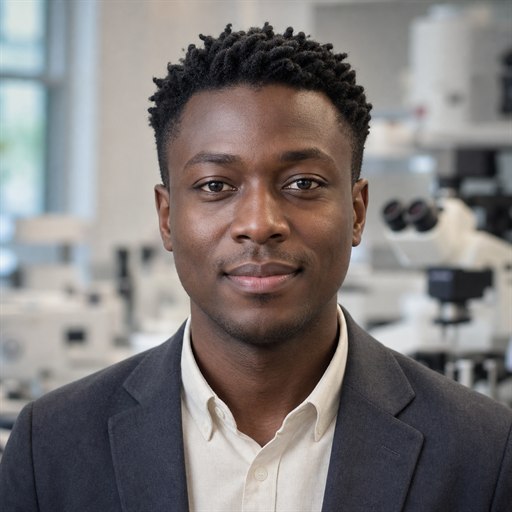
Omar Saleh, a prominent materials professor and chair at UC Santa Barbara, has embarked on a groundbreaking exploration into the realm of polymers, receiving substantial recognition for his efforts from the National Science Foundation (NSF). With a grant amounting to $441,000 over three years, Saleh aims to elucidate the intricacies of complex coacervates—mixtures of charged polymers that exhibit unique properties and behaviors at the nanoscale. This research is poised to significantly advance our understanding of these exceptional materials and unlock their potential applications in drug delivery, adhesives, and other cutting-edge technologies.
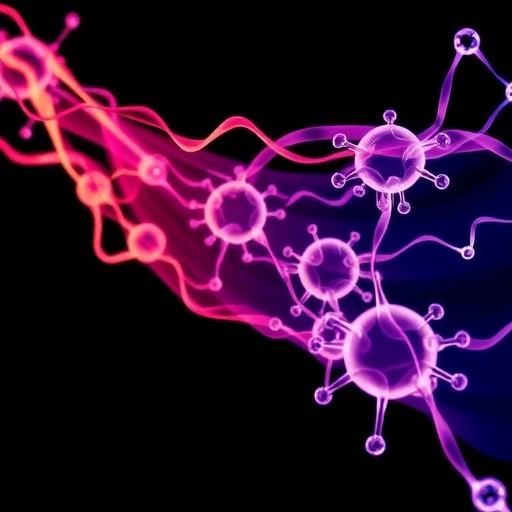
Polymers, large molecules composed of repeated units known as monomers, are ubiquitous in both natural and synthetic materials. Their structural complexity allows for diverse functionalities, which have been harnessed across industries, ranging from everyday consumer goods to sophisticated biomedical applications. When in their soft, biogel-like state, polymers can be likened to a disordered mass of intertwined noodles, creating an environment ripe for coacervation—an interaction that occurs when opposite electrostatic charges from different polymers induce them to merge in liquid form.
Saleh’s research primarily focuses on biological polymers, such as hyaluronic acid and RNA, which are of particular interest in fields that include pharmaceuticals and cosmetic formulations. Through refined experiments, his team seeks to unravel the mechanisms behind the formation of microdroplets—tiny entities that can encapsulate drugs or serve as highly effective adhesives. Importantly, while specific technological applications are not the immediate focus, the insights gleaned from this fundamental research will offer significant knowledge that can lead to practical solutions down the line.
At the core of Saleh’s investigations lies an advanced measurement methodology using magnetic tweezers, an innovative tool that allows for precise quantification of polymer behavior at the nanometer scale. By applying controlled stretching forces through a magnetic field, Saleh can measure the extension of polymers with remarkable accuracy, down to one nanometer. The significance of such precision cannot be overstated; it enables researchers to observe and quantify even the minutest changes in polymer configuration as they interact with their environment—information critical to understanding coacervation.
Crucially, this research is grounded in the understanding that a polymer’s conformation—its shape after being subjected to external forces—affects its coacervation behavior. This intricate relationship adds layers of complexity to the study, as the loosely organized state of a microgel presents unique binding characteristics and interactions. Unlike traditional solid-state measurements, such as those obtained via X-ray crystallography, the semi-liquid nature of the microgel state complicates the assessment of polymer behavior, necessitating novel experimental approaches.
Saleh likens the microgel state to a “wiggly, sticky ball of noodles,” illustrating that the way these polymers hold together is distinct from what occurs during typical phase transitions. The challenge of measuring these interactions underscores the need for high-precision tools and methodologies. Saleh’s lab, one of only a handful globally engaging in this level of nanoscale measurement, is uniquely positioned to confront these challenges head-on.
Demonstrating the project’s interdisciplinary nature, Saleh collaborates with Mark Stevens from Sandia National Laboratories, whose expertise in simulations will complement the experimental efforts. Stevens will create simulations that replicate the experimental setup, thus providing vital insights that can inform the design and interpretation of results. The integration of computational modeling with experimental data is expected to enhance the understanding of polymer dynamics and properties in complex coacervate systems.
The potential applications of the insights derived from this research are both promising and varied. Saleh notes that understanding how to manipulate the characteristics of coacervates could lead to new advancements in drug delivery mechanisms, enabling more targeted and effective therapies. Additionally, the adhesive properties of these polymer systems could yield innovative materials for use in medical adhesives or even surgical glue, transforming how various medical procedures are performed.
At the heart of this inquiry lies a commitment to addressing fundamental questions in polymer science, a pursuit Saleh finds both intellectually significant and practically impactful. By focusing on the underlying science of complex coacervation, his lab strives not only to advance academic knowledge but also to translate that knowledge into tangible advancements that could benefit various sectors.
Available funding from NSF plays an essential role in maintaining rigorous research activities and supporting educational development. Saleh emphasizes the importance of this funding not only in his research but also as a catalyst for training the next generation of scientists. The project will enable the hiring of a PhD student who will gain critical hands-on experience in advanced measurement techniques. This student’s education will foster skills highly applicable to a wide range of scientific and engineering disciplines, promoting a robust pipeline of talent within the STEM workforce.
The impact of NSF support extends beyond individual projects, serving as a foundational element that sustains research endeavors critical to innovation and economic advancement in the United States. Saleh’s reflections on this support highlight the broader implications of funding for scientific inquiry and technological development, underlining the connection between research, education, and societal benefit.
Ultimately, the work led by Omar Saleh demonstrates the dual significance of scientific research: advancing our fundamental understanding of polymers while also paving the way for developed sciences to address real-world challenges. By bridging rigorous scientific investigation with potential applications, he and his team are poised to contribute not only to the academic community but also to industries reliant on advanced materials technology.
As the project unfolds over the coming years, the revolutionary findings are set to make waves across multiple fields. The anticipated insights into polymer behavior in coacervate systems may open the door to innovatively designed materials facilitating everything from drug delivery to new adhesives, thus enhancing our ability to harness polymers in practical, beneficial ways.
This exploration into coacervation and polymer dynamics stands as a testament to the importance of detailed scientific inquiry into complex materials, which are vital to myriad applications. Saleh’s expertise, supported by the NSF grant, is sure to lead to revelations that could reshape how we utilize and understand polymers in technology and medicine.
Keywords
Cite Scienmag News
Neil Sanderson. (November 3, 2025). From Electrically Charged Polymers to Breakthroughs in Life-Saving Technologies. Scienmag. https://scienmag.com/from-electrically-charged-polymers-to-breakthroughs-in-life-saving-technologies/
Neil Sanderson. "From Electrically Charged Polymers to Breakthroughs in Life-Saving Technologies." Scienmag, 3 November 2025, https://scienmag.com/from-electrically-charged-polymers-to-breakthroughs-in-life-saving-technologies/. Accessed 7 September 2026.
Neil Sanderson. "From Electrically Charged Polymers to Breakthroughs in Life-Saving Technologies." Scienmag. November 3, 2025. https://scienmag.com/from-electrically-charged-polymers-to-breakthroughs-in-life-saving-technologies/


