


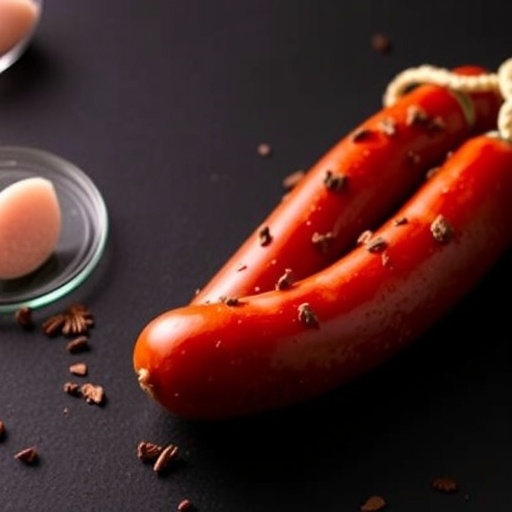
Across the globe, the art of fermentation has been a cornerstone in culinary traditions, particularly in the creation of sausages. These beloved delicacies owe their distinct flavors and textures to a complex interplay of microorganisms during the fermentation process. Researchers from Shenyang Agricultural University and Beijing Guomao Dongfu Engineering Technology Co., Ltd. have delved into the intricacies of microbial dynamics in fermented sausages, yielding fascinating insights that bridge cultural practices with scientific rigor.
The study, recently published in the journal Food Science of Animal Products, meticulously contrasts the fermentation techniques employed in Eastern and Western sausages. It illustrates how variations in microbial communities significantly shape the flavor profiles of these meat products. The review, which has been met with intrigue within the food science community, addresses the pivotal yet often overlooked role of microbial succession in enhancing the taste and quality of sausages.
Fermented sausages, such as salami and chorizo from the West, and Sichuan sausage and Nham from the East, represent more than mere preservation methods; they showcase the nuances of flavor sought after by culinary enthusiasts. Lactic acid bacteria (LAB), yeasts, and molds form the backbone of this fermentation, catalyzing metabolic transformations that contribute to the development of characteristic notes. The researchers highlight the need for clarity in understanding these microbial interactions, particularly as consumers increasingly desire consistency in flavor without sacrificing artisanal qualities.
One of the central findings presented in the review is the role of LAB in initiating the fermentation process. In Western styles of sausage-making, specific strains such as Latilactobacillus sakei and Lactobacillus curvatus lead to acidification, a critical step that enhances flavor while inhibiting spoilage. As the fermentation progresses, various chemical reactions occur, producing distinct flavor compounds such as ethyl acetate and phenylacetic acid, which impart floral and fruity notes. This progression underscores the importance of microbial control in achieving the desired organoleptic qualities in mass-produced products.
Furthermore, the review delves into the influence of molds and yeasts during fermentation. Western fermented sausages often benefit from the addition of molds like Penicillium, alongside yeasts such as Debaryomyces hansenii. This combination enriches the sausage’s aroma profile, introducing smoky, woody, and creamy nuances that elevate consumer experience. The interplay between these microorganisms not only enhances flavor but also contributes to the development of a desirable texture in the finished product.
In a stark contrast, Eastern fermented sausages traditionally rely on natural fermentation processes. These products often showcase regional ingredients, with local microbial flora playing an essential role. For instance, sausages incorporating glutinous rice or fermented ingredients such as kimchi exhibit a richer microbial diversity. The researchers note that strains like Lactiplantibacillus plantarum and Weissella contribute unique sourness, umami, and herbal undertones that have become signature flavors in various Eastern sausage styles.
The microbial succession observed in these sausages is multifaceted. The initial dominance of LAB gives way to other microorganisms, including staphylococci, yeasts, and molds. This succession is not merely a chronological progression; it is a meticulously orchestrated transition crucial to the final taste, safety, and texture of the product. The study emphasizes that understanding these microbial shifts can inform both traditional and modern approaches to sausage production, paving the way for innovative techniques that honor historical methods while embracing scientific advancements.
Dr. Mohan Li, the lead author of the study, articulates the significance of this research: “Fermentation isn’t just about preservation—it’s about craftsmanship at the microbial level.” His statement underscores the delicate balance between tradition and innovation in food science, as producers seek to harness microbial communities to enhance flavor consistency and safety protocols. The study advocates for a closer examination of fermentation practices, aiming to modernize techniques without compromising cultural identity.
As globalization continues to influence culinary trends, the findings of this review present a unique opportunity for producers. By decoding the complexities of microbial succession, vendors can effectively tailor flavors and standardize their products, ensuring consumer satisfaction in both mass-market and artisanal offerings. This pursuit of flavor precision extends beyond sausages, as the principles derived from this research have the potential to inform practices in other fermented foods like cheeses, kimchi, and cured meats.
The implications of the research conducted by these scientists are profound. With a growing demand for authentic and reliable food experiences, a comprehensive understanding of microbial dynamics can guide producers in optimizing flavors while ensuring safety. This knowledge is particularly critical as consumers become more discerning about the authenticity of their food, seeking both tradition and reliability in their culinary choices.
In conclusion, the exploration of microbial succession in fermented sausages opens new horizons not only for the products themselves but also for the broader landscape of food science. As techniques evolve, the fusion of microbial insight and culinary tradition heralds a new era in gastronomy, where the flavors of the future may very well be shaped by lessons from the past. The study serves as an essential framework for those wishing to navigate the delicate interplay between microbiology, tradition, and modern food production.
Keywords
Fermentation, microbial succession, flavor development, Western sausages, Eastern sausages, lactic acid bacteria, food science, culinary tradition, flavor optimization, food production.
Cite Scienmag News
Denise Maddox. (August 7, 2025). From East to West: The Role of Microbes in Crafting Sausage Flavor. Scienmag. https://scienmag.com/from-east-to-west-the-role-of-microbes-in-crafting-sausage-flavor/
Denise Maddox. "From East to West: The Role of Microbes in Crafting Sausage Flavor." Scienmag, 7 August 2025, https://scienmag.com/from-east-to-west-the-role-of-microbes-in-crafting-sausage-flavor/. Accessed 5 September 2026.
Denise Maddox. "From East to West: The Role of Microbes in Crafting Sausage Flavor." Scienmag. August 7, 2025. https://scienmag.com/from-east-to-west-the-role-of-microbes-in-crafting-sausage-flavor/


