


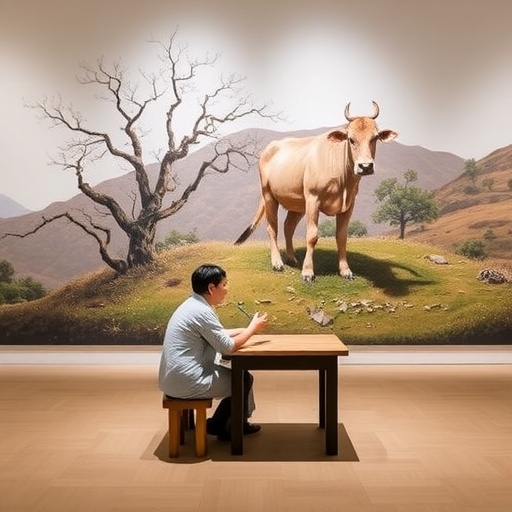
An unprecedented fusion of tradition and contemporary artistry has breathed new life into Hong Kong’s ancient Hakka village of Lai Chi Wo through a groundbreaking exhibition recently unveiled in Central. Organised by The University of Hong Kong’s Centre for Civil Society and Governance (HKU-CCSG), the exhibition titled “Celebrating Traditional Wisdom Through Art” represents the culmination of a nine-month immersive artist incubation program designed to translate intangible rural knowledge into tangible contemporary expressions.
Over the course of this intensive program, a collective of three local mentorship artists partnered with twelve emerging creatives, embarking on a profound journey into the heart of Lai Chi Wo. This collaboration was not superficial; it required artists to deeply embed themselves within the village’s ecological landscape and social fabric, documenting and decoding centuries-old rural wisdom that had, until now, primarily survived through oral tradition. This methodological immersion allowed the emerging artists to grasp the symbiotic relationships between natural elements, community resilience, and cultural continuity.
Central to the exhibition is an exploration of three elemental themes—soil, plants, and sound—which serve as conduits for understanding rural sustainability and cultural adaptability. These vectors enabled the artists to transcend mere representation and foster multisensory engagements, encouraging a conceptual reexamination of rural life’s resilience mechanisms in the face of modernity’s pressures. The exhibition space at The Fringe Club in Central deliberately juxtaposes these natural essences within an urban context, challenging visitors to reconsider rural-urban dichotomies.
The opening ceremony was officiated by Professor Wai-Fung Lam, Director of HKU-CCSG, alongside Rachel Cheung, the exhibition’s curator and one of the lead mentor-artists. Professor Lam emphasized the invaluable contributions of the Lai Chi Wo community, not only as subjects of study but as active co-creators in the confluence of academic research and artistic innovation. He highlighted how the villagers’ steadfast hospitality and ecological wisdom enriched academic inquiry and provided an emotional sanctuary for urban participants navigating modern life’s complexities.
Curator Rachel Cheung underscored the villagers’ remarkable perseverance and adaptability, characteristics that continuously nurture their traditional wisdom. Her reflections reveal a nuanced understanding of how localized strategies and everyday problem-solving fuel the sustainability of rural cultures. This insight was integral to the program’s approach, emphasizing that the villagers’ resilient practices are dynamic, evolving, and intrinsically linked to their environment and socio-economic realities.
An essential component of the incubation program was an immersive, intensive three-day exploratory camp held in the village. This camp was co-facilitated by the HKU-CCSG team and the three mentor-artists: ceramic specialist Rachel Cheung; Benjamin Hao, an expert in natural dyes and environmental art; and mixed-media artist Connie Lo, known for integrating auditory sensations into visual-spatial experiences. This multidisciplinary mentorship allowed emerging artists to engage deeply with ecological and cultural elements through structured interviews, participatory workshops, and informal dialogues with villagers.
The participants documented the villagers’ traditional lifestyle, capturing childhood narratives and evolving village identities, while simultaneously studying the distinctive ecological features of the area. A significant scientific aspect involved extracting natural pigments from native flora and cataloging the rich soundscapes of Lai Chi Wo, including the nuanced interplay of biotic elements and human activities. These technical investigations underpinned the artistic transformations and lent a scientifically rigorous dimension to the creative outputs.
Before its public debut in Central, the project held an Open House event at the Lai Chi Wo Cultural Hub, a restored traditional village house, where the artists exhibited preliminary concepts and prototypes. This transparent, iterative process fostered a continuous dialogue between creators and villagers, ensuring an authentic representation grounded in mutual respect and accurate cultural translation.
The artworks showcased at The Fringe Club incorporate a range of aesthetically distinct interpretations, drawing on local raw materials, plant-derived pigments, and conceptual frameworks inspired by the village’s unique topography and architectural vernacular. Some pieces pay tribute to historical artifacts such as cooking utensils, fishing traps, village wells, and domestic tools, while others delve into ambient sonic environments, capturing the sounds of streams, avian life, and industrial elements like the nearby Yantian Container Port.
This project exemplifies the power of place-based research and creative collaboration in preserving and re-envisioning cultural heritage within rapidly urbanizing contexts. The meticulous interplay between scientific observation and artistic intervention bridges disciplines and invites urban audiences to critically engage with the persistence and transformation of rural ecologies and cultural narratives. Through this exhibition, HKU-CCSG not only celebrates the endurance of Hakka wisdom but also models innovative pathways for community-inclusive research and sustainable cultural policymaking.
The continuation of such interdisciplinary and participatory approaches holds promise for other endangered rural communities worldwide, highlighting the importance of integrating ecological, anthropological, and artistic methodologies to safeguard intangible cultural assets. As cities expand and global homogenization threatens local identities, projects like “Celebrating Traditional Wisdom Through Art” offer a vital counter-narrative grounded in resilience, adaptability, and creative expression.
Exhibition Details:
Date: 16 – 23 June 2026
Time: 10:00 AM – 9:00 PM
Venue: Anita Chan Lai-ling Gallery, The Fringe Club, Central, Hong Kong
For further inquiries, contact Ms Daisy Yeung, Senior Project Officer at HKU-CCSG, at daisyy3@hku.hk.
Cite Scienmag News
Courtney Benton. (June 23, 2026). From Earth to Experience: HKU Exhibition Explores Hong Kong’s Rural Traditions Through Contemporary Art. Scienmag. https://scienmag.com/from-earth-to-experience-hku-exhibition-explores-hong-kongs-rural-traditions-through-contemporary-art/
Courtney Benton. "From Earth to Experience: HKU Exhibition Explores Hong Kong’s Rural Traditions Through Contemporary Art." Scienmag, 23 June 2026, https://scienmag.com/from-earth-to-experience-hku-exhibition-explores-hong-kongs-rural-traditions-through-contemporary-art/. Accessed 3 September 2026.
Courtney Benton. "From Earth to Experience: HKU Exhibition Explores Hong Kong’s Rural Traditions Through Contemporary Art." Scienmag. June 23, 2026. https://scienmag.com/from-earth-to-experience-hku-exhibition-explores-hong-kongs-rural-traditions-through-contemporary-art/


