


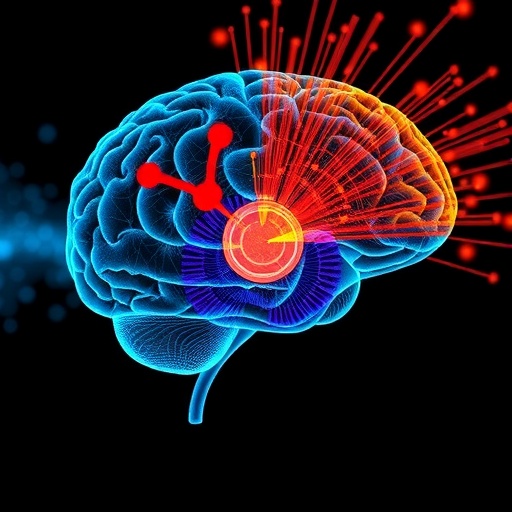
Schizophrenia has long challenged scientists because its most disabling symptoms do not arise from a single damaged brain region. Instead, the disorder appears to involve a breakdown in communication across complex neural systems—networks responsible for perception, thought, motivation, memory and the sense of self. A new study published in Translational Psychiatry offers a sharper view of that disruption, reporting that the relationship between the brain’s physical wiring and its moment-to-moment activity becomes uncoupled in a frequency-specific way. The findings, described by X. Lyu, T. Liu, J. Wu and colleagues, suggest that different rhythms of brain activity may lose alignment with the structural pathways that are supposed to support them, helping explain the core symptoms of schizophrenia.
The study’s central concept is known as structure-function coupling. The brain’s structural connectome consists of the anatomical links formed by white-matter fiber tracts, which connect distant areas and create the physical infrastructure for information exchange. Functional organization, by contrast, describes how those regions interact dynamically, often measured through patterns of synchronized activity observed with technologies such as functional magnetic resonance imaging or electroencephalography. In a healthy brain, anatomy constrains activity without rigidly determining it. Neural systems can flexibly communicate, but their activity generally remains anchored to the underlying network architecture. When structure and function become excessively disconnected, signals may travel in inefficient, unstable or biologically implausible ways.
What makes the new report particularly important is its focus on frequency. Brain activity is not a single stream running at one speed. It unfolds across multiple oscillatory bands, from slow fluctuations associated with broad coordination and integration to faster rhythms linked to local processing, sensory binding and rapid communication. Each frequency range may support a different computational role, and each may depend on structural pathways in a distinct manner. A brain network can therefore appear relatively intact when examined globally while showing profound abnormalities at a particular rhythm. By examining structure-function relationships across frequencies, the researchers move beyond the idea that schizophrenia is simply a disorder of “overconnectivity” or “underconnectivity.”
This frequency-sensitive approach may help resolve a long-standing puzzle in psychiatric neuroscience. Many patients with schizophrenia experience hallucinations, delusions, disorganized thinking, diminished motivation or social withdrawal, yet the severity and combination of symptoms vary widely. Conventional brain-imaging measures often identify broad changes in connectivity, but those averages can obscure the specific neural processes associated with individual symptoms. A frequency-specific analysis provides a more detailed framework: the same anatomical circuit might support different functions depending on the rhythm through which its regions communicate. If that circuit is structurally intact but functionally misaligned at one frequency, the resulting disturbance could affect perception or cognition without producing the same consequences at another frequency.
The reported findings indicate that this decoupling is not merely a general feature of schizophrenia but is related to its core clinical manifestations. In practical terms, the researchers’ analysis links symptom burden to the extent that functional activity departs from the constraints imposed by the brain’s physical wiring. Such a relationship could help explain why patients may experience internally generated thoughts, images or beliefs as if they were externally produced. If communication among sensory, memory and higher-order networks becomes poorly coordinated, the brain may have greater difficulty distinguishing signals originating from the outside world from those generated internally. Likewise, disrupted coordination across cognitive control networks could contribute to disorganized speech, impaired working memory and difficulties maintaining a coherent train of thought.
The biological meaning of decoupling is more subtle than simply describing damaged connections. Structural pathways change relatively slowly, while functional activity can shift from moment to moment. This difference allows the brain to adapt, learn and respond to changing demands. Some degree of structure-function independence is therefore healthy and necessary. The problem may arise when functional dynamics become too detached from anatomical support, or when the balance between constraint and flexibility varies abnormally across frequency bands. In schizophrenia, the brain could be operating with an unstable compromise: some networks may be overly restricted by their structural architecture, while others may generate activity that is insufficiently coordinated with the pathways available to carry it.
The study also highlights why schizophrenia is increasingly understood as a disorder of distributed brain networks rather than a disease localized to one region. Symptoms emerge from interactions among systems, including circuits involved in salience, executive control, sensory processing, memory and self-referential thought. A disturbance in one network can influence activity elsewhere, particularly when communication is synchronized through specific oscillatory rhythms. Frequency-specific structure-function decoupling could therefore provide a common mechanism linking apparently different symptoms. Hallucinations, delusions and cognitive disorganization may look clinically distinct, but all could reflect failures in the brain’s ability to coordinate activity across anatomical networks at the appropriate temporal scales.
The implications extend beyond explanation and into the search for better biomarkers. Current diagnosis relies primarily on clinical interviews and observed behavior, with no single laboratory test capable of confirming schizophrenia or predicting its course. Measures of structure-function coupling may eventually offer an objective complement to clinical assessment, especially if researchers can determine which frequency patterns distinguish symptom dimensions or forecast treatment response. Such tools could support more personalized care by identifying whether a patient’s difficulties are associated mainly with slow network integration, faster local communication or a combination of abnormalities. However, translating a promising neuroimaging signal into a reliable clinical test will require large, diverse studies and careful replication across scanners, populations and stages of illness.
The findings may also influence future treatments. Antipsychotic medications primarily act on neurotransmitter systems, especially dopamine, and can reduce psychosis without fully resolving cognitive or negative symptoms. If different symptoms are associated with different frequency-specific disruptions, therapies might eventually be designed to restore communication at the relevant temporal scale. Noninvasive brain stimulation, neurofeedback and closed-loop neuromodulation are already being investigated as methods for altering abnormal neural rhythms. A clearer map of how oscillations interact with structural networks could help determine where and when stimulation should be delivered. Yet such applications remain prospective: identifying an association between decoupling and symptoms is an essential first step, not proof that correcting the pattern will cure the disorder.
By placing brain anatomy and brain dynamics in the same analytical frame, Lyu and colleagues’ work points toward a more precise model of schizophrenia—one in which the illness reflects not only which regions are connected, but also how and at what frequencies those connections are used. The study suggests that the brain’s physical infrastructure and its active communication patterns can drift apart in ways that are closely tied to psychiatric symptoms. That insight may help bridge the gap between microscopic biology, large-scale neural networks and the lived experience of psychosis. As researchers continue to test and refine the result, frequency-specific structure-function coupling could become a crucial piece of the effort to understand why the mind’s most fundamental processes can lose their stability—and how that stability might ultimately be restored.
Cite Scienmag News
Cassandra Pierce. (August 22, 2026). Frequency-specific structure-function decoupling underlies schizophrenia’s core symptoms. Scienmag. https://scienmag.com/frequency-specific-structure-function-decoupling-underlies-schizophrenias-core-symptoms/
Cassandra Pierce. "Frequency-specific structure-function decoupling underlies schizophrenia’s core symptoms." Scienmag, 22 August 2026, https://scienmag.com/frequency-specific-structure-function-decoupling-underlies-schizophrenias-core-symptoms/. Accessed 3 September 2026.
Cassandra Pierce. "Frequency-specific structure-function decoupling underlies schizophrenia’s core symptoms." Scienmag. August 22, 2026. https://scienmag.com/frequency-specific-structure-function-decoupling-underlies-schizophrenias-core-symptoms/


