


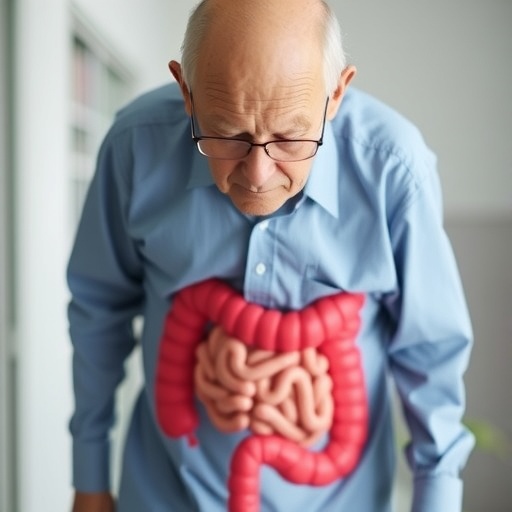
In a groundbreaking study recently published in the British Journal of Cancer, researchers have unveiled compelling evidence linking the Hospital Frailty Risk Score (HFRS) with adverse inpatient outcomes in older adults undergoing treatment for colorectal cancer. This study delves deeply into the complex interplay between frailty—a multidimensional syndrome characterized by decreased physiological reserves—and cancer prognosis, revealing nuances that could markedly influence clinical decision-making in oncogeriatrics.
The prevalence of colorectal cancer escalates with advancing age, making it one of the most common malignancies afflicting the elderly worldwide. Managing this demographic poses formidable challenges due to the heterogeneity in physiological resilience and the presence of multiple comorbid conditions. The concept of frailty has emerged as a pivotal framework to stratify patients beyond chronological age, enabling a more refined assessment of vulnerability to stressors such as surgery or chemotherapy. Prior to this study, while frailty was acknowledged as an important determinant of outcomes, its quantifiable relationship with inpatient risks specifically in older colorectal cancer patients had remained insufficiently defined.
Employing a robust retrospective cohort design, the investigators harnessed hospital administrative data spanning multiple institutions to calculate patients’ HFRS—a validated score derived from ICD-10 diagnostic codes that encapsulate various frailty-related deficits. This innovative use of routinely collected data allowed for scalable frailty assessment without additional clinical burden. The cohort consisted exclusively of individuals aged 65 and above diagnosed with colorectal cancer, ensuring that findings were specifically applicable to this vulnerable population subset.
One of the pivotal revelations of the research was the strong association between elevated HFRS and increased incidence of adverse inpatient outcomes, including prolonged hospital stays, intensive care admissions, and in-hospital mortality. These associations persisted even after adjustment for age, cancer stage, and comorbidities, underscoring frailty’s independent predictive power. This insight crystallizes the notion that frailty constitutes a distinct biological pathway influencing resilience to medical interventions, beyond traditional risk factors.
Mechanistically, frailty may amplify vulnerability by impairing homeostatic mechanisms critical to recovery and resistance against surgical stress or systemic therapy toxicity. The cumulative burden of physiological deficits indexed in the HFRS likely reflects diminished immune surveillance, sarcopenia, and altered inflammatory responses—each contributing to worsened clinical trajectories. The study’s findings advocate for incorporating frailty screening into routine oncological assessments to tailor treatment intensity commensurate with individualized risk profiles.
Interestingly, the study also uncovered a gradient effect; patients with moderate frailty exhibited intermediate risks compared to robust or severely frail counterparts. This suggests that frailty exists on a continuum and that nuanced categorization can optimize prognostication. The ability to stratify patients along this spectrum offers potential for prehabilitation interventions aimed at reversing or mitigating frailty prior to cancer therapy, thereby possibly improving outcomes.
The implications for clinical practice are profound. First, the integration of HFRS into electronic health record systems can facilitate automated frailty alerts, prompting multidisciplinary teams to engage in shared decision-making. Such an approach could harmonize oncological benefits with geriatric considerations, avoiding overtreatment in frail patients while not withholding potentially curative interventions from fitter older adults.
Second, this research paves the way for precision oncology frameworks that explicitly incorporate geriatric syndromes. By recognizing frailty as a modifiable risk factor, clinicians may pursue adjunctive therapies such as nutritional support, physiotherapy, and aggressive symptom management to bolster resilience. This aligns with the growing movement towards individualized cancer care transcending tumor biology to encompass host factors.
Moreover, health policy ramifications are notable. Hospitals and healthcare systems can leverage these findings to prioritize resource allocation, ensuring that frail older adults receive comprehensive care pathways that address both oncologic needs and frailty-associated vulnerabilities. Such policies might reduce readmissions, complications, and healthcare costs, ultimately enhancing the quality of life for elderly cancer patients.
However, the authors prudently caution about limitations inherent in using administrative data, including potential coding inaccuracies and lack of granularity regarding functional status and patient-reported outcomes. They advocate for prospective studies integrating clinical frailty scales alongside HFRS to validate and refine predictive models. Furthermore, interventional trials targeting frailty-modifying strategies pre- and post-cancer treatment would be essential to translate prognostic insights into tangible clinical benefits.
The emergence of digital health technologies, including machine learning algorithms, could further augment frailty assessment by integrating multidimensional data streams encompassing physiological, biochemical, and psychosocial parameters. Such innovations promise to enhance the fidelity and responsiveness of frailty measurement, facilitating real-time risk stratification and personalized care pathways.
In summary, this landmark study substantiates the Hospital Frailty Risk Score as a potent prognostic tool in elderly colorectal cancer patients, elucidating its strong predictive relationship with adverse inpatient outcomes. These findings underscore the necessity of transcending chronological age to incorporate comprehensive frailty assessment in oncological care. As the global population ages and cancer incidence in older adults rises, integrating frailty into clinical pathways may revolutionize therapeutic strategies, optimize patient-centered outcomes, and pave the way for a new paradigm in geriatric oncology.
The integration of frailty screening, coupled with targeted interventions to mitigate its impact, heralds an era where cancer treatment transcends survival metrics to encompass holistic health, functionality, and dignity in older adults. This study provides a clarion call for oncologists, geriatricians, health systems, and policymakers to collaboratively champion frailty-informed cancer care, fostering innovation that resonates far beyond colorectal oncology.
The ongoing translation of these insights into routine practice will necessitate multidisciplinary collaboration, robust clinical validation, and patient engagement. Nevertheless, the path charted by Cheng and colleagues represents a seminal advance in understanding and addressing the intricate vulnerabilities shaping cancer outcomes in an aging society.
Cite Scienmag News
Nathaniel Bowman. (May 6, 2026). Frailty Score Predicts Outcomes in Older Colorectal Patients. Scienmag. https://scienmag.com/frailty-score-predicts-outcomes-in-older-colorectal-patients/
Nathaniel Bowman. "Frailty Score Predicts Outcomes in Older Colorectal Patients." Scienmag, 6 May 2026, https://scienmag.com/frailty-score-predicts-outcomes-in-older-colorectal-patients/. Accessed 5 September 2026.
Nathaniel Bowman. "Frailty Score Predicts Outcomes in Older Colorectal Patients." Scienmag. May 6, 2026. https://scienmag.com/frailty-score-predicts-outcomes-in-older-colorectal-patients/


