


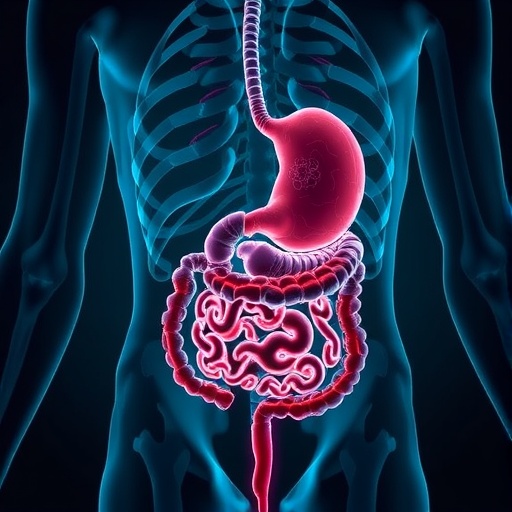
In recent years, radical cystectomy has emerged as a cornerstone surgical treatment for muscle-invasive bladder cancer. Despite leaps in surgical methods, including the refinement of robot-assisted radical cystectomy with intracorporeal urinary diversion (iRARC), postoperative gastrointestinal complications persist as a formidable obstacle for patient recovery. These adverse events, encompassing postoperative ileus (POI) and intra-abdominal infections (IAI), pose significant threats by extending hospital stays and increasing morbidity rates, thereby compelling clinicians to reevaluate factors beyond surgical technique that influence outcomes.
A groundbreaking study spearheaded by Associate Professor Kenji Zennami from Nagoya University School of Medicine and Fujita Health University, alongside Professors Ryoichi Shiroki and Kiyoshi Takahara at Fujita Health University, throws light on a hitherto underexplored dimension: the gut microbiota’s role in these postoperative complications. Their investigation, encompassing 146 bladder cancer patients undergoing iRARC without bowel preparation and under short-term antibiotic prophylaxis, unveiled a crucial link between residual intra-abdominal microbes and the heightened risk of GI complications. This finding is pivotal, especially considering that conventional antibiotic strategies suppress ileal microbiota yet fail to eradicate all residual organisms.
The study’s methodology was meticulous. Fecal samples from the distal ileum and ascitic fluid were collected and cultured to map the microbial landscape. Although antibiotic prophylaxis largely suppressed ileal microorganisms, cultures revealed persistent bacteria and fungi within the peritoneal cavity in a significant subset of cases. More importantly, these persistent microbes directly correlated with poorer postoperative outcomes, including a stark increase in POI and IAI among affected patients. The researchers documented that patients with positive ascitic cultures exhibited more than a six-fold increase in complication risk compared to those with sterile cultures—a staggering statistic underscoring microbial persistence as a critical factor.
Diving deeper, the presence of bacteria in ileal feces alone was associated with nearly a quadrupled risk of GI complications, highlighting that both local intestinal and intra-abdominal microbial ecosystems intricately influence postoperative trajectories. Notably, all recorded intra-abdominal infections arose exclusively in patients showing simultaneous positivity in both ileal and ascitic cultures. This synergy suggests a dynamic interplay where residual gut microbes translocate or persist postoperatively, effectively seeding infections that compromise recovery.
A particularly novel insight from this research is the role of patient frailty in shaping microbial profiles and complication susceptibility. Using the validated Geriatric-8 questionnaire, frailty was linked to a pronounced predisposition for harboring residual microbes. Frail patients not only exhibited elevated complication rates—at 63%, dramatically higher than the 12% observed in their non-frail counterparts—but also displayed distinctive microbiota compositions dominated by problematic taxa such as Enterococcus and Enterobacter species. The emergence of carbapenem-resistant strains within frail individuals marks a concerning development, indicating that antimicrobial-resistant organisms might be key players in postoperative adversity.
Associate Professor Zennami emphasized that these insights challenge the current paradigm in surgical care. “Despite advances in operative technique and perioperative management, gastrointestinal complications remain prevalent. Our data underscores that frailty and the gut microbiome must be integral considerations in preoperative evaluation and postoperative care,” he stated. This calls for an evolved clinical approach that transcends standardized antibiotic prophylaxis towards more individualized strategies targeting the unique microbiota signatures of patients, especially those deemed frail.
The clinical ramifications are multifaceted. Standard antibiotic protocols currently employed in urologic surgeries may require customization to address microbial populations that survive conventional prophylaxis, particularly within frail demographics. Moreover, integrating frailty assessment tools into perioperative workflows could help stratify patients by risk, enabling tailored interventions that preemptively mitigate microbial imbalance. Prehabilitation programs that include nutritional modulation and exercise regimens hold promise in bolstering patients’ resilience and potentially reshaping gut microbial communities before surgery.
Beyond current practices, the study paves the way for novel microbiota-targeted interventions. Probiotics, synbiotics, and fecal microbiota transplantation represent therapeutic avenues that could restore microbial equilibrium and enhance mucosal defenses, reducing postoperative GI complications. Research into these modalities aligned with frailty status could revolutionize perioperative care, fostering precision medicine approaches that combine surgical innovation with microbial management.
While the study’s single-center design and reliance on traditional culture methods pose limitations, the direct correlation detected between frailty-associated dysbiosis and adverse surgical outcomes marks a pioneering milestone. It provides foundational evidence that warrants expansive multicenter studies harnessing advanced techniques such as metagenomic sequencing to unravel microbial dynamics with greater resolution. Such research will be critical to devising targeted antimicrobial strategies and refining perioperative management guidelines.
Looking forward, Dr. Zennami envisions a future clinical landscape where microbiota-based management forms a standard pillar of care in urologic surgeries. “By embedding frailty evaluations alongside interventions that cultivate a healthier gut environment, we can potentially transform recovery pathways, diminish GI complications, and optimize outcomes for vulnerable populations,” he concluded. This integrative approach holds promise not just for bladder cancer care but could also inform practices across surgical disciplines grappling with infection risks and recovery challenges amplified by microbial and host factors.
The implications of this study reach beyond immediate postoperative care. Understanding the mechanistic underpinnings of microbial persistence in the peritoneal cavity opens new research frontiers exploring host-microbe interactions, immune modulation, and the contribution of resistant bacterial strains to surgical morbidity. It accentuates the necessity of an interdisciplinary approach combining surgery, microbiology, geriatrics, and pharmacology to comprehensively address the multifaceted challenge of postoperative complications.
In sum, the identification of frailty-associated gut dysbiosis as a significant amplifier of gastrointestinal complications post-iRARC heralds a paradigm shift. It moves the needle from a sole focus on surgical precision to a more nuanced recognition of patient-specific biological contexts that sculpt recovery trajectories. As research progresses, these findings illuminate pathways for enhancing surgical outcomes through personalized medicine frameworks that integrate microbial ecology and patient frailty—a transformative leap towards safer, more effective cancer surgery.
News Publication Date: July 1, 2025
References: DOI: 10.1038/s41598-025-07932-4
Cite Scienmag News
Morgan Morrow. (September 8, 2025). Frailty Drives Gut Microbiome Imbalance and Heightens Post-Surgical GI Risks. Scienmag. https://scienmag.com/frailty-drives-gut-microbiome-imbalance-and-heightens-post-surgical-gi-risks/
Morgan Morrow. "Frailty Drives Gut Microbiome Imbalance and Heightens Post-Surgical GI Risks." Scienmag, 8 September 2025, https://scienmag.com/frailty-drives-gut-microbiome-imbalance-and-heightens-post-surgical-gi-risks/. Accessed 3 September 2026.
Morgan Morrow. "Frailty Drives Gut Microbiome Imbalance and Heightens Post-Surgical GI Risks." Scienmag. September 8, 2025. https://scienmag.com/frailty-drives-gut-microbiome-imbalance-and-heightens-post-surgical-gi-risks/


