

Monday, July 20, 2026
Science
No Result
View All Result
  • Login
  • HOME
  • SCIENCE NEWS
  • CONTACT US
  • HOME
  • SCIENCE NEWS
  • CONTACT US
No Result
View All Result
Scienmag
No Result
View All Result
Home Science News Biology

Four and a Half Years of Advancing Protection for European Wild Pollinators: Safeguard Project Concludes

February 27, 2026
in Biology
Reading Time: 3 mins read
0
Four and a Half Years of Advancing Protection for European Wild Pollinators: Safeguard Project Concludes
66
SHARES
598
VIEWS
Share on FacebookShare on Twitter
ADVERTISEMENT
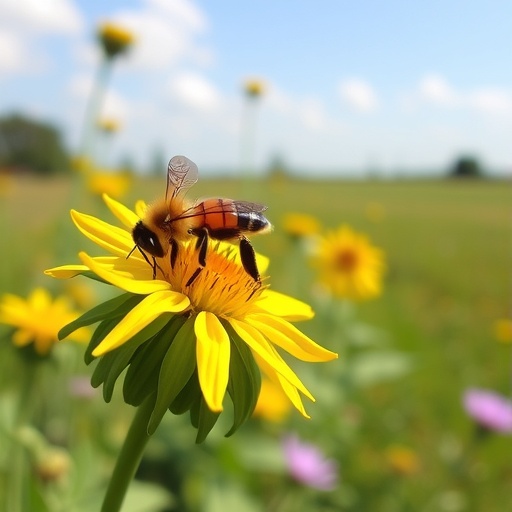
Safeguard Project
image: Safeguard project

view more 

Credit: Safeguard project

Over the course of the Horizon 2020 Safeguard project, researchers, NGOs, social scientists, industry partners, policymakers and other experts from 25 institutions joined forces to expand the understanding of the decline of wild pollinators and explore measures to tackle the issue.

Following an interdisciplinary approach, Safeguard delivered a comprehensive reassessment of the status and trends of European wild pollinators, shed light on the pressures they face, and worked on developing an integrated assessment framework (IAF) to guide evidence-based management and policy at national, European and global levels.

To ensure the lasting legacy of project results, the Safeguard Knowledge Exchange Hub (Safe-Hub) was launched, providing resources and tools on pollinator conservation for decision-makers, conservationists, farmers, and citizens.

In the span of four and a half years, Safeguard established an extensive database, filling data gaps and providing a knowledge base for future actions. Focusing on long-term and large-scale impact, the project produced a number of policy materials with recommendations for pollinator-friendly practices.

To wrap up the project officially, this week, the Safeguard consortium met for one last time in Brussels, showcasing findings and insights to researchers, decisionmakers and practitioners, focusing on: 1) Status and trends of European pollinators, and future directions in monitoring, 2) Main drivers for pollinator decline, emerging pressures, and land-management solutions, 3) Integrated landscape and urban interventions for pollinator protection and 4) Future perspectives and knowledge needs.

While Safeguard is officially coming to an end in February 2026, the exploitation of its results – and their lasting impact – is only just beginning. 

A heartfelt thank you to all partners, contributors, field researchers, and supporters who made Safeguard possible.

Access the Safeguard’s open-access collection in the Research Ideas and Outcomes journal to explore all project publications.


################################

This project receives funding from the European Union’s Horizon 2020 research and innovation programme under grant agreement No. 101003476.

Views and opinions expressed are those of the author(s) only and do not necessarily reflect those of the European Union or the European Commission. Neither the EU nor the EC can be held responsible for them.


Media Contact

Iva Boyadzhieva

Pensoft Publishers

marketing@pensoft.net

Office: 359-287-04281

Funder
Horizon 2020 Framework Programme

Tags


  • /Life sciences/Plant sciences/Plant physiology/Plant reproduction/Pollination/Pollinators

  • /Life sciences/Plant sciences/Plant physiology/Plant reproduction/Pollination/Animal pollination

  • /Life sciences/Plant sciences/Plant physiology/Plant reproduction/Pollination

  • /Life sciences/Organismal biology/Animals/Invertebrates/Arthropods/Insects/Hymenoptera/Bees

  • /Life sciences/Organismal biology/Animals/Invertebrates/Arthropods/Insects/Lepidoptera

  • /Life sciences/Organismal biology/Animals/Invertebrates/Arthropods/Insects

  • /Life sciences/Organismal biology/Entomology

  • /Applied sciences and engineering/Environmental sciences/Ecology/Macroecology/Ecological diversity/Biodiversity/Biodiversity conservation

  • /Applied sciences and engineering/Environmental sciences/Ecology/Macroecology/Ecological diversity/Biodiversity/Biodiversity loss
Tags: decline of wild pollinators in EuropeEuropean wild pollinators conservationevidence-based pollinator policyHorizon 2020 environmental projectsintegrated assessment framework for pollinatorsinterdisciplinary pollinator researchNGO and policymaker collaborationpollinator habitat protection strategiespollinator population trends Europesafeguarding biodiversity in Europesocial science in environmental protectionsustainable pollinator management practices
Share26Tweet17
Previous Post

Dentists Urged to Minimize Unnecessary Use of Nitrous Oxide

Next Post

Leading Scientists Challenge DOE Climate Report, Calling It ‘Demonstrably Incorrect’ in New Analysis

Related Posts

The concealed geometry behind breeding constraints
Biology

The concealed geometry behind breeding constraints

July 18, 2026
Organic fertilizer helps biochar immobilize cadmium in contaminated soil
Biology

Organic fertilizer helps biochar immobilize cadmium in contaminated soil

July 17, 2026
Asteroid impact may have reshaped tuna evolution alongside dinosaur extinction
Biology

Asteroid impact may have reshaped tuna evolution alongside dinosaur extinction

July 17, 2026
Wild snapdragons subtly change color to attract bees
Biology

Wild snapdragons subtly change color to attract bees

July 17, 2026
Root developmental zonation persists despite changes in cell wall pH
Biology

Root developmental zonation persists despite changes in cell wall pH

July 17, 2026
Genes rapidly reactivate expression following thermal stress exposure
Biology

Genes rapidly reactivate expression following thermal stress exposure

July 17, 2026
Next Post
Leading Scientists Challenge DOE Climate Report, Calling It ‘Demonstrably Incorrect’ in New Analysis

Leading Scientists Challenge DOE Climate Report, Calling It ‘Demonstrably Incorrect’ in New Analysis

  • Mothers who receive childcare support from maternal grandparents show more

    Mothers who receive childcare support from maternal grandparents show more parental warmth, finds NTU Singapore study

    27656 shares
    Share 11059 Tweet 6912
  • University of Seville Breaks 120-Year-Old Mystery, Revises a Key Einstein Concept

    1061 shares
    Share 424 Tweet 265
  • Bee body mass, pathogens and local climate influence heat tolerance

    682 shares
    Share 273 Tweet 171
  • Researchers record first-ever images and data of a shark experiencing a boat strike

    546 shares
    Share 218 Tweet 137
  • Groundbreaking Clinical Trial Reveals Lubiprostone Enhances Kidney Function

    531 shares
    Share 212 Tweet 133
Science

Embark on a thrilling journey of discovery with Scienmag.com—your ultimate source for cutting-edge breakthroughs. Immerse yourself in a world where curiosity knows no limits and tomorrow’s possibilities become today’s reality!

RECENT NEWS

  • Rannasangpei crocin-1 improves valproate-induced autism-like behaviors by reducing oxidative stress
  • Sleep Quality Links Synergistically with Frailty to Increase Cardiometabolic Multimorbidity in Elderly Chinese
  • Gut Microbiome Metabolites Shape Development of Stress-Related Mental Disorders
  • Cognitive reserve helps older adults resist frailty and recover better

Categories

  • Agriculture
  • Anthropology
  • Archaeology
  • Athmospheric
  • Biology
  • Biotechnology
  • Blog
  • Bussines
  • Cancer
  • Chemistry
  • Climate
  • Earth Science
  • Editorial Policy
  • Marine
  • Mathematics
  • Medicine
  • Pediatry
  • Policy
  • Psychology & Psychiatry
  • Science Education
  • Social Science
  • Space
  • Technology and Engineering

Subscribe to Blog via Email

Success! An email was just sent to confirm your subscription. Please find the email now and click 'Confirm Follow' to start subscribing.

Join 5,146 other subscribers

© 2025 Scienmag - Science Magazine

Welcome Back!

Login to your account below

Forgotten Password?

Retrieve your password

Please enter your username or email address to reset your password.

Log In
No Result
View All Result
  • HOME
  • SCIENCE NEWS
  • CONTACT US

© 2025 Scienmag - Science Magazine
