


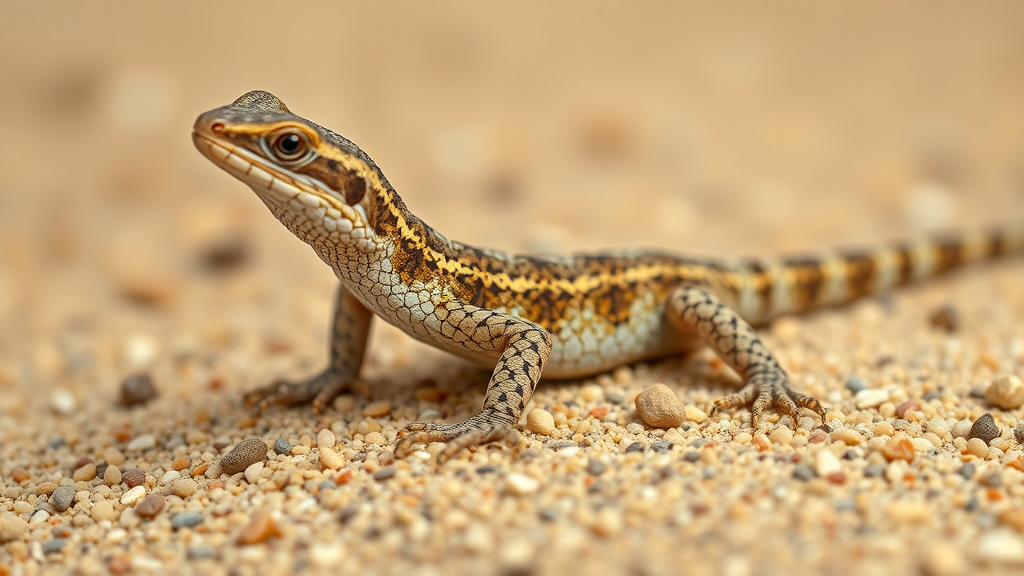
The establishment of new populations from small groups of founders is one of the most common scenarios in modern conservation biology, yet it remains one of the most genetically fraught. When a handful of individuals is moved to a new site, whether deliberately as part of a reintroduction program or accidentally through human-mediated dispersal, the resulting population carries only a fraction of the genetic variation present in the source populations. A new study published in Heredity examines this problem in an unusually rigorous way, using an experimentally founded population of sand lizards (Lacerta agilis) to track, over generations, what happens to the genome when admixture between different source lineages is built into the founding event from the start.
Sand lizards are an ideal system for this kind of work. The species occupies a broad range across Europe and Asia, but local populations are often small, isolated and genetically differentiated, particularly at the northern and western edges of the distribution where habitat fragmentation has squeezed reptile communities into remnant patches of heathland, dune grassland and forest clearing. Because sand lizards are site-faithful, easy to capture and relatively straightforward to mark and follow over time, they lend themselves to longitudinal studies that would be impossible in many other vertebrates. The experimental population at the heart of the study was founded by releasing individuals drawn from more than one genetically distinct source, creating what population geneticists call a mixed or admixed founder event, and then monitoring the genetic consequences across subsequent generations.
The central question the researchers addressed is one that divides conservation practitioners. On one side stands the worry that mixing divergent lineages can be harmful, a phenomenon sometimes called outbreeding depression, in which combinations of genes that are well adapted to local conditions are broken apart, or where chromosomes that have accumulated incompatibilities fail to work together properly in hybrids. On the other side stands the argument that the benefits of admixture, above all the restoration of heterozygosity and the masking of deleterious recessive mutations, will usually outweigh the risks, particularly for small founded populations that would otherwise march toward inbreeding depression. The study was designed to let the genomes themselves arbitrate between these competing expectations.
Using genome-wide markers, the team reconstructed the ancestry of the founded population generation by generation, quantifying how much genetic material each founding source contributed and how those contributions were reshuffled by recombination and inheritance over time. This is a powerful approach because admixture leaves characteristic signatures in the genome. In the first generations after mixing, the chromosomes of descendants exist as long blocks inherited intact from one source or the other. As generations pass, recombination slices those blocks into ever smaller segments, and the ancestry of the population converges toward a smooth, genome-wide blend. The rate and pattern of this ancestry transition reveal how selection, drift and demographic stochasticity interact in a young population.
The results provide a strikingly optimistic picture of the short-term consequences of admixture. The founded population retained a substantial share of the genetic diversity present in the combined sources, and heterozygosity, the measure most closely tied to fitness in small populations, was maintained at levels that would have been unattainable if founders had been drawn from a single source. Inbreeding, which accumulates rapidly when close relatives mate in a confined population, was diluted by the availability of genetically dissimilar partners. In practical terms, admixture acted as a genetic rescue mechanism, restoring the raw variation on which future adaptation depends.
Equally important is what the study found about the fate of ancestry blocks. Rather than showing evidence that selection was purging one lineage or another wholesale, the genomes of later generations displayed the progressive fragmentation of ancestry tracts consistent with neutral recombination, with local deviations that the authors interpret cautiously in the light of the population’s short history. This matters because it suggests that, at least on the timescale observed, mixing divergent sand lizard sources did not trigger a genomic crisis. There was no signal of wholesale hybrid breakdown, no collapse of the ancestry mixture, and no indication that the population was rejecting its mixed heritage. The admixed genome proved not merely viable but apparently robust.
These findings carry real weight for conservation practice. Reptile reintroductions are frequently criticized for being based on small numbers of founders and for source populations chosen on grounds of convenience rather than genetics. Guidelines in many countries still urge caution about mixing lineages, and managers often face an unenviable choice between founding a new population from a single, potentially inbred source or combining sources and accepting the theoretical risk of outbreeding depression. By documenting the genomic consequences of a mixed founding event in a real, monitored population, the study converts an abstract debate into empirical evidence. The message is that for species with the life history of the sand lizard, the short-term genetic cost of mixing appears small compared with the benefit of avoiding inbreeding.
The study is equally candid about the limits of its inference. Outbreeding depression often manifests only after several generations, when recombinant genotypes confront natural selection in the wild, and the timescale of the experiment, though substantial for a longitudinal reptile study, remains brief in evolutionary terms. Fitness traits, rather than genetic markers alone, are the ultimate arbiter of whether admixture is beneficial, and the authors emphasize that continued monitoring of survival, reproduction and morphology in the admixed population is essential. There is also the question of how far the results generalize. Sand lizards have moderate chromosomal uniformity across their range and no known strong intrinsic postzygotic barriers between regional lineages, whereas in other taxa deeply divergent sources may carry real incompatibilities. The appropriate lesson is not that mixing is always safe, but that the risks must be assessed taxon by taxon rather than assumed.
Methodologically, the work illustrates how genomic tools have transformed the study of founder events. Where earlier generations of conservation geneticists worked with a few dozen allozyme or microsatellite loci, genome-wide datasets now allow researchers to estimate ancestry proportions per individual, map ancestry blocks along chromosomes, track changes in effective population size and detect the erosion of diversity at fine scale. In a founded population, each generation is a natural experiment in inheritance, and high-density markers make it possible to read the record of that experiment directly from the DNA. The study thereby contributes not only to sand lizard conservation but to a broader theoretical understanding of admixture dynamics in small populations, a topic of growing urgency as assisted colonization and genetic rescue enter the mainstream conservation toolkit.
The broader significance of the work lies in its timing. Biodiversity is being reshuffled at an accelerating pace, and conservationists are increasingly asked to move organisms across landscapes that no longer resemble the ones in which those lineages evolved. Climate change is shifting the match between populations and their environments, making the question of which genetic sources to use in translocations one of the defining decisions of the coming decades. An experimentally founded sand lizard population, studied genome by genome and generation by generation, offers a rare controlled window into what actually happens when divergent lineages are deliberately brought together. The evidence so far suggests that admixture, far from being a hazard to be avoided, can be a foundation to be built upon, provided that the genomic consequences are monitored with the same care that managers devote to habitat and demography.
Subject of Research: Genomic consequences of admixture in an experimentally founded sand lizard (Lacerta agilis) population
Article Title: Genomic consequences of admixture in an experimentally founded sand lizard population
Article References: Bracamonte, S. E., Olsson, M., Wapstra, E., Lindsay, W. R., & Lillie, M. (2026). Genomic consequences of admixture in an experimentally founded sand lizard population. Heredity. https://doi.org/10.1038/s41437-026-00879-w
Image Credits: AI Generated
DOI: 10.1038/s41437-026-00879-w
Keywords: sand lizard, Lacerta agilis, admixture, genetic rescue, founder event, outbreeding depression, inbreeding, conservation genomics, reintroduction, ancestry, Heredity, population genetics
Cite Scienmag News
Juliet Wilcox. (September 23, 2026). Founded by Few: Sand Lizard Experiment Reveals How Admixture Rescues Genetic Diversity. Scienmag. https://scienmag.com/founded-by-few-sand-lizard-experiment-reveals-how-admixture-rescues-genetic-diversity/
Juliet Wilcox. "Founded by Few: Sand Lizard Experiment Reveals How Admixture Rescues Genetic Diversity." Scienmag, 23 September 2026, https://scienmag.com/founded-by-few-sand-lizard-experiment-reveals-how-admixture-rescues-genetic-diversity/. Accessed 6 October 2026.
Juliet Wilcox. "Founded by Few: Sand Lizard Experiment Reveals How Admixture Rescues Genetic Diversity." Scienmag. September 23, 2026. https://scienmag.com/founded-by-few-sand-lizard-experiment-reveals-how-admixture-rescues-genetic-diversity/


