


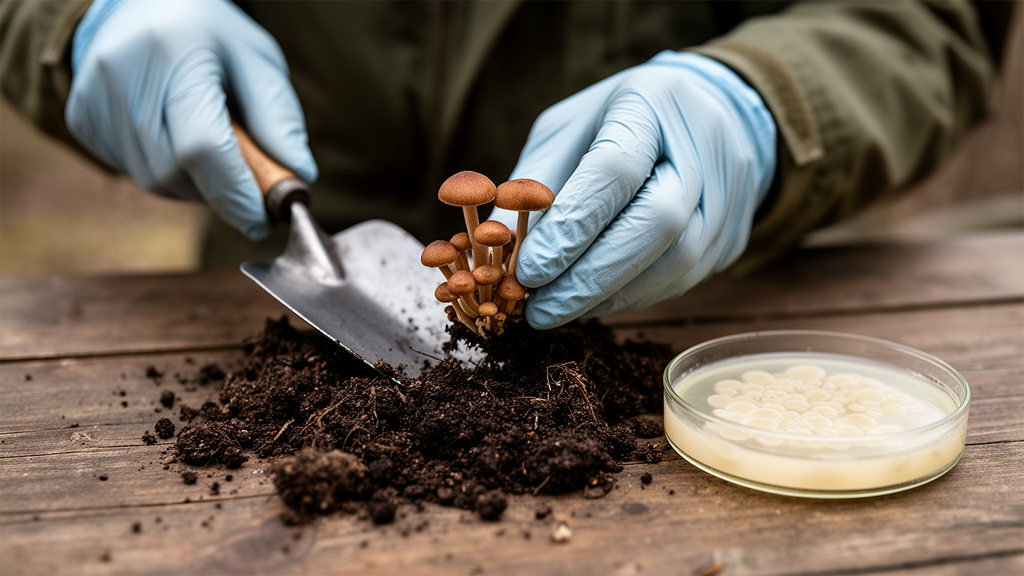
A forum review of fungal nomenclature concludes that the International Code of Nomenclature for algae, fungi, and plants does not unambiguously determine whether environmental samples such as soil, water, sediment and dung can serve as type material for newly named fungi. The analysis focuses on a narrower question than whether sequence-based fungal taxonomy should be accepted in future: whether the current wording already invalidates names typified by environmental samples or permits more than one interpretation.
The debate followed an attempt to introduce 30 species representing previously unnamed higher-level fungal lineages detected in environmental material, together with more than 160 names based on environmental DNA sequences. By 30 January 2026, the recognized nomenclatural repositories Index Fungorum, MycoBank and Fungal Names treated the relevant names in the 2025 attempt as invalidly published. The central issue was not whether the authors had indicated type material, but whether physical environmental material met the Code’s definition of a specimen.
Article 8.2 defines a specimen for typification as a gathering, or part of a gathering, of a single species or infraspecific taxon, disregarding admixtures. A gathering is material obtained by the same collectors at one time from one locality and presumed to represent one taxon. Article 9.14 provides that, when material associated with a type contains more than one taxon, the name remains attached to the part that corresponds most nearly with the original description or diagnosis.
The review notes that these provisions do not require a specimen to have a visible structure, be obtainable as a pure culture, or occur on a particular kind of substrate. They also do not explicitly exclude soil, dung, water, sediment, plant material or animal substrates. However, the wording does not state how a distributed molecular signal should be treated when no discrete physical or optically visible part of the sample can be linked to the molecular diagnosis.
Repository decisions in the disputed cases have generally taken a conservative approach. The reasoning described in the forum paper is that an environmental sample may be a gathering in procedural terms, but that curators may be unable to identify or delimit a specific physical part representing the named taxon when the diagnosis is exclusively molecular and no morphological structure, culture or microscopic preparation is available. On this reading, Article 9.14 cannot resolve the issue because there is no identifiable name-bearing part to which the name can remain attached.
A different interpretation remains compatible with the Code, according to the review. The Code does not expressly require a taxon to be morphologically visible at the time of typification or detected through a specific analytical method. Recovering taxon-attributable DNA from preserved material could therefore be interpreted as evidence that the organism was physically represented in the gathering. The authors acknowledge that the nature and scale of a part of a gathering are not precisely defined, but they regard this as an interpretive reading rather than an explicit rule authorizing DNA-based typification.
Earlier cases show that the boundary between specimens and illustrations has also shifted. In the proposed typification of Lawreymyces palicei, a DNA sequence was treated as an illustration, a route later closed by editions of the Code that specified that DNA representations do not depict organismal features. The review says this did not settle the broader question of what constitutes a depiction of an organismal feature. Piromyces cryptodigmaticus was described with preserved cow manure as type material and diagnostic DNA sequences, illustrating another case in which the status of environmental material depends on interpretation.
Repository practice has not been uniform. The review reports that all three recognized repositories treated Curlevskia holarctica and the other species described in the 2025 environmental-sample attempt as invalid, while MycoBank alone treated Piromyces cryptodigmaticus as invalid, unlike Index Fungorum and Fungal Names. The authors present these differing assessments as evidence of ambiguity in Articles 8 and 9 rather than as proof of a settled rule. They argue that repositories should state the basis for status assessments clearly and provide efficient ways to revisit disputed decisions.
The forum paper identifies several possible routes for formal clarification, without presupposing that DNA-based typification should be adopted. These include defining environmental samples for nomenclatural purposes, specifying whether molecular detection can establish specimenhood, clarifying how non-localisable biological evidence should be handled, and revising Article 9.14 to distinguish a type-bearing specimen from the herbarium sheet or preparation containing it. It also considers an interim sequence-based designation and more restrictive safeguards for DNA typification. General Code amendments follow International Botanical Congress procedures, while fungus-specific amendments follow International Mycological Congress procedures; proposals for Chapter F at IMC13 are due by 31 December 2026.
The review’s bounded conclusion is that recent repository treatments are conservative and defensible interpretations under uncertain wording, but they are not explicitly mandated by the Code. Environmental sequencing is exposing a gap between how fungi are detected and how their names are formally anchored. The authors therefore call for governance that can accommodate detection-led discovery while preserving transparent, consistent and stable application of fungal names.
Subject of Research: Ambiguity in the nomenclatural treatment of fungal taxa described from environmental DNA samples
Article Title: Dirt or type? Clarifying fungal nomenclature in the DNA age
Article References: Fachada, V., & Druzhinina, I. S. (2026). Dirt or type? Clarifying fungal nomenclature in the DNA age. IMA Fungus, 17, Article e190622. https://doi.org/10.3897/imafungus.17.190622
Image Credits: AI Generated
DOI: 10.3897/imafungus.17.190622
Keywords: fungal nomenclature, environmental DNA, fungal systematics, specimen typification, International Code of Nomenclature, cryptic diversity, dark taxa, nomenclatural repositories, Dirt, type, Clarifying, fungal
Cite Scienmag News
Roger Howard. (October 20, 2026). Forum review finds fungal naming rules unclear on environmental-sample types. Scienmag. https://scienmag.com/forum-review-finds-fungal-naming-rules-unclear-on-environmental-sample-types/
Roger Howard. "Forum review finds fungal naming rules unclear on environmental-sample types." Scienmag, 20 October 2026, https://scienmag.com/forum-review-finds-fungal-naming-rules-unclear-on-environmental-sample-types/. Accessed 20 October 2026.
Roger Howard. "Forum review finds fungal naming rules unclear on environmental-sample types." Scienmag. October 20, 2026. https://scienmag.com/forum-review-finds-fungal-naming-rules-unclear-on-environmental-sample-types/


