

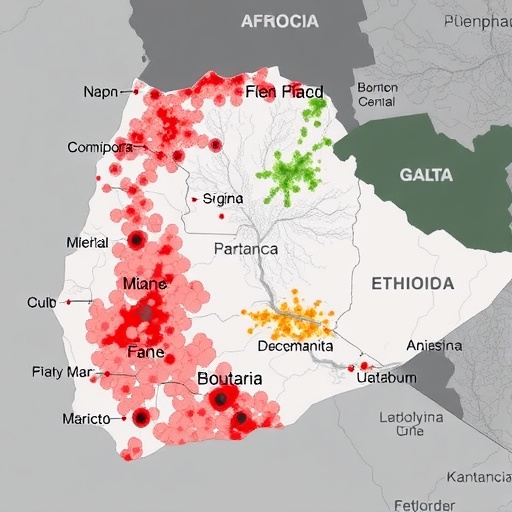
In the context of shifting climates around the globe, the impact on biodiversity and plant distributions is of increasing concern for ecologists and conservationists alike. The recent study conducted by Mekasha, Nemomissa, and Suryabhagavan amplifies this dialogue, focusing specifically on the plant species Commiphora Africana. This essential botanist piece of research utilizes advanced modeling techniques to predict the current and future distribution of this species across Ethiopia, emphasizing the potential effects of climate change.
Commiphora Africana, a key species in Ethiopian ecosystems, is more than just a plant; it carries significant cultural, medicinal, and ecological value. Known for its resin, which is often used in traditional medicine and incense, this species plays a critical role in local economies and practices. The ongoing changes in climate threaten not only this species but also the many life forms that rely on it for survival. Researchers have underscored the urgency of understanding how shifting temperatures and altered precipitation patterns will impact Commiphora Africana and its widespread utility among local populations.
The methodology underpinning the study is grounded in the MaxEnt model—an influential tool in ecological modeling. By utilizing this model, the researchers effectively mapped the species’ preferred habitats while accounting for varying climate scenarios anticipated over the coming decades. MaxEnt, which stands for Maximum Entropy, is notable for its ability to model species distributions even in the absence of complete data, making it an invaluable asset in ecological research, particularly in regions where data is sparse.
Through the application of the MaxEnt model, the research team identified the ideal climate parameters that currently support Commiphora Africana. Identifying these parameters is critical, as it allows scientists and conservationists to gauge how environmental changes may shift the species’ suitable habitats. By projecting these distributions under both present conditions and various future climate scenarios, the researchers provide valuable insights that can help direct effective conservation strategies.
Given Ethiopia’s diverse climatic zones—from arid landscapes to humid highlands—the habitat suitability for Commiphora Africana is inherently complex. The researchers utilized climate variables including temperature, precipitation, and humidity, which are pivotal in determining plant health and distribution. The nuanced understanding garnered through this study is vital for both botanical science and sustainable development initiatives aimed at preserving the ecological integrity of the region.
The findings reveal alarming shifts in suitable habitats for Commiphora Africana. Under future climate scenarios, particularly those predicting increased temperatures and altered rainfall patterns, significant portions of the current suitable habitat for this species may dwindle. This decline could lead to severe repercussions for local biodiversity and the human populations that rely on the plant for its various utilities, including sustenance and traditional practices.
Moreover, the research advocates for targeted conservation efforts, emphasizing the importance of considering climate resilience in conservation planning. By identifying potential refugia—areas where Commiphora Africana may still thrive despite adverse conditions—policymakers and conservationists can prioritize these locations for protection. The study serves as a clarion call for a collaborative approach between local communities, researchers, and governmental bodies to adapt and mitigate the impacts of climate change.
Additionally, the researchers recommend strengthening local conservation practices and awareness, highlighting the necessity for engaging with local communities about the importance of Commiphora Africana. Increasing awareness can empower local stewards in their efforts to manage ecosystems effectively while enhancing the economic viability tied to this remarkable plant species.
The ramifications of this research extend beyond the immediate geographical scope as well. As climate change accelerates globally, studies focused on diverse species and ecosystems are vital to understanding the collective impacts and adaptations necessary across varying climates. The predictive nature of the MaxEnt model, when applied comprehensively, could serve as a template for similar studies on myriad species worldwide, thus enhancing our universal database of ecological resilience.
As the study foregrounds the impending threats to Commiphora Africana, it also underscores the resilience of science in addressing ecological crises. The integration of technology and ecological modeling not only aids in forecasting potential challenges but also enlightens our path towards sustainability and conservation. Scientists are tasked not merely with reporting on these issues but actively participating in solutions capable of preserving both species and their habitats.
In conclusion, Mekasha, Nemomissa, and Suryabhagavan’s study marks a significant step toward understanding the future of Commiphora Africana in Ethiopia amidst the changing climate landscape. Their contributions elucidate an urgent narrative—one in which the survival of vital ecosystems and the communities connected to them hinge on our ability to understand and adapt to environmental change. This research not only sheds light on the threats facing a single species but also conjures a larger vision of ecological interconnectedness that necessitates immediate attention and action.
Subject of Research: The impact of climate change on the distribution of Commiphora Africana in Ethiopia.
Article Title: Predicting the current and future potential distribution of Commiphora Africana in Ethiopia under climate change using maxent model.
Article References:
Mekasha, S.T., Nemomissa, S. & Suryabhagavan, K.V. Predicting the current and future potential distribution of Commiphora Africana in Ethiopia under climate change using maxent model.
Discov. For. 2, 9 (2026). https://doi.org/10.1007/s44415-026-00068-x
Image Credits: AI Generated
DOI: https://doi.org/10.1007/s44415-026-00068-x
Keywords: Climate Change, Biodiversity, Ecological Modeling, Conservation, Commiphora Africana, MaxEnt Model, Ethiopia, Habitat Suitability, Environmental Change, Sustainable Development.


