


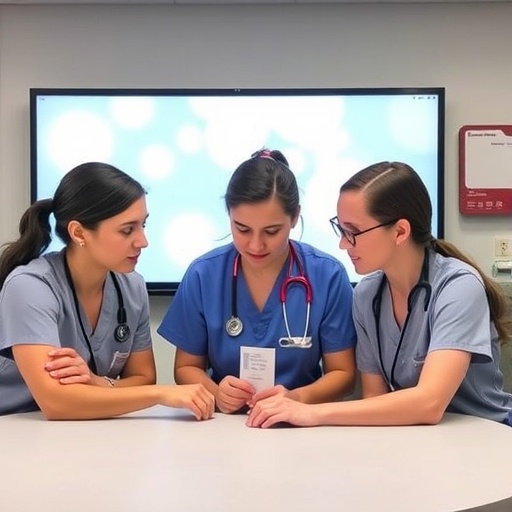
In a groundbreaking shift within the educational frameworks employed in healthcare, a recent randomized controlled study has unveiled transformative insights regarding the flipped learning model among nursing students, particularly in the context of administering inhaled medications. The study, conducted by Bayrak Kahraman, Acun, and Bilgiç, stands at the forefront of innovative teaching methodologies that emphasize active learning and critical thinking, reshaping how nursing education equips future practitioners with essential skills for patient care.
The concept of flipped learning revolves around inverting traditional teaching dynamics. In a conventional classroom, education typically occurs through lectures where students passively absorb information. Conversely, the flipped model encourages students to engage with instructional content prior to class, allowing valuable in-class time to focus on experiential learning activities and collaborative discussions. This paradigm shift primes nursing students to effectively absorb theoretical frameworks at their own pace before applying that knowledge through practical simulations and hands-on practice.
In this recent study, the researchers aimed to measure the effectiveness of flipped learning in enhancing nursing students’ knowledge and skills in administering inhaled medications, a crucial aspect of respiratory care. Given the increasing prevalence of respiratory diseases, understanding the nuances of administering inhaled therapies is paramount for nursing professionals. This study posits that equipping nursing students with robust foundational knowledge and practical skills will ultimately enhance patient outcomes in clinical settings.
Prior to implementing the flipped learning model, students were evaluated on their initial knowledge and skills related to inhaled medication administration. The randomized controlled trial then involved grouping students into two distinct cohorts: one experienced the traditional teaching method while the other group engaged with the flipped learning approach. The researchers meticulously monitored the progress of both cohorts, employing assessments and observational techniques to gauge knowledge acquisition and practical competencies in real-time scenarios.
The outcomes of this research offer an illuminating glimpse into the future of nursing education. Notable findings indicated that students who underwent flipped learning not only demonstrated a significant increase in theoretical knowledge compared to their traditional counterparts, but also excelled in practical skills essential for inhaled medication administration. This hands-on capability is critical, as nursing involves not only cognitive understanding but also the dexterity to perform complex tasks under pressure.
In dissecting the implications of this study, it becomes clear that flipped learning cultivates an environment of engagement and accountability among students. By requiring learners to prepare before class, this model fosters a sense of autonomy and responsibility for their own education. Consequently, this increased ownership manifests during practical applications, where students confidently navigate clinical scenarios and exhibit enhanced problem-solving capabilities, key attributes in healthcare settings.
Furthermore, the interactive nature of flipped learning encourages peer collaboration and knowledge sharing. In a discipline where teamwork is essential, fostering a collaborative spirit among students can bridge gaps in understanding and further amplify the learning experience. The mixed-methods approach adopted by the researchers, combining quantitative assessments with qualitative feedback from students, enriches the data collected, providing a holistic view of the learning process.
Beyond the classroom, the implications of this research ripple through the broader healthcare landscape. As nursing educators emphasize competency-driven training, the need for innovative instructional strategies becomes increasingly vital. The ability to administer inhaled medications with proficiency can significantly impact patient safety and treatment effectiveness. Therefore, incorporating flipped learning into nursing curricula not only elevates educational standards but ultimately advances the quality of care delivered to patients across various healthcare settings.
As nursing programs grapple with integrating modern pedagogical approaches, the study authored by Kahraman, Acun, and Bilgiç provides a compelling case for the flipped learning model. Educational institutions must adapt to the changing dynamics of healthcare, ensuring that future nursing professionals are equipped not only with foundational knowledge but also the practical skills that are essential for delivering high-quality patient care.
Moreover, this study opens avenues for further research into other domains of nursing education. Investigating the efficacy of flipped learning across various subjects, including pharmacology, critical care nursing, and patient assessment, could yield invaluable insights. By exploring diverse applications of this teaching methodology, nursing education can continue to evolve in tandem with the demands of the healthcare industry.
The researchers’ findings resonate particularly well in light of the ongoing shifts in medical education methods. As technological advancements continue to shape the landscape of learning, educators must seek to harness these developments to enhance instructional strategies. The flipped classroom model, supported by digital learning tools, can facilitate a more interactive and immersive educational experience, a necessity in the fast-paced world of healthcare.
In conclusion, the pioneering research led by Bayrak Kahraman, Acun, and Bilgiç sheds light on the transformative potential of flipped learning within nursing education. By redefining traditional teaching methodologies, this study underscores the importance of equipping nursing students with both knowledge and practical skills necessary for effective patient care. The ongoing dialogue around innovative pedagogies is crucial as we advance toward a future marked by enhanced healthcare delivery and improved patient outcomes.
As nursing education continues to adapt, it is incumbent upon educators and institutions to ensure that they are utilizing the best possible strategies to educate the next generation of healthcare providers. The findings from this groundbreaking study serve as a beacon of possibility, signaling a future where nursing education is not only more effective but also more aligned with the realities of contemporary healthcare challenges. The journey toward exemplary nursing practice begins with innovative education strategies, paving the way for future leaders in health.
Bayrak Kahraman, B., Acun, A. & Bilgiç, S. The effect of flipped learning on nursing students’ knowledge and skills in administering inhaled medications: a randomized controlled study.
BMC Nurs 24, 1146 (2025). https://doi.org/10.1186/s12912-025-03821-3
Cite Scienmag News
Ophelia Keating. (September 2, 2025). Flipped Learning Boosts Nursing Students’ Inhalation Skills. Scienmag. https://scienmag.com/flipped-learning-boosts-nursing-students-inhalation-skills/
Ophelia Keating. "Flipped Learning Boosts Nursing Students’ Inhalation Skills." Scienmag, 2 September 2025, https://scienmag.com/flipped-learning-boosts-nursing-students-inhalation-skills/. Accessed 4 September 2026.
Ophelia Keating. "Flipped Learning Boosts Nursing Students’ Inhalation Skills." Scienmag. September 2, 2025. https://scienmag.com/flipped-learning-boosts-nursing-students-inhalation-skills/


