

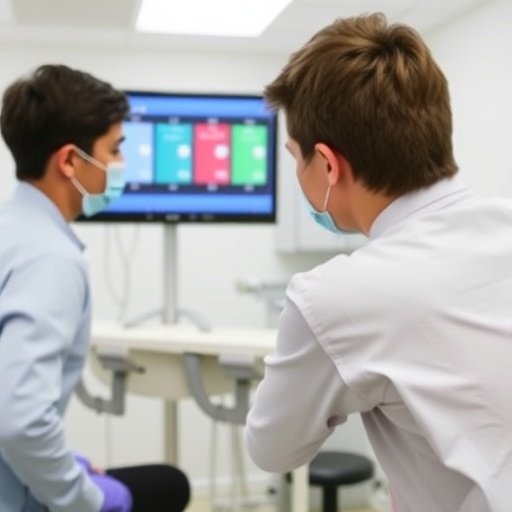
In a groundbreaking study that has the potential to reshape dental education, researchers have introduced an innovative pedagogical approach known as the extended flipped classroom model. Conducted by a team led by Ba, R., Feng, X., and Yuan, L., this research highlights the transformative impacts of this educational strategy on dental undergraduates, ultimately aiding their transition into professional practice as dentists. The study, which will be published in BMC Medical Education in 2026, reveals how a structured, flipped classroom environment not only elevates the learning experience but also enhances the acquisition and application of essential dental skills.
Traditionally, dental education has relied heavily on conventional lecture-based teaching methods, where students absorb information passively without engaging in practical application. However, this study challenges that norm by advocating for a shift towards an experiential learning paradigm. The extended flipped classroom model reverses the conventional teaching dynamic, with students engaging with theoretical materials at home and applying these concepts in a supportive classroom environment. By doing so, the model encourages collaborative learning and critical thinking, both of which are vital for the development of competent dental professionals.
The extended flipped classroom model moves beyond the basic flipped classroom format by providing additional support structures for students. In this model, a variety of multimedia resources, including videos, interactive quizzes, and discussion forums, are utilized to deepen students’ understanding of complex dental concepts before they enter the classroom. This preparatory work equips students with a foundational knowledge base, allowing them to participate more actively in hands-on exercises and peer collaboration during in-person sessions.
Furthermore, the model incorporates regular feedback and evaluation mechanisms, which are crucial for monitoring student progress and understanding. In traditional settings, students might not receive timely feedback on their performance. However, the extended flipped classroom ensures that instructors can provide immediate insights into students’ grasp of the material, enabling them to identify areas that require further reinforcement. This immediate feedback loop fosters a learning environment where students can continuously refine their skills and knowledge.
A significant aspect of the research highlights the positive influence of active engagement in learning on student motivation and retention. As students participate in peer discussions and collaborative exercises, they find themselves more invested in the learning process. This heightened engagement not only enhances their understanding of clinical concepts but also cultivates a sense of camaraderie among peers that mirrors the collaborative nature of professional dental practice. This social dimension of learning cannot be overstated, as the cultivation of teamwork and communication skills is vital for future success in dentistry.
Moreover, the extended flipped classroom model allows for personalized learning experiences. Instructors can tailor their teaching approaches to fit the unique needs and learning styles of individual students. With the freedom to explore topics at their own pace outside the classroom, students can spend more time on challenging subjects, while also benefiting from guided instruction during class time. This adaptability is especially beneficial in a field as complex as dentistry, where mastering both theoretical concepts and practical skills is essential.
Another noteworthy finding from the research pertains to improved clinical skills among participants. By providing students with the opportunity to practice procedures in a controlled classroom environment, the extended flipped classroom model allows them to gain confidence before encountering real clinical scenarios. This hands-on experience is invaluable as students learn to navigate the intricacies of patient care and treatment planning. As a result, they are better prepared to handle the demands of clinical practice upon graduation.
The positive outcomes observed through this model have implications that extend beyond the classroom. Graduates who have experienced the extended flipped classroom approach are likely to emerge as more competent and self-assured dental professionals. As they enter the workforce, their advanced clinical skills and proactive engagement in patient care are expected to enhance the quality of dental services provided to the community. This ripple effect underscores the importance of innovative educational strategies in shaping the future of healthcare professionals.
As this study gains traction, it stands to challenge educational institutions to reconsider their teaching methodologies. The benefits of the extended flipped classroom model suggest that dental schools may need to re-evaluate their curricula and teaching methods to create an environment that fosters active learning. Colleges and universities aiming to produce the next generation of skilled dentists can look to this research as a valuable resource for implementing effective instructional strategies.
In conclusion, the introduction of the extended flipped classroom model represents a significant evolution in dental education. By prioritizing active engagement, collaboration, and personalized learning, this innovative approach equips dental students with the tools they need for success in their professional journeys. With the potential to revolutionize how dental practitioners are trained, this research paves the way for more effective and responsive educational frameworks in healthcare.
As we await the final publication of this study in BMC Medical Education, it’s clear that the extended flipped classroom model holds promise not only for dental undergraduates but for future generations of healthcare professionals. The call to action is clear: educational institutions must embrace innovative teaching methods that reflect the demands of modern practice, ensuring that students thrive in both their academic pursuits and their future careers.
The implications of this research resonate well beyond dental education alone. As the extended flipped classroom model gains popularity, other fields may adopt similar frameworks, applying the principles of active learning and student engagement to create a more dynamic and effective educational landscape. This marks a pivotal moment in education, inviting stakeholders to rethink how knowledge is delivered and sought after in an ever-evolving world.
Subject of Research: Innovative pedagogy in dental education through the extended flipped classroom model.
Article Title: A novel extended flipped classroom model helps dental undergraduates grow into dentists.
Article References:
Ba, R., Feng, X., Yuan, L. et al. A novel extended flipped classroom model helps dental undergraduates grow into dentists.
BMC Med Educ (2026). https://doi.org/10.1186/s12909-025-08525-5
Image Credits: AI Generated
DOI: 10.1186/s12909-025-08525-5
Keywords: extended flipped classroom model, dental education, innovative teaching, student engagement, hands-on learning, collaborative education, feedback mechanisms, clinical skills development.


