


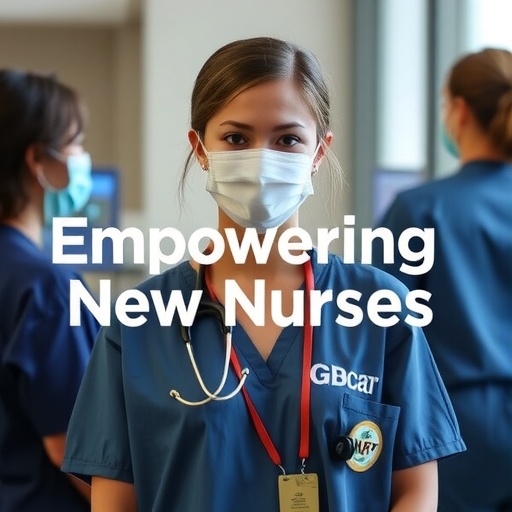
In the evolving landscape of healthcare, the integration of new nurses into hospitals is becoming increasingly crucial. Recent qualitative research led by Ahn and Jeong sheds light on the significant role that clinical nurse educators play in facilitating this essential transition. Conducted in a tertiary hospital in South Korea, the study unveils insights into practice adaptation training pivotal for developing competent nursing professionals amidst a complex healthcare environment.
The research emphasizes the critical nature of effective training programs designed for newly graduated nurses who are often overwhelmed when stepping into the demanding world of clinical care. As the healthcare industry continuously faces challenges such as rising patient acuity and staff shortages, having structured support in place becomes paramount. Clinical nurse educators must therefore be equipped with strategies that not only encourage clinical confidence but also foster a sense of belonging and professional identity in novice nurses.
The qualitative study collected data through in-depth interviews with experienced clinical nurse educators and newly hired nurses. These conversations revealed a wealth of experiences, highlighting diverse perspectives on the adaptation process. It became evident that supporting new nurses extends beyond fundamental clinical skills. It encompasses emotional and social aspects, which are vital for enhancing resilience and coping strategies among novices.
Furthermore, the findings illustrated the dynamic and multifaceted roles that clinical nurse educators adopt. They are not mere transmitters of knowledge but also act as mentors, facilitators, and role models. Educators employ various pedagogical approaches to create an interactive learning environment, where new nurses can express uncertainties and seek guidance without fear. This needs-driven educational model reflects the importance of adapting training to meet the individual needs of novice practitioners.
One crucial revelation from the research involves the balance between imparting technical skills and nurturing interpersonal competencies. New nurses often encounter complex scenarios that require effective communication and strong teamwork. Clinical nurse educators are therefore tasked with embedding these soft skills into the training curriculum, bridging the gap between theory and real-world application.
The article brings forth the theme of continuous improvement in nursing education. The authors argue for the necessity of regular feedback mechanisms, which enable clinical nurse educators to refine their approaches based on the evolving challenges faced by new nurses. This responsiveness is critical, as feedback loops foster an educational culture of learning and adaptation, which ultimately enhances patient care quality.
However, challenges persist. Many clinical nurse educators grapple with their own workloads, leading to potential burnout and a compromised ability to deliver optimal mentoring. The study highlights the need for institutional support systems that alleviate these pressures while allowing educators to dedicate ample time to mentoring tasks. System-wide interventions that prioritize educator well-being could enhance the overall training experience for new nurses.
Another significant aspect explored is the importance of building a collaborative workplace culture. Educators are encouraged to foster relationships not only within their training cohorts but also among senior nursing staff. Collaboration across departments can create a more supportive learning environment, improving the successful integration of new nurses into multidisciplinary teams.
The implications of this study extend beyond the immediate findings, suggesting broader applications in nursing education globally. As healthcare settings around the world adapt to new challenges, understanding the necessity for support systems within nurse training is essential. The study advocates for establishing structured mentorships and robust training programs in varied healthcare contexts, providing a blueprint for global nursing education reform.
Moreover, the rapid evolution of technology in healthcare brings new dimensions into the training paradigm. Innovative educational tools and simulation technologies can be integrated into practice adaptation training. This approach not only enhances skill acquisition but also allows for safe experimentation within clinical settings. The experience gained through simulated scenarios can significantly bolster new nurses’ confidence and preparedness as they transition into real patient care.
In conclusion, the findings from Ahn and Jeong’s study illuminate critical insights into the challenges and opportunities within nursing education. The foundational role of clinical nurse educators in shaping the future of nursing cannot be understated. By championing a culture of support, continuous feedback, and collaboration, there exists an opportunity to transform the transitional experience for new nurses into a positive and empowering endeavor.
As healthcare demands intensify, the profession must invest in nurturing the next generation of nursing leaders through robust educational frameworks. The implications of this research serve as a clarion call for healthcare institutions worldwide to recognize the indispensable role of clinical nurse educators in shaping competent and resilient nursing professionals prepared to tackle the complexities of modern-day healthcare.
By focusing on practice adaptation and the multifaceted training needs of new nurses, the study advocates for systematic advancements that can enhance nurse retention and ultimately improve patient outcomes. In this ever-evolving field, embracing these insights might well be the key to ensuring a sustainable and effective nursing workforce in the years to come.
Cite Scienmag News
Ophelia Keating. (January 8, 2026). Empowering New Nurses: Insights from Clinical Educators. Scienmag. https://scienmag.com/empowering-new-nurses-insights-from-clinical-educators/
Ophelia Keating. "Empowering New Nurses: Insights from Clinical Educators." Scienmag, 8 January 2026, https://scienmag.com/empowering-new-nurses-insights-from-clinical-educators/. Accessed 4 September 2026.
Ophelia Keating. "Empowering New Nurses: Insights from Clinical Educators." Scienmag. January 8, 2026. https://scienmag.com/empowering-new-nurses-insights-from-clinical-educators/


