


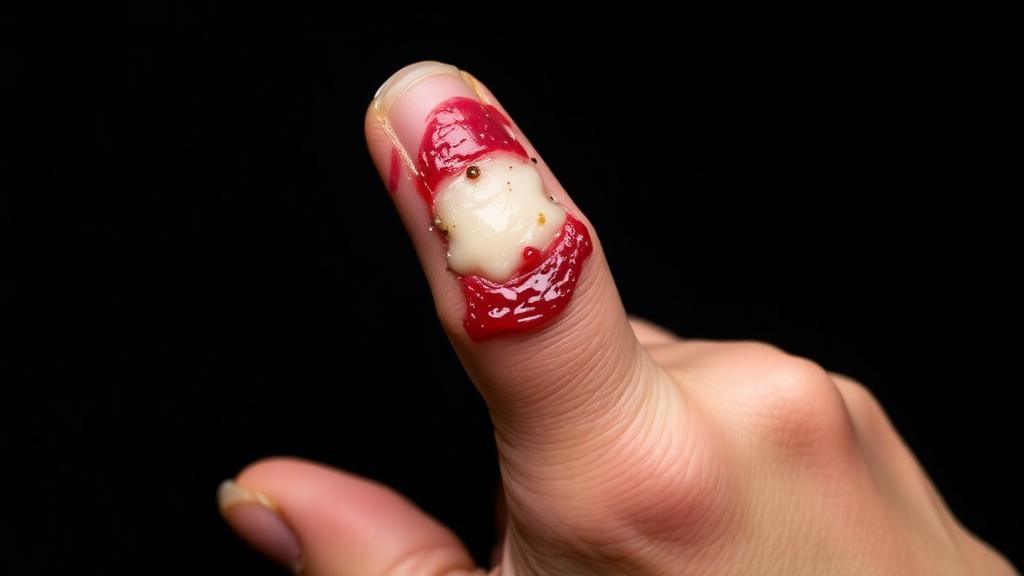
A seemingly routine thumb abscess nearly cost a 40-year-old man his hand. What began as pain, swelling, and redness in his left thumb escalated within days into necrotizing fasciitis, the rare and terrifying soft-tissue infection often described as flesh-eating disease. In a case report published in BMC Plastic and Reconstructive Surgery, surgeons in Qatar describe how the infection, which had already claimed the man’s thumb, was ultimately tamed and the hand rebuilt using a sequence of sophisticated microsurgical techniques, including a free flap of skin and fascia harvested from his own thigh.
Necrotizing fasciitis is among the most feared infections in medicine. It attacks the fascia, the connective tissue sheath that wraps around muscles and organs beneath the skin, and spreads along these planes with alarming speed. As bacteria multiply, they release toxins that destroy tissue, cut off blood supply, and can drive the body into septic shock. Mortality estimates cited in the report reach 18.1 percent overall, and when the infection takes hold in the hand, the stakes are uniquely high: a systematic review of hand-originating necrotizing fasciitis reports a mortality rate of around 8 percent and an amputation rate of 28 percent. The thumb, which accounts for roughly 40 percent of overall hand function, is an exceptionally rare site for the disease, with only a handful of cases documented in the medical literature.
The patient in this report arrived at the emergency department after first seeking care elsewhere, where clinicians drained what appeared to be a simple abscess. Instead of resolving, his symptoms worsened rapidly. He was newly diagnosed with type 2 diabetes, a critical detail, because diabetes impairs immune defenses and tissue integrity, making patients far more vulnerable to aggressive infections. On examination, surgeons found blackened, necrotic tissue in the thumb pulp with pus discharge, marked swelling across the entire hand, bluish skin discoloration, and a sinister finding: palpable crepitus, the crackling sensation produced by gas trapped under the skin. He could not flex his thumb at all, and the tenderness had spread to his wrist and forearm.
Diagnostic imaging confirmed the surgeons’ worst suspicions. An X-ray of the left hand revealed marked soft-tissue swelling and multiple pockets of air over the thenar eminence, the muscular pad at the base of the thumb, a hallmark of a gas-forming infection. Laboratory tests painted a picture of overwhelming systemic inflammation: his white blood cell count had soared to 28.7 × 10³ per microliter, and his procalcitonin level, a marker of severe bacterial infection, stood at 3.28 nanograms per milliliter. He was immediately started on a triple-antibiotic regimen of intravenous clindamycin, vancomycin, and piperacillin-tazobactam, and taken to the operating room the following morning for emergency incision, drainage, and debridement.
What surgeons found in the operating room underscored how deceptively mild these infections can appear from the outside. The hand was tense and swollen, the thumb tip was dead, and deep within the tissues lay extensive necrosis, foul-smelling brown pus, and thrombosed dorsal veins. Surgeons made multiple incisions to evacuate the infection and performed a carpal tunnel release to decompress the median nerve, irrigating the wound with hydrogen peroxide, Betadine, and saline. By the next day, the disease had progressed relentlessly. The thumb was disarticulated at the metacarpophalangeal joint, and surgeons excised all necrotic tissue, including dead extensor tendons and flexor sheaths, until they reached healthy margins. Tissue cultures identified a polymicrobial cocktail: Streptococcus constellatus, Streptococcus agalactiae, and anaerobic bacteria, consistent with Type 1 necrotizing fasciitis.
With the infection controlled and the wound bed confirmed viable, the reconstruction phase began four days after the amputation. The team selected a free anterolateral thigh flap, a workhorse of modern reconstructive surgery. This technique involves harvesting a large paddle of skin, fat, and fascia from the patient’s thigh, along with its feeding artery and veins, then transplanting it to the hand and reconnecting the vessels under a microscope. In this case, the flap’s artery was anastomosed to the radial artery and its accompanying veins, restoring blood flow to the reconstructed tissue. The surgeons deliberately chose a fasciocutaneous flap over a muscle flap because it provides bulk while remaining easier to dissect in a planned second stage, and they preserved a backup flap option on the opposite side in case the transplant failed. They also harvested the flexor tendon from the patient’s index finger to reconstruct the destroyed extensor tendon of the thumb, and stabilized the first metacarpal with K-wires.
Recovery was not linear. Thirteen days after the initial presentation, persistent pus drainage and spreading necrosis forced yet another operation. A four-by-four-centimeter patch of skin on the volar forearm had died, even though the thigh flap itself remained healthy and well-perfused. Surgeons responded with a second, elegantly different technique: a distally based pedicled ulnar artery perforator flap. Unlike a free flap, this tissue is rotated locally from the forearm while remaining attached to its ulnar artery blood supply, avoiding the need for microvascular anastomosis in an already compromised field. The donor site was covered with split-thickness skin grafts from the thigh. Intraoperative cultures from this second procedure were negative, a sign the infection had finally been eradicated.
The patient spent 34 days in the hospital, during which his glycemic control was tightly managed and his inflammatory markers steadily normalized, with white blood cells falling to 11.0 × 10³ per microliter by discharge. Occupational therapy began early, with gentle passive wrist flexion and composite digital stretching exercises once the splint was removed. At follow-up visits every three days, both the thigh donor site and the hand recipient site healed well, the flaps remained viable, and finger range of motion continued to improve. The authors report no postoperative complications and favorable recovery through six months of follow-up, though they note that definitive reconstruction has been deferred because the patient has hesitated to proceed.
The surgical team’s discussion of the case offers broader lessons for clinicians. Necrotizing fasciitis of the thumb often begins with subtle symptoms, redness, induration, and pain, that can escalate within hours to days. Reported cases in the literature range from fulminant progression within 8 to 24 hours to slower courses unfolding over four days, as in this patient. The key diagnostic clue is pain disproportionate to physical findings, and the authors argue clinicians should maintain a low threshold for suspecting the disease, especially in diabetic or immunocompromised patients, because the infection can look localized and mild on the surface while ravaging deep tissues. Current guidelines, including those from the Eastern Association for the Surgery of Trauma, emphasize debridement within 24 hours of diagnosis, empiric broad-spectrum antibiotics covering both aerobic and anaerobic organisms, and supportive sepsis care.
The case also illuminates the future of thumb reconstruction. Because microsurgical reconstruction in an actively infected field carries a high risk of failure, the team deferred definitive restoration until the infection fully resolved and the soft-tissue envelope matured. The planned next stage is a toe-to-hand transfer, in which part of the patient’s great toe, with its bone, joint, tendon, and nerve supply, is transplanted to recreate the missing thumb, an approach supported by recent evidence showing high functional success in staged thumb reconstruction. For now, the man retains a healed, functional hand where a flesh-eating infection threatened to take far more than a single digit, a testament to aggressive surgery, multidisciplinary care, and the remarkable toolkit of modern reconstructive microsurgery.
Subject of Research: Necrotizing fasciitis of the thumb and its staged microsurgical reconstruction with free and pedicled flaps
Article Title: Necrotizing fasciitis of the thumb reconstructed with a free flap: a case report and review of surgical lessons
Article References: Ahmed, M. B., Al-Mohannadi, F. S., Zeir, F. A., Mohammed, M., Mohammedali, S., Tay, J. Q., & Alsherawi, A. (2026). Necrotizing fasciitis of the thumb reconstructed with a free flap: a case report and review of surgical lessons. BMC Plastic and Reconstructive Surgery, 2(1), Article 2. https://doi.org/10.1186/s44452-026-00014-y
Image Credits: AI Generated
DOI: 10.1186/s44452-026-00014-y
Keywords: necrotizing fasciitis, thumb amputation, free flap reconstruction, anterolateral thigh flap, microsurgery, diabetes, polymicrobial infection, debridement, hand surgery, Streptococcus constellatus, toe-to-hand transfer, reconstructive surgery
Cite Scienmag News
Ophelia Keating. (October 1, 2026). Flesh-Eating Infection Destroyed a Man’s Thumb: Surgeons Rebuilt His Hand With Tissue From His Thigh. Scienmag. https://scienmag.com/flesh-eating-infection-destroyed-a-mans-thumb-surgeons-rebuilt-his-hand-with-tissue-from-his-thigh/
Ophelia Keating. "Flesh-Eating Infection Destroyed a Man’s Thumb: Surgeons Rebuilt His Hand With Tissue From His Thigh." Scienmag, 1 October 2026, https://scienmag.com/flesh-eating-infection-destroyed-a-mans-thumb-surgeons-rebuilt-his-hand-with-tissue-from-his-thigh/. Accessed 17 October 2026.
Ophelia Keating. "Flesh-Eating Infection Destroyed a Man’s Thumb: Surgeons Rebuilt His Hand With Tissue From His Thigh." Scienmag. October 1, 2026. https://scienmag.com/flesh-eating-infection-destroyed-a-mans-thumb-surgeons-rebuilt-his-hand-with-tissue-from-his-thigh/


