


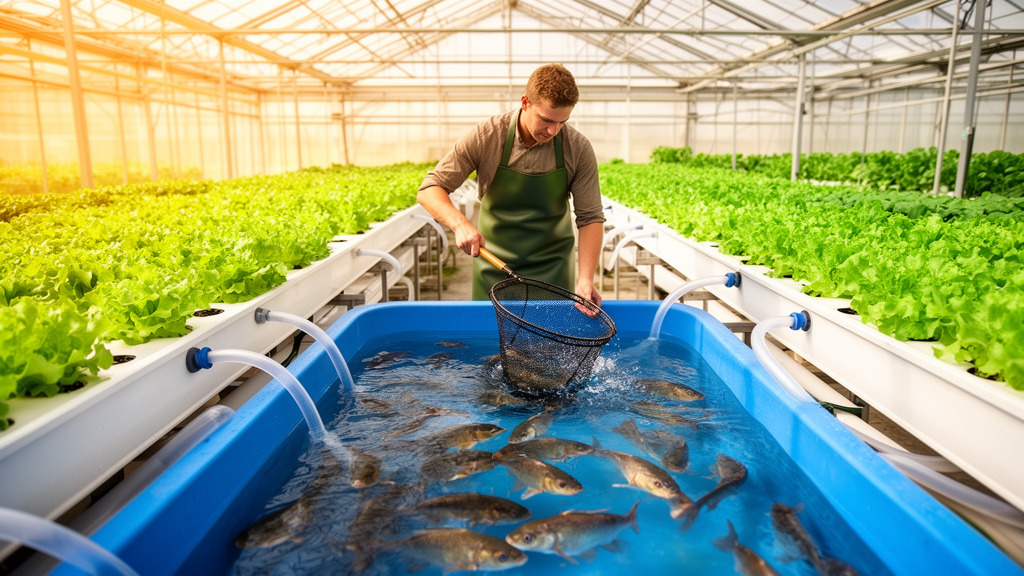
Aquaculture now supplies more than half of the world’s aquatic animal food, and that rapid expansion comes with a hidden cost: fish farms generate enormous loads of nitrogen and phosphorus compounds from fish metabolism and uneaten feed. A new study from the University of the Philippines Visayas, published in Frontiers in Aquaculture, has now tracked exactly where those nutrients go when fish waste is routed into lettuce production, and the results upend some common assumptions about which farming system actually pays.
The research team, led by Mary Clarisse M. Surmion, Frenz Charish B. Hechanova, and Fredson H. Huervana, compared three production strategies side by side over a forty-day cultivation period: coupled aquaponics, in which filtered water from an African catfish recirculating system flows directly through lettuce-growing boxes and back to the fish tank; conventional hydroponics, fertilized with the commercial SNAP A and B nutrient solutions; and a nutrient-supplemented decoupled aquaponic system, in which the fish and plant loops are separated and catfish sludge is aerobically mineralized for fifteen days with molasses as a carbon source before being fed to the plants alongside roughly half the chemical fertilizer rate used in hydroponics.
The fish component consisted of 509 African catfish averaging 120 grams each, stocked at 10 kilograms per cubic meter in a circular tank and fed a commercial diet three times daily at 3 percent of body weight, corresponding to a daily ration of 1.83 kilograms. That feed input is the engine of the entire nutrient economy: approximately 95 percent of feed is consumed, and 60 to 70 percent of ingested nutrients are subsequently excreted as waste, including ammonia, which nitrifying bacteria convert into nitrate and ammonium, the primary nitrogen forms plants can assimilate. The daily ration corresponds to roughly 90.77 grams of nitrogen entering the system, a substantial fraction of which becomes available for plant uptake.
When the lettuce was harvested, conventional hydroponics was the clear winner on plant growth. Plants in the hydroponic treatment achieved the highest crop growth rate and total fresh weight, followed by coupled aquaponics, while the decoupled, sludge-fortified system produced the lowest biomass. The morphological data told a more nuanced story: coupled aquaponics produced the greatest number of leaves at 18.85 per plant, hydroponics produced the heaviest leaves at 32.26 grams fresh weight and by far the longest roots at 32.38 centimeters, and the decoupled system produced the heaviest roots at 6.31 grams despite the smallest shoots at 12.17 grams. The root-to-leaf weight ratio followed the opposite trend of shoot growth, indicating fundamental differences in how plants allocated biomass among the three nutrient environments.
The most striking finding, however, was that plant productivity was not directly proportional to the total nutrient concentrations in the culture water. Tissue analysis showed that lettuce in the decoupled system actually accumulated the highest tissue nitrogen at 3,015 milligrams per kilogram and the highest phosphorus at 22,013 milligrams per kilogram, statistically comparable to coupled aquaponics, while hydroponic lettuce had the lowest tissue nitrogen at 2,350 milligrams per kilogram. Water analysis confirmed that the decoupled system maintained the highest nitrogen and phosphorus concentrations throughout the trial. Yet those nutrient-rich plants grew the least, demonstrating that nutrient availability and assimilation efficiency, rather than abundance alone, govern crop productivity.
The researchers attribute this paradox to the interplay of pH-mediated nutrient solubility and ionic competition. The hydroponic system exhibited the most pronounced acidification, with pH declining from 6.7 to a minimum of 5.2, staying within or close to the recommended 5.5 to 6.5 range for lettuce for much of the culture period. That slightly acidic environment prevents the precipitation of essential elements such as iron, manganese, calcium, and magnesium, which typically become bio-unavailable above pH 7.0, potentially facilitating superior root-to-shoot translocation. In contrast, both aquaponic treatments maintained pH values between 6.45 and 7.75, which may have restricted the mobility of essential nutrients and limited their transport from roots to shoots even when root-zone concentrations were sufficient.
Ionic antagonism adds another layer of complexity. The uptake of calcium, magnesium, and potassium is inherently competitive, such that an excess of one element can inhibit absorption of the others. The decoupled system’s elevated calcium concentrations, reaching 8,736 milligrams per kilogram in tissue, may have induced nutrient lockout, limiting potassium and magnesium absorption. Interestingly, the decoupled system did achieve the highest tissue magnesium at 403 milligrams per kilogram, a marked increase from the initial level below 170, which the authors attribute to the mineralized fish sludge increasing magnesium availability in the culture water. The shorter, heavier roots observed in the decoupled system may also indicate osmotic stress, creating a physiological bottleneck that limited shoot growth.
The economic analysis delivered the study’s most counterintuitive verdict. Although conventional hydroponics achieved the highest vegetable yield, the coupled aquaponic system generated the highest gross income at 126,400 Philippine pesos annually and the highest net income at 33,956 pesos, thanks to the combined sale of lettuce and roughly 400 kilograms of catfish per year. The decoupled system, despite producing the lowest lettuce biomass, achieved the highest annual return on investment at 97.94 percent and the shortest investment payback period at 0.76 years, because its low capital and operational costs compensated for the reduced crop yield. Conventional hydroponics showed the weakest economic performance in net income, annual return, and payback periods, constrained by its reliance on a single product.
Sensitivity analyses revealed that profitability in the coupled system is strongly influenced by fish market price, whereas the plant-only systems are more dependent on lettuce market value. A 10 percent drop in lettuce pricing reduced the hydroponic system’s annual net income from 6,742 pesos to just 2,102 pesos, while the coupled system’s diversified income stream provided greater resilience against market fluctuations. The authors note that the economic estimates involving fish production were based on assumed standard values rather than measured growth performance data, and that fish prices, feed costs, and investment depreciation were drawn from prevailing market prices as of June 2023.
From a sustainability perspective, each system presents distinct trade-offs. Coupled systems enhance nutrient recycling and reduce reliance on external inputs but require tighter environmental control due to the competing needs of fish, plants, and nitrifying bacteria. Decoupled systems offer greater operational flexibility by allowing independent optimization of fish and plant production, though this increases dependence on external inputs. The authors caution that these results are specific to the lettuce and African catfish combination and may differ across other crop-fish pairings, recommending future work on micronutrient profiling, comprehensive effluent characterization, feed input variability, and long-term studies with multiple production cycles and system replicates. What the study makes undeniably clear, though, is that in the race to feed both people and profit from a single tank of water, the biggest harvest is not always the one you can weigh.
Subject of Research: Aquaculture and sustainable food production systems
Article Title: Comparative analysis of nutrient dynamics, growth performance, and economic returns of lettuce (Lactuca sativa) in coupled aquaponic, decoupled aquaponic, and conventional hydroponic systems
Article References: Surmion, M. C. M., Hechanova, F. C. B., Huervana, F. H., Guyapale, R. M. T., & Gayosa, V. E. D. (2026). Comparative analysis of nutrient dynamics, growth performance, and economic returns of lettuce (Lactuca sativa) in coupled aquaponic, decoupled aquaponic, and conventional hydroponic systems. Frontiers in Aquaculture, 5, Article 1813061. https://doi.org/10.3389/faquc.2026.1813061
Image Credits: AI Generated
DOI: 10.3389/faquc.2026.1813061
Keywords: aquaponics, hydroponics, lettuce, African catfish, nutrient dynamics, sustainable agriculture, food production economics, Comparative, analysis, nutrient, dynamics, growth
Cite Scienmag News
Alan Morgan. (October 17, 2026). Fish Waste Meets Lettuce: The Surprising Economics of Aquaponics Revealed. Scienmag. https://scienmag.com/fish-waste-meets-lettuce-the-surprising-economics-of-aquaponics-revealed/
Alan Morgan. "Fish Waste Meets Lettuce: The Surprising Economics of Aquaponics Revealed." Scienmag, 17 October 2026, https://scienmag.com/fish-waste-meets-lettuce-the-surprising-economics-of-aquaponics-revealed/. Accessed 17 October 2026.
Alan Morgan. "Fish Waste Meets Lettuce: The Surprising Economics of Aquaponics Revealed." Scienmag. October 17, 2026. https://scienmag.com/fish-waste-meets-lettuce-the-surprising-economics-of-aquaponics-revealed/


