


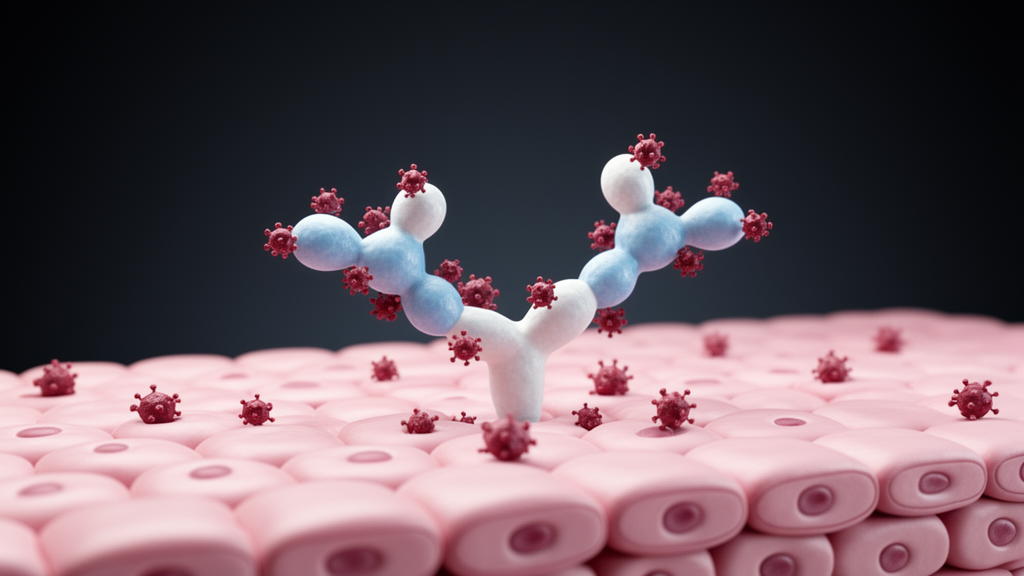
A bacterial toxin long suspected of contributing to the misery of urinary tract infections has finally been made visible to researchers. The uropathogenic specific protein, or USP, is a nuclease toxin produced by certain uropathogenic strains of Escherichia coli, and although the gene that encodes it has been detected repeatedly in clinical samples from patients, the protein itself has remained stubbornly invisible. Now a team led by researchers at the University of Puerto Rico School of Medicine and the Molecular Sciences Research Center in San Juan reports the first monoclonal antibodies capable of specifically recognizing USP, along with an antibody-based assay that opens the door to measuring the toxin in human biological samples. The work, published as an open-access article in Applied Microbiology and Biotechnology, addresses a technical gap that has hindered the study of this virulence factor for years.
The challenge of detecting USP is rooted in its biology. The protein is a bacterial nuclease, an enzyme that degrades nucleic acids, and it has been associated both with urinary tract infections and with genotoxicity, meaning it has the capacity to damage the genetic material of host cells. Scientists have been able to detect the usp gene in human samples using nucleic-acid-based methods, but demonstrating the presence of the encoded protein in those same samples proved far more difficult. Without antibodies that bind USP specifically, there was no way to confirm that the gene was actually being expressed into protein during infection, and no way to explore whether protein levels correlate with disease severity, treatment outcomes, or other clinical variables.
To close that gap, the research team turned to mouse hybridoma technology, a classical but powerful approach for generating monoclonal antibodies. Hybridomas are immortalized cell lines produced by fusing antibody-producing immune cells with myeloma cells, and each hybridoma clone secretes a single, uniform antibody. The investigators generated and screened a panel of 38 mouse hybridomas containing USP-specific antibodies, evaluating each candidate for its ability to bind the target protein. The screening method of choice was biolayer interferometry, an optical technique that measures real-time binding between an immobilized ligand and an analyte in solution by monitoring interference patterns of light reflected from the surface of a biosensor. This allowed the team to quantitatively compare the binding behavior of all 38 antibody candidates and select the strongest performers.
From that screen, two antibodies emerged as the winners: mAb-A10 and mAb-D5. After purification, these two monoclonals became the first antibodies ever reported to specifically recognize the USP protein. That distinction matters because polyclonal antibody preparations, which contain a heterogeneous mixture of antibodies, can suffer from batch-to-batch variability and cross-reactivity, whereas monoclonal antibodies provide a reproducible, well-defined reagent that can be manufactured consistently and shared between laboratories. The availability of these reagents transforms USP from a protein that could only be inferred from its gene into a measurable molecular entity.
With validated antibodies in hand, the team built a diagnostic-style assay around them: a single-antibody enzyme-linked immunosorbent assay, or ELISA. In an ELISA, an antibody is used to capture a target protein from a sample, and an enzymatic reaction generates a measurable signal proportional to the amount of target present. The researchers optimized the assay over a working range of 0.1 to 12.5 micrograms per milliliter of USP and rigorously characterized its analytical performance. The lower limit of quantification, the lowest concentration that can be measured with acceptable precision and accuracy, came out at 0.13 micrograms per milliliter. The lower limit of detection, the lowest concentration that can be reliably distinguished from background, was even lower, at 0.04 micrograms per milliliter. These figures define the practical boundaries within which the assay can yield trustworthy quantitative results.
The true test of any immunoassay intended for clinical research is whether it works in real biological matrices, which are far messier than purified protein solutions. Urine contains salts, urea, host proteins, and variable pH, all of which can interfere with antibody binding or enzymatic signal generation. The Puerto Rico team implemented their ELISA for the detection of USP in human urine samples obtained from consenting participants in a study conducted at Auxilio BioLabs under institutional review board protocol IRB1083505. Two of the urine samples registered a statistically significant response in the assay, providing proof of concept that the method can pick up a signal attributable to USP in a clinical matrix.
That encouraging result comes with an important caveat that the authors themselves emphasize: although the responses in those two samples were statistically significant, the protein levels fell below the lower limit of quantification. In other words, the assay detected something, but the concentration was too low to assign a reliable numerical value. This is a common situation in the early development of biomarker assays, and it points to the next phase of work: refining sample preparation, concentrating analytes from larger urine volumes, or further optimizing the assay format to push the effective quantification limit down. Even in its current form, the assay provides a foundation that did not previously exist.
The significance of the work extends beyond the immediate technical achievement. The usp gene has been implicated in several human diseases, and a nuclease toxin that damages host DNA raises questions about its possible role in the pathology of urinary tract infections and potentially other conditions. Researchers studying bacterial genotoxins have long noted that toxins capable of damaging host cell DNA can influence inflammation, cell death, and tissue damage at sites of infection. Being able to measure the actual protein in patient samples will allow investigators to ask whether USP expression varies between patients, whether it tracks with symptoms or antibiotic response, and whether it could serve as a biomarker for particular types of infection. None of these questions could be addressed rigorously without protein-level detection.
The study also illustrates the value of sustained investment in research infrastructure at institutions that have historically been underrepresented in biomedical science. The project was supported by the National Institutes of Health through Grant 1R16GM153691-01 to Abel Baerga-Ortiz and Grant R25GM061838 to Rachell Martinez-Ramirez, the latter being part of a program that supports undergraduate research training. An additional NIH grant, 1S10OD025143-01A1, enabled the purchase of the MALDI-ToF mass spectrometry equipment used in the work. The collaboration spanned academic laboratories at the University of Puerto Rico and the Molecular Sciences Research Center, the biotechnology company CDI Laboratories in Mayaguez, and the clinical laboratory Auxilio BioLab at Hospital Auxilio Mutuo in San Juan, combining antibody discovery expertise, analytical instrumentation, and access to clinical samples.
One practical detail worth noting for the research community is that some of the authors are affiliated with CDI Laboratories, which sells the two antibodies reported in the work. That commercial availability means other laboratories will not need to repeat the hybridoma generation and screening process to obtain these reagents, which should accelerate adoption. The article itself is published open access under a Creative Commons license, and the authors note that the version shared early is citable and carries a permanent DOI, subject to further editorial edits before the final version of record. As the first monoclonal antibodies against USP and the first immunoassay for the protein, the tools described in this study are likely to become standard reagents in the growing effort to understand how this bacterial nuclease contributes to urinary tract disease, and whether detecting it in urine could one day inform how clinicians diagnose, monitor, or treat infections caused by USP-producing uropathogens.
Subject of Research: Development of monoclonal antibodies and an ELISA for detecting the bacterial nuclease toxin uropathogenic specific protein in biological samples
Article Title: Antibody-based detection of the bacterial nuclease toxin uropathogenic specific protein (USP)
Article References: Martinez-Ramirez, R., Toro-Diaz, V., Akamine, P., Gonzalez-Feliciano, J. A., Capo-Velez, C., Ruiz-Rosado, K., Pino, I., Eichinger, D., Canto, E., & Baerga-Ortiz, A. (2026). Antibody-based detection of the bacterial nuclease toxin uropathogenic specific protein (USP). Applied Microbiology and Biotechnology. https://doi.org/10.1007/s00253-026-14066-8
Image Credits: AI Generated
DOI: 10.1007/s00253-026-14066-8
Keywords: uropathogenic specific protein, USP, monoclonal antibodies, ELISA, bacterial nuclease, urinary tract infection, biolayer interferometry, bacterial toxin, biomarker, immunoassay, Escherichia coli, genotoxicity
Cite Scienmag News
Kristina Jarvis. (October 9, 2026). First Monoclonal Antibodies Reveal Elusive Urinary Tract Infection Toxin USP. Scienmag. https://scienmag.com/first-monoclonal-antibodies-reveal-elusive-urinary-tract-infection-toxin-usp/
Kristina Jarvis. "First Monoclonal Antibodies Reveal Elusive Urinary Tract Infection Toxin USP." Scienmag, 9 October 2026, https://scienmag.com/first-monoclonal-antibodies-reveal-elusive-urinary-tract-infection-toxin-usp/. Accessed 9 October 2026.
Kristina Jarvis. "First Monoclonal Antibodies Reveal Elusive Urinary Tract Infection Toxin USP." Scienmag. October 9, 2026. https://scienmag.com/first-monoclonal-antibodies-reveal-elusive-urinary-tract-infection-toxin-usp/


