


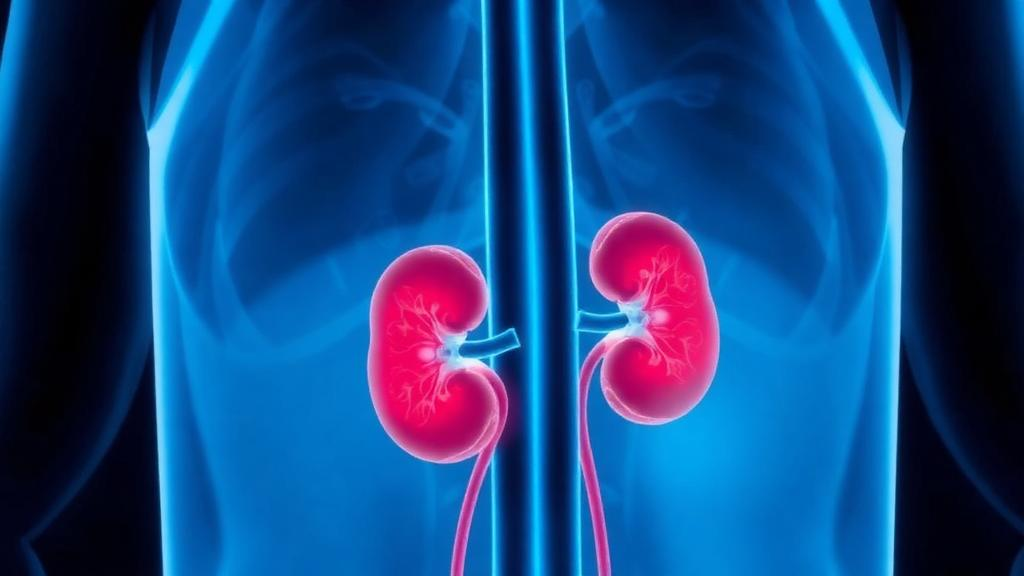
Chronic kidney disease affects an estimated 850 million people worldwide, and although diabetes is a leading driver of kidney deterioration, between 50 and 80 percent of cases arise from non-diabetic causes such as IgA nephropathy and membranous nephropathy. For these patients, treatment options have long been limited to renin-angiotensin system inhibitors, sodium-glucose cotransporter-2 inhibitors, and, in selected immune-mediated diseases, immunosuppressive therapy. Yet many continue to lose kidney function despite this standard arsenal. Now, a real-world study from China suggests that finerenone, a drug already proven in diabetic kidney disease, may meaningfully slow kidney decline in non-diabetic patients as well.
Finerenone is a selective, non-steroidal mineralocorticoid receptor antagonist. Unlike older steroidal antagonists such as spironolactone, it blocks the mineralocorticoid receptor with high selectivity, dampening the sodium and fluid retention as well as the profibrotic and proinflammatory signaling that overactivation of this receptor drives in kidney tissue. Randomized trials including FIDELIO-DKD and FIGARO-DKD established its renoprotective effects in patients with diabetic chronic kidney disease, and the recently completed FIND-CKD trial extended those benefits to non-diabetic chronic kidney disease, showing slowed decline in estimated glomerular filtration rate, the standard measure of kidney function. Real-world evidence in this broader population, however, has remained scarce, limited to small single-center studies with follow-up of twelve months or less.
To address that gap, a team at the First Affiliated Hospital of Xiamen University conducted a retrospective cohort study of adults with non-diabetic chronic kidney disease who initiated finerenone between January 2023 and December 2025. Because the drug’s use in non-diabetic patients was off-label at the time, each prescription was reviewed and approved by the institutional Drug and Therapeutics Committee based on clinical judgment. The researchers applied strict eligibility criteria: patients needed at least ninety days of regular finerenone use, a baseline estimated glomerular filtration rate of at least 20 mL/min/1.73 m2, urinary albumin-to-creatinine ratio of at least 30 mg/g, and stable background therapy for at least ninety days before the drug was added for persistent proteinuria. Patients with diabetes, baseline hyperkalemia, renal replacement therapy, or severe heart failure were excluded. After screening, 121 patients entered the final analysis.
The cohort was heterogeneous and relatively young, with a mean age of 45.2 years and just over half female. Mean baseline kidney function was 80.1 mL/min/1.73 m2, and median urinary protein excretion exceeded one gram per day. IgA nephropathy accounted for 42.1 percent of cases and membranous nephropathy for 28.1 percent. Most patients were already receiving guideline-recommended therapy, with 82.6 percent on renin-angiotensin system inhibitors and 45.5 percent on SGLT-2 inhibitors, while roughly a quarter received immunosuppressive agents such as tacrolimus, mycophenolate mofetil, or cyclophosphamide. Nearly all patients, 95 percent, started finerenone at a cautious 10 mg daily dose, with only 6.6 percent later uptitrated to 20 mg.
The results, published in Frontiers in Medicine, are striking. Using covariate-adjusted generalized estimating equation models with an autoregressive correlation structure and robust standard errors, the researchers found that the urinary albumin-to-creatinine ratio fell by an adjusted 48.6 percent at twelve months, a highly significant reduction. Total twenty-four-hour urinary protein declined by 34.5 percent at twelve months and remained significantly lower, at minus 34.9 percent, at twenty-four months. Albuminuria reductions appeared early, with a 22.1 percent drop already visible at one month and a 41.5 percent drop by three months, and remained statistically significant through month twenty-one.
Perhaps the most consequential finding concerned the trajectory of kidney function itself. By collecting all available serum creatinine measurements in the twelve months before treatment, the team could estimate each patient’s pre-treatment rate of decline. A segmented linear mixed-effects model with a knot at finerenone initiation revealed that the annualized eGFR slope improved from minus 6.51 mL/min/1.73 m2 per year before treatment to minus 1.44 afterward, a statistically significant improvement of 5.07 mL/min/1.73 m2 per year. In practical terms, kidneys that had been deteriorating at a pace likely to reach kidney failure within years were, on average, nearly stabilizing after the drug was added. Because eGFR slope is increasingly accepted as a surrogate endpoint for kidney failure risk, this attenuation carries substantial clinical weight.
The findings survived multiple sensitivity checks. Additional adjustment for kidney disease etiology and baseline severity barely changed the estimates, and replacing categorical baseline albuminuria with continuous log-transformed values yielded similar results. Exploratory subgroup analyses found nominally significant improvements across most strata, including patients with reduced baseline kidney function, heavy baseline proteinuria, and concomitant immunosuppression, although after false discovery rate correction only a time-by-RAS interaction for albuminuria remained significant, and the authors themselves caution that this should be viewed as exploratory rather than evidence of a definitively superior response in any subgroup.
Safety data were equally encouraging. No serious adverse events were documented during follow-up, which had a median duration of 434 days. Clinically defined hyperkalemia, serum potassium of 5.5 mmol/L or higher, occurred in only 4.96 percent of patients, or six of 121, and was managed with short-course potassium-lowering medication and dietary counseling without any treatment discontinuation. Neither hyperkalemia nor hypotension prompted anyone to stop the drug, and longitudinal estimates of serum potassium and blood pressure remained within clinically acceptable ranges throughout. The predominantly low starting dose and limited dose escalation likely contributed to this tolerability, although the authors note that conservative dosing may also have blunted the magnitude of the observed efficacy.
The study is not without limitations, and the authors are candid about them. The retrospective, single-center, single-arm design limits causal inference, and comparisons of treatment-period versus pre-treatment slopes can be influenced by regression to the mean, changes in background therapy, and variations in disease activity. The ninety-day treatment requirement may have introduced selection or survivor bias, excluding patients who discontinued the drug very early. Rolling enrollment meant that only twenty patients had available data at the twenty-four-month visit, making late estimates imprecise; the month-twenty-four albuminuria result, though numerically favorable, was no longer statistically significant. With 121 patients and a predominance of IgA nephropathy, generalizability also remains uncertain.
Even with those caveats, the convergence of three independent outcomes, reduced albuminuria, reduced total proteinuria, and a dramatically flattened eGFR slope, together with an infrequent and manageable hyperkalemia profile, offers the strongest real-world signal yet that finerenone belongs in the treatment conversation for non-diabetic chronic kidney disease. Larger prospective studies and more diverse populations will be needed to confirm causal benefit and define optimal dosing, but for the millions of patients whose kidneys continue to fail despite standard therapy, this study suggests that a drug developed for diabetic kidney disease may have a far broader role to play.
Subject of Research: Real-world effectiveness and safety of finerenone in patients with non-diabetic chronic kidney disease
Article Title: Longitudinal kidney outcomes and safety after finerenone initiation in patients with non-diabetic chronic kidney disease: a single-center retrospective cohort study
Article References: Sun, X., Pei, J., Chen, X., Wang, Z., Yao, L., Bai, P., Yan, Z., Li, Y., & Shao, L. (2026). Longitudinal kidney outcomes and safety after finerenone initiation in patients with non-diabetic chronic kidney disease: a single-center retrospective cohort study. Frontiers in Medicine, 13, Article 1959259. https://doi.org/10.3389/fmed.2026.1959259
Image Credits: AI Generated
DOI: 10.3389/fmed.2026.1959259
Keywords: finerenone, non-diabetic chronic kidney disease, mineralocorticoid receptor antagonist, albuminuria, eGFR slope, proteinuria, hyperkalemia, IgA nephropathy, membranous nephropathy, nephrology, real-world study, kidney disease progression
Cite Scienmag News
Jerry Hayes. (October 19, 2026). Finerenone Slows Kidney Decline in Non-Diabetic CKD, Real-World Study Finds. Scienmag. https://scienmag.com/finerenone-slows-kidney-decline-in-non-diabetic-ckd-real-world-study-finds/
Jerry Hayes. "Finerenone Slows Kidney Decline in Non-Diabetic CKD, Real-World Study Finds." Scienmag, 19 October 2026, https://scienmag.com/finerenone-slows-kidney-decline-in-non-diabetic-ckd-real-world-study-finds/. Accessed 19 October 2026.
Jerry Hayes. "Finerenone Slows Kidney Decline in Non-Diabetic CKD, Real-World Study Finds." Scienmag. October 19, 2026. https://scienmag.com/finerenone-slows-kidney-decline-in-non-diabetic-ckd-real-world-study-finds/


