


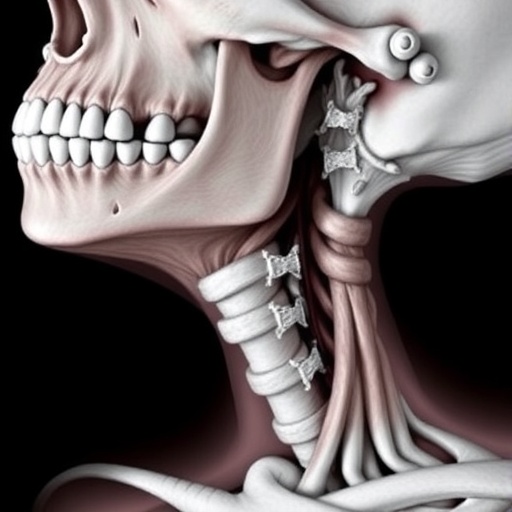
In an emerging field of pediatric radiology, researchers McLuckey and Choi have shed light on a significant topic that impacts both prenatal care and the early diagnosis of fetal abnormalities. Their study, centered on the masses found in the fetal neck and oral cavity, delivers crucial insights that may revolutionize the way healthcare professionals monitor fetal development. The research notes that various masses can present themselves during the prenatal stages, often causing concern for expectant parents and challenging decision-making for clinicians.
Understanding the etiology of these masses is essential, as they can arise from various origins, including teratomas, lymphangiomas, or even congenital anomalies. The challenges associated with diagnosing these masses lie not only in their varying presentations but also in the details required to distinguish between benign and potentially malignant conditions. The study emphasizes the importance of accurate imaging techniques, such as ultrasound and MRI, to ascertain the nature of these masses, providing a foundation for effective management strategies intended to ensure the health of both the mother and the fetus.
McLuckey and Choi’s research indicates that while some fetal neck masses may resolve spontaneously, others can pose serious implications, such as airway obstruction, which demands immediate intervention post-delivery. The implications of their findings extend beyond mere observation; they advocate for a systematic approach to assessing these anomalies to promote timely interventions. Their research underlines that interdisciplinary collaboration among obstetricians, radiologists, and pediatric specialists is paramount in achieving favorable outcomes in these complex cases.
As ultrasound technology continues to advance, methodologies for assessing fetal growth and development have improved as well. This study highlights the critical role of high-resolution imaging techniques that can depict even subtle abnormalities, giving clinicians a comprehensive view of the fetal condition. Early detection through such imaging can lead to preemptive management, aligning with modern medical philosophies that prioritize proactive care over reactive measures.
Furthermore, the study outlines the psychological impact of discovering fetal masses on expectant parents. The uncertainty and stress that accompany a prenatal diagnosis are profound, and it is essential for healthcare practitioners to provide not only medical solutions but also emotional support throughout the process. McLuckey and Choi recommend that effective communication is a key element in mitigating parental anxiety, emphasizing the need for healthcare providers to explain the nature of findings compassionately and clearly.
The research also delves into clinical outcomes associated with the various types of fetal neck masses. It presents evidence suggesting that the majority of these cases, especially lymphatic malformations and certain teratomas, often have favorable prognoses when identified early. The findings advocate a crucial paradigm shift in how masses are perceived during pregnancy, pushing for an emphasis on a tailored management plan that not only addresses the immediate concerns but also considers long-term follow-up.
Another significant point raised in the study is the variability in the prevalence of fetal neck masses observed across different populations. Environmental factors, genetic predispositions, and access to healthcare resources can play a role in the incidence of these anomalies. McLuckey and Choi underscore the need for larger, multi-center studies that can provide a more holistic understanding of these variables and their implications for prenatal care.
Incorporating an understanding of maternal health factors is equally vital in the evaluation of fetal neck masses. Factors such as maternal age, existing health conditions, and family medical history can contribute significantly to the predictions regarding fetal outcomes. By integrating maternal health into the diagnostic framework, clinicians can better tailor their approaches to each patient’s unique circumstances, enhancing overall care and prognosis.
The rising prominence of artificial intelligence in medical imaging also makes an appearance in the discussions presented by McLuckey and Choi. AI algorithms equipped to assist in analyzing ultrasound images could enhance diagnostic accuracy and speed while identifying subtle patterns that may be missed by the human eye. The integration of technology is a promising avenue that may revolutionize pediatric radiology, leading to quicker and more reliable diagnoses.
As the medical community continues to evolve, there is a clear demand for ongoing education and training focused on the management of fetal anomalies, including neck and oral masses. McLuckey and Choi’s findings suggest that continued professional development is crucial for obstetricians and radiologists to keep abreast of advancing techniques and evolving standards in care. This education could bridge gaps in knowledge and practice, ultimately providing a higher standard of care for patients.
Proactively addressing the challenges and concerns associated with fetal neck and oral cavity masses establishes a narrative of hope within the realm of pediatric healthcare. The potential for positive fetal outcomes tied to early detection, adequate management, and thorough parental support paints an optimistic picture. As McLuckey and Choi call for comprehensive research, they illuminate the path forward for healthcare practitioners, emphasizing the union of technology and compassion in caring for future generations.
In conclusion, the work of McLuckey and Choi represents a significant leap forward in the understanding of fetal neck and oral cavity masses. Their findings spark a conversation that crosses disciplinary boundaries, touching on the nexus of technology, maternal health, and clinical practice. With advancements in imaging and a renewed commitment to patient care, the medical community stands on the brink of enhancing outcomes for countless families navigating the unpredictability of fetal anomalies.
McLuckey, M., Choi, J. Masses of the fetal neck and oral cavity.
Pediatr Radiol (2025). https://doi.org/10.1007/s00247-025-06307-1
Cite Scienmag News
Harold Sullivan. (August 6, 2025). Fetal Neck and Oral Cavity Masses Explored. Scienmag. https://scienmag.com/fetal-neck-and-oral-cavity-masses-explored/
Harold Sullivan. "Fetal Neck and Oral Cavity Masses Explored." Scienmag, 6 August 2025, https://scienmag.com/fetal-neck-and-oral-cavity-masses-explored/. Accessed 5 September 2026.
Harold Sullivan. "Fetal Neck and Oral Cavity Masses Explored." Scienmag. August 6, 2025. https://scienmag.com/fetal-neck-and-oral-cavity-masses-explored/


