


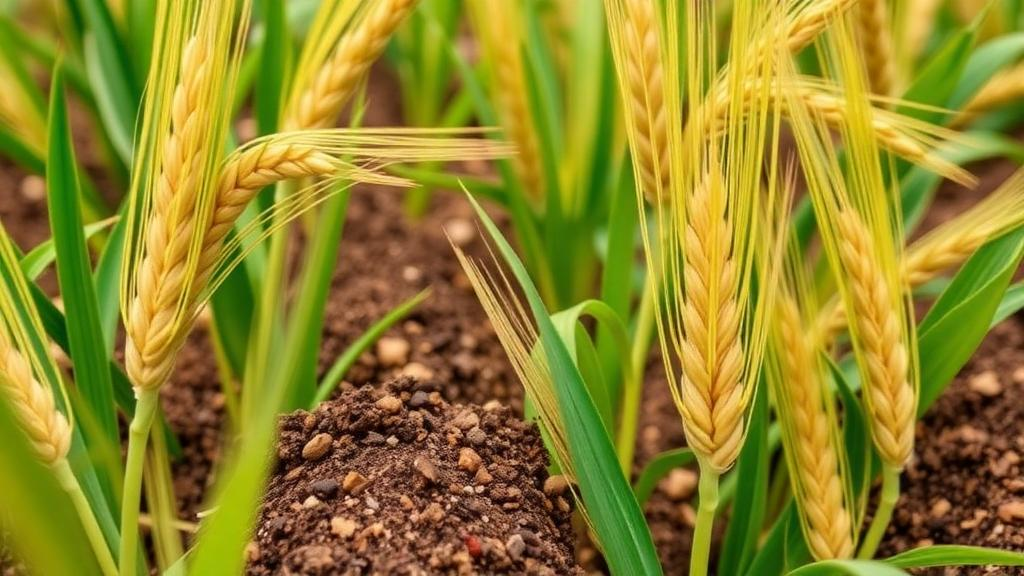
A three-year field experiment on the fertile clay loam soils of the Nile Valley has delivered one of the clearest pictures yet of how the fertilizer a farmer chooses can quietly reshape the chemistry of the food on our plates. Researchers working at Monshaet El Kanater in Giza Governorate, Egypt, grew wheat across three consecutive winter seasons from 2022 to 2025, comparing four nutrient management strategies: conventional mineral fertilization, reduced fertilization, purely organic fertilization, and integrated nutrient management, which blends mineral and organic inputs. Their findings, published in Environmental Geochemistry and Health, trace six potentially toxic metals—cadmium, lead, nickel, chromium, copper, and zinc—through the soil-plant system and into the human diet, with results that carry weight far beyond one Egyptian field.
The stakes are considerable. Wheat is the backbone of the Egyptian diet, and peri-urban farms like the one studied here sit close to dense urban populations, meaning their grain feeds millions with little delay between harvest and consumption. Heavy metals are a particular concern in such systems because they are persistent, they accumulate in topsoil over years of cultivation, and they can be transferred from soil into grain through the plant’s own nutrient uptake machinery. Cadmium is the most notorious of the group: it has no biological function in humans, it accumulates in the kidneys over decades, and it is classified as a human carcinogen. Lead, nickel, and chromium each carry their own toxicological burdens, while copper and zinc are essential nutrients that become harmful only at elevated doses.
On the productivity side, the trial produced a clear winner. Integrated nutrient management, the hybrid strategy that combines synthetic fertilizers with organic amendments, delivered the highest grain yield of the four treatments, reaching 8.12 tonnes per hectare. This outcome aligns with a growing body of international evidence that mixed nutrient strategies outperform either pure approach, because mineral fertilizers supply immediately available nutrients while organic matter improves soil structure, water retention, and microbial activity. For a country like Egypt, where wheat self-sufficiency is a matter of national strategy and import bills are enormous, a fertilization regime that boosts yield without aggravating contamination is exactly the kind of tool agronomists have been searching for.
Grain quality told a complementary story. Organic fertilization produced the highest grain protein content, at 13.15 percent, a reminder that the nutritional profile of cereals is not fixed but responds to how the soil is fed. The relationship between yield and protein in cereal grain has long been recognized as a trade-off, and the Egyptian results suggest that farmers and millers may face a genuine choice: the integrated approach maximizes tonnage, while the organic route maximizes protein concentration. Neither strategy dominated on every metric, which is precisely why the study’s contamination data matter so much—the yield and quality gains would mean little if they came bundled with a hidden toxicological cost.
That cost, encouragingly, appears to have been modest over the three-year window. Soil concentrations of the six metals did differ significantly among the fertilization treatments, but the researchers emphasize that the quantitative differences were small, indicating limited treatment-induced accumulation during the experimental period. This is an important nuance. Long-term fertilizer experiments elsewhere, including a 25-year trial in China and decades-long studies in Germany, have shown that continuous application of certain fertilizers—particularly phosphate products, which naturally carry cadmium impurities—can gradually raise soil metal loads. Three seasons may simply be too short for such signals to emerge, so the Egyptian team’s finding should be read as a baseline rather than a final verdict on the long-term safety of any given strategy.
The contamination indices used by the researchers add context to the soil numbers. Enrichment factors and the pollution load index, or PLI, compare measured concentrations against a reference baseline—in this case, values for the upper continental crust drawn from standard geochemical references. The recalculated PLI values ranged from 1.107 to 1.127, a modest exceedance of the threshold of 1 that signals enrichment above natural background. Contamination factors identified cadmium and zinc as the principal contributors to the overall soil metal load. In other words, the field is not pristine, but neither is it heavily degraded; the slight enrichment likely reflects a combination of background geology, atmospheric deposition, and the accumulated history of agricultural inputs rather than any single fertilizer treatment.
Inside the grain itself, the metals arranged themselves in a consistent hierarchy: zinc was most abundant, followed by copper, then nickel, chromium, lead, and finally cadmium at the lowest concentrations. This ordering reflects both the natural abundance of these elements in soils and the differing degrees to which wheat roots absorb and translocate them. Zinc and copper are actively regulated as micronutrients, so plants take them up readily, whereas cadmium, despite being far more dangerous to humans, is typically present at much lower concentrations. The treatment effect was nonetheless visible: organic fertilization resulted in slightly higher cadmium and nickel concentrations in the grain than the other strategies, indicating greater transfer of these two metals from soil to grain. This finding echoes a recurring theme in the literature—organic manures can either immobilize metals by binding them to organic matter or, depending on composition and dose, introduce additional metal loads, particularly cadmium from animal-derived inputs.
The health risk assessment is where the study becomes most directly relevant to consumers. The team calculated the estimated daily intake of each metal from wheat consumption, then applied the target hazard quotient model to gauge non-carcinogenic risk, combined those quotients into a hazard index, and estimated carcinogenic risk using standard United States Environmental Protection Agency frameworks. Two headline findings emerged. First, dietary exposure was greater for children than for adults, a consequence of children’s lower body weight relative to their food consumption—a pattern seen in virtually every dietary metal exposure study and one that makes food safety standards for children disproportionately important. Second, the metals responsible for risk were not the same for the two endpoints: copper and zinc, the two essential elements, were the principal contributors to non-carcinogenic risk, while cadmium dominated the carcinogenic risk estimate, followed by nickel.
That cadmium, present at the lowest grain concentrations of the six metals, drives the cancer risk estimate is a textbook illustration of how toxicology and abundance diverge. Reference doses for non-carcinogenic effects are relatively generous for copper and zinc, but the slope factors and tolerable intakes for cadmium are stringent because the metal accumulates irreversibly in the renal cortex over a human lifetime. The result means that even small reductions in cadmium transfer from soil to grain could yield disproportionate public health benefits. It also reframes the fertilizer debate: if organic manures slightly increase grain cadmium and nickel, while integrated management limits metal transfer to grain, then the hybrid strategy earns its recommendation on safety grounds as well as on yield. The authors explicitly highlight integrated nutrient management as a promising approach for enhancing wheat productivity while limiting heavy metal transfer in peri-urban systems.
Several caveats temper the conclusions, and the researchers are candid about them. Three growing seasons cannot capture the slow accumulation dynamics that govern metal burdens over decades of cultivation, and the health risk models rest on assumptions about consumption rates and metal bioavailability that may vary across populations. The modest PLI exceedance also underscores that the starting condition of the soil, not just the fertilizer bag, shapes the contamination picture. Still, the study offers something rare: a controlled, multi-season, head-to-head comparison of fertilization philosophies measured not only in tonnes of grain but in milligrams of toxic metal and quantified human risk. As Egypt and other wheat-dependent nations grapple with intensifying agriculture on limited, increasingly urban-adjacent land, the message from Giza is that the smartest fertilizer strategy may be the one that refuses to choose between feeding people and protecting them.
Subject of Research: Trace metal accumulation in soil and wheat grain under contrasting fertilization strategies and associated human health risks
Article Title: Soil and wheat grain trace metals under contrasting fertilization strategies: implications for food safety and human health risk
Article References: Hamed, L. M. M., Al-Saeed, A. M., Darrag, H. M., & Emara, E. I. R. (2026). Soil and wheat grain trace metals under contrasting fertilization strategies: implications for food safety and human health risk. Environmental Geochemistry and Health, 48(14), Article 579. https://doi.org/10.1007/s10653-026-03485-1
Image Credits: AI Generated
DOI: 10.1007/s10653-026-03485-1
Keywords: wheat, heavy metals, cadmium, fertilization, integrated nutrient management, soil contamination, food safety, health risk assessment, peri-urban agriculture, Egypt, pollution load index, grain yield
Cite Scienmag News
Alan Morgan. (October 3, 2026). Fertilizer Choices Shape How Toxic Metals Move From Soil Into Wheat Grain. Scienmag. https://scienmag.com/fertilizer-choices-shape-how-toxic-metals-move-from-soil-into-wheat-grain/
Alan Morgan. "Fertilizer Choices Shape How Toxic Metals Move From Soil Into Wheat Grain." Scienmag, 3 October 2026, https://scienmag.com/fertilizer-choices-shape-how-toxic-metals-move-from-soil-into-wheat-grain/. Accessed 4 October 2026.
Alan Morgan. "Fertilizer Choices Shape How Toxic Metals Move From Soil Into Wheat Grain." Scienmag. October 3, 2026. https://scienmag.com/fertilizer-choices-shape-how-toxic-metals-move-from-soil-into-wheat-grain/


