

Thursday, August 6, 2026
Science
No Result
View All Result
  • Login
  • HOME
  • SCIENCE NEWS
  • CONTACT US
  • HOME
  • SCIENCE NEWS
  • CONTACT US
No Result
View All Result
Scienmag
No Result
View All Result
Home Science News Technology and Engineering

Federal Ginseng Rules Struggle to Accurately Predict Plant Health

July 17, 2026
in Technology and Engineering
Reading Time: 2 mins read
0
Federal Ginseng Rules Struggle to Accurately Predict Plant Health

Federal Ginseng Rules Struggle to Accurately Predict Plant Health

65
SHARES
587
VIEWS
Share on FacebookShare on Twitter
ADVERTISEMENT

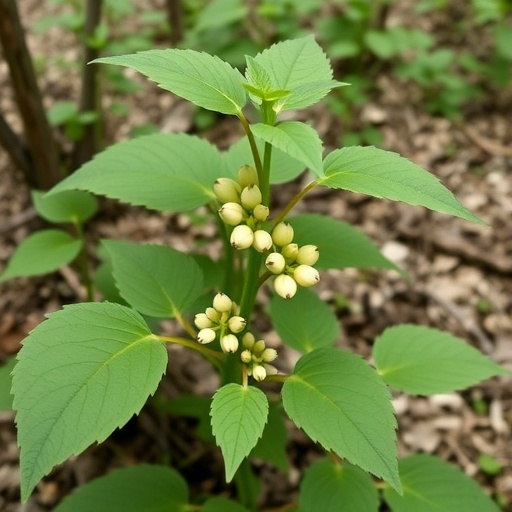
Wild American ginseng has long been regulated by rules that rely on plant age and leaf count, but a new study led by Yale researchers suggests those benchmarks can miss what conservation managers actually need. The work, published in Environmental Research Letters, examines how well the current federal criteria predict biological traits tied to survival and regeneration in natural populations.

Under current rules, ginseng can be harvested only after it reaches at least five years of age and forms three leaves. While such thresholds are intended to ensure individuals have enough time to grow, the study found that age and leaf number often fail to track root development and reproductive potential—the traits most directly linked to conservation outcomes.

To test these assumptions, the authors measured hundreds of plants across wild and working landscapes, comparing field- and biology-relevant characteristics. The results indicate that two plants meeting the same age/leaf requirement may still differ substantially in root size and the ability to produce seeds. In other words, the legal proxy (age and leaf count) did not reliably translate into the biological maturity that matters for population persistence.

A central implication is that conservation policy may be improving the odds of harvest compliance without guaranteeing protection of the most ecologically valuable individuals. When harvest pressure removes plants whose roots are still small or whose seed production capacity is limited, recovery dynamics can shift in ways that regulations based on time-based proxies are less likely to prevent.

The researchers argue for transitioning toward size-based harvest criteria, such as thresholds anchored to measurable plant dimensions that better correspond to root growth and reproductive output. Size metrics, they note, can align regulations with the biology that determines how quickly populations can replace harvested plants.

Beyond conservation, the team emphasizes practicality: criteria tied to observable size may be easier for harvesters and forest farmers to apply consistently in the field. That could reduce inadvertent violations and improve enforcement by making compliance more transparent and less dependent on estimating plant age.

The paper is led by Karam C. Sheban ’26 PhD, with co-authors Mark Bradford and Marlyse C. Duguid. Together, they present a framework for updating harvest regulation to better protect both wild populations and sustainable, long-term “working landscape” production.

Subject of Research: American ginseng conservation; harvest regulation criteria
Article Title: Protecting wild populations and working landscapes: the case for transitioning to size-based criteria for federal regulation of American ginseng
News Publication Date: 14-Jul-2026
Web References: https://iopscience.iop.org/article/10.1088/1748-9326/ae867c ; https://doi.org/10.1088/1748-9326/ae867c
References: 10.1088/1748-9326/ae867c
Image Credits: Not provided

Keywords

  • American ginseng
  • Harvest regulation
  • Conservation policy
  • Size-based criteria
  • Plant reproductive potential
  • Root growth
Tags: American ginseng conservationbiological traits linked to ginseng survivaleffectiveness of current ginseng harvesting policiesfederal ginseng harvesting regulationsginseng root development indicatorsginseng seed production and regenerationimplications of ginseng harvest rules on conservationlimitations of age-based plant regulationsplant age and leaf count in ginsengplant maturity assessment in conservationreproductive potential of wild ginsengwild ginseng population sustainability
Share26Tweet16
Previous Post

Experimental KRAS Vaccine Stimulates Immune Response in High-Risk Pancreatic Cancer Patients

Next Post

Compact genetic switch offers new potential therapies for drug-resistant epilepsy

Related Posts

AI Designs Functional Bacteriophages Entirely From Scratch
Technology and Engineering

AI Designs Functional Bacteriophages Entirely From Scratch

August 6, 2026
New strategy boosts TOPCon solar cell power conversion efficiency
Technology and Engineering

New strategy boosts TOPCon solar cell power conversion efficiency

August 6, 2026
FAU Wins EPA Grant to Develop AI Technology Combating Harmful Algal Blooms
Technology and Engineering

FAU Wins EPA Grant to Develop AI Technology Combating Harmful Algal Blooms

August 6, 2026
AI Advances Operational Forecasting of Tropical Cyclones
Medicine

AI Advances Operational Forecasting of Tropical Cyclones

August 6, 2026
Smart hydrogel packaging reveals whether food is still fresh
Technology and Engineering

Smart hydrogel packaging reveals whether food is still fresh

August 6, 2026
China’s Solar Manufacturers Time Decarbonization Efforts to Accelerate the Global Energy Transition
Technology and Engineering

China’s Solar Manufacturers Time Decarbonization Efforts to Accelerate the Global Energy Transition

August 6, 2026
Next Post
Compact genetic switch offers new potential therapies for drug-resistant epilepsy

Compact genetic switch offers new potential therapies for drug-resistant epilepsy

  • Mothers who receive childcare support from maternal grandparents show more

    Mothers who receive childcare support from maternal grandparents show more parental warmth, finds NTU Singapore study

    27656 shares
    Share 11059 Tweet 6912
  • University of Seville Breaks 120-Year-Old Mystery, Revises a Key Einstein Concept

    1061 shares
    Share 424 Tweet 265
  • Bee body mass, pathogens and local climate influence heat tolerance

    682 shares
    Share 273 Tweet 171
  • Researchers record first-ever images and data of a shark experiencing a boat strike

    546 shares
    Share 218 Tweet 137
  • Groundbreaking Clinical Trial Reveals Lubiprostone Enhances Kidney Function

    531 shares
    Share 212 Tweet 133
Science

Embark on a thrilling journey of discovery with Scienmag.com—your ultimate source for cutting-edge breakthroughs. Immerse yourself in a world where curiosity knows no limits and tomorrow’s possibilities become today’s reality!

RECENT NEWS

  • Ateneo scientists probe continent-spanning moisture conveyor belt driving extreme monsoon rains
  • UCF Researcher Joins DOE Project Using AI to Accelerate Scientific Discovery
  • Climate change increases severe snow droughts across western U.S., study finds
  • Peer AI use makes parents more willing to pay for homework subscriptions

Categories

  • Agriculture
  • Anthropology
  • Archaeology
  • Athmospheric
  • Biology
  • Biotechnology
  • Blog
  • Bussines
  • Cancer
  • Chemistry
  • Climate
  • Earth Science
  • Editorial Policy
  • Marine
  • Mathematics
  • Medicine
  • Pediatry
  • Policy
  • Psychology & Psychiatry
  • Science Education
  • Social Science
  • Space
  • Technology and Engineering

Subscribe to Blog via Email

Enter your email address to subscribe to this blog and receive notifications of new posts by email.

Join 5,149 other subscribers

© 2025 Scienmag - Science Magazine

Welcome Back!

Login to your account below

Forgotten Password?

Retrieve your password

Please enter your username or email address to reset your password.

Log In
No Result
View All Result
  • HOME
  • SCIENCE NEWS
  • CONTACT US

© 2025 Scienmag - Science Magazine

Discover more from Science

Subscribe now to keep reading and get access to the full archive.

Continue reading
