


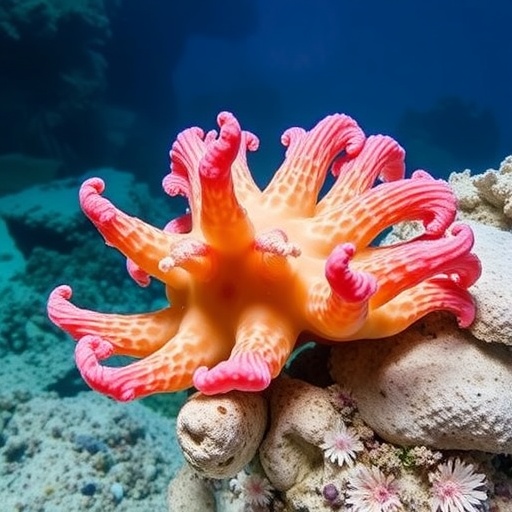
The Queen Conch, a species emblematic of Caribbean marine biodiversity and cultural heritage, has long suffered under the pressures of overfishing and habitat degradation. In response to this urgent conservation need, the Florida Atlantic University Harbor Branch Oceanographic Institute’s Queen Conch Lab has pioneered a transformative innovation that addresses both ecological restoration and community empowerment. Their groundbreaking mobile lab hatcheries have recently been honored with the 2025 Responsible Seafood Innovation Award in Aquaculture by the Global Seafood Alliance (GSA), underscoring the critical role of this technology in sustainable seafood production and ecosystem resilience.
These self-contained hatchery units, ingeniously housed within custom-built trailers, leverage advanced aquaculture technologies to facilitate queen conch propagation in remote coastal regions lacking traditional laboratory infrastructure. The mobile design includes integrated systems such as solar-powered energy, aeration modules, recirculating saltwater setups, and algae cultivation facilities essential for conch larval feeding and growth. By connecting directly to local seawater sources, these mobile labs operate independently of permanent facilities, offering an agile, scalable solution adaptable across diverse Caribbean locales.
Since initial deployment in 2022 on Great Exuma, Bahamas, the project has expanded to include eight additional units strategically situated in Puerto Rico, Jamaica, and Florida. Plans are underway to introduce further hatcheries to other Caribbean nations such as Turks and Caicos and St. Vincent and the Grenadines. Each hatchery is capable of producing roughly 2,000 juvenile queen conch annually—significantly contributing to wild population replenishment while bolstering local fisheries and food security in regions heavily dependent on marine resources.
Beyond their biological output, the hatcheries function as focal points for community engagement, education, and capacity building. Collaborations with local organizations, including Blue Action Lab in Grand Bahama, Conservación ConCiencia and Villa Pesquera de Naguabo in Puerto Rico, and the University of West Indies in Jamaica, facilitate culturally informed scientific training and skill development. This community-centric model ensures that restoration efforts are not merely scientific exercises but also vehicles for enhancing socio-economic resilience among Caribbean coastal populations.
The Global Seafood Alliance, an international nonprofit focused on promoting environmentally responsible and socially accountable seafood practices, recognized the Queen Conch Lab’s innovation for its dual impact on conservation and sustainable aquaculture. The award presentation during the Responsible Seafood Summit in Cartagena, Colombia, highlighted how science can transcend conventional boundaries by forging inclusive partnerships that respect both ecological complexity and human livelihoods.
This project’s relevance is heightened by the queen conch’s official designation as ‘threatened’ under the U.S. Endangered Species Act in 2024, reflecting alarming population declines largely driven by habitat loss and unsustainable harvest. Projections indicate that without intervention, commercial fishing activities in regions like The Bahamas may become unsustainable within the next decade, threatening a keystone species whose decline imperils marine biodiversity and local economies.
Technically, the mobile lab hatcheries employ cutting-edge aquaculture methodologies optimized for the unique life cycle of queen conch. Larval rearing necessitates maintaining stable water quality parameters, including temperature, salinity, and dissolved oxygen, alongside constant nutrition through cultured microalgae. The integration of flow-through and recirculating systems enables meticulous control over these variables while reducing dependency on external resources and minimizing ecological footprint.
The Queen Conch Lab’s approach embodies a paradigm shift in aquaculture – conceptualizing laboratories as mobile, adaptable platforms that bring scientific expertise and restoration capacity directly to communities. This mobility facilitates rapid deployment following environmental disturbances, supports localized research and monitoring, and enables iterative optimization of aquaculture protocols tailored to site-specific conditions.
According to Megan Davis, Ph.D., lead research professor at the Harbor Branch Oceanographic Institute, this award symbolizes the convergence of technological innovation and community collaboration. “Our work redefines what responsible aquaculture can achieve,” she notes, “by placing cutting-edge science within reach of those who depend on marine resources, empowering them to actively steward their environment and cultural heritage.”
James Sullivan, Ph.D., executive director of the Harbor Branch Oceanographic Institute, emphasizes the broader implications of this model: “The mobile hatcheries are not just scientific assets; they foster resilience at multiple scales—ecological, economic, and social. They cultivate the next generation of marine scientists and demonstrate how localized innovation can catalyze global standards for responsible seafood production.”
Looking forward, the Queen Conch Lab envisions establishing a network of community-based queen conch farms spanning Caribbean nations, multiplying replication of their success. Plans include expanding educational outreach and integrating further scientific research to refine breeding techniques, monitor genetic diversity, and evaluate ecosystem impacts. This integrated framework aims to restore queen conch populations while nurturing sustainable livelihoods and strengthening marine ecosystem services across the region.
By aligning aquaculture innovation with grassroots empowerment and environmental stewardship, the Queen Conch Lab’s mobile hatchery initiative offers a compelling blueprint for addressing pressing challenges in marine conservation and sustainable fisheries. It exemplifies how interdisciplinary science, coupled with inclusive partnerships, can yield scalable solutions that protect biodiversity, bolster food security, and sustain cultural traditions, ultimately forging a more resilient marine future for the Caribbean and beyond.
Cite Scienmag News
Margaret Porter. (October 17, 2025). FAU’s Queen Conch Lab Honored with Prestigious International Award. Scienmag. https://scienmag.com/faus-queen-conch-lab-honored-with-prestigious-international-award/
Margaret Porter. "FAU’s Queen Conch Lab Honored with Prestigious International Award." Scienmag, 17 October 2025, https://scienmag.com/faus-queen-conch-lab-honored-with-prestigious-international-award/. Accessed 3 September 2026.
Margaret Porter. "FAU’s Queen Conch Lab Honored with Prestigious International Award." Scienmag. October 17, 2025. https://scienmag.com/faus-queen-conch-lab-honored-with-prestigious-international-award/


