


While chemotherapy has advanced in personalization, personalized radiation therapy for cancer remains underdeveloped. Current cancer treatment methods – including radiation therapy – are intricate, lack personalization, and rely heavily on the expertise of medical teams. Medical image analysis and machine learning hold great promise for enhancing personalized oncology. However, challenges persist such as limited high-quality data and data complexity.

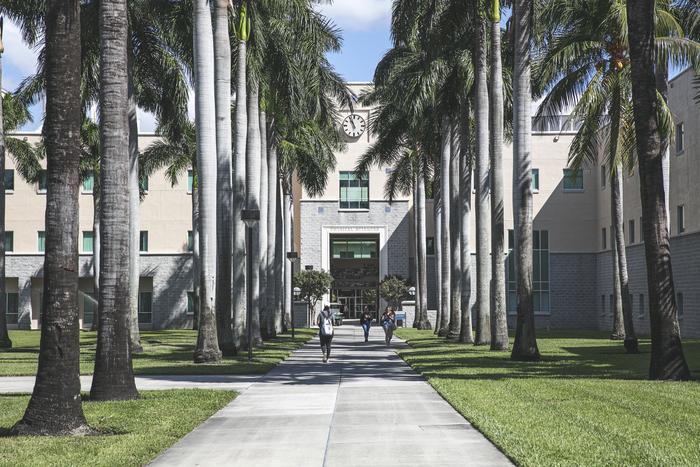
Credit: Alex Dolce, Florida Atlantic University
While chemotherapy has advanced in personalization, personalized radiation therapy for cancer remains underdeveloped. Current cancer treatment methods – including radiation therapy – are intricate, lack personalization, and rely heavily on the expertise of medical teams. Medical image analysis and machine learning hold great promise for enhancing personalized oncology. However, challenges persist such as limited high-quality data and data complexity.
Wazir Muhammad, Ph.D., principal investigator and an assistant professor in the Department of Physics within Florida Atlantic University’s Charles E. Schmidt College of Science, has received a $701,000 grant from Precess Medical Derivatives, Inc., a company that specializes in providing an array of medical physics services and designing and developing software applications, for a project that aims to revolutionize cancer treatment by making it more personalized and effective.
The project, “Deciphering Digital Twins of Cancer Patients for Personalized Treatments,” uses artificial intelligence, in particular, deep reinforcement learning (DRL), to analyze multimodal data, and enhance cancer characterization and treatment to ultimately improve patient outcomes.
“Using personal health data, genetic information about the tumor, and patient treatment and follow-up data, digital twins will simulate diagnoses and treatment options to help physicians choose the most effective treatments and monitor responses over time,” said Muhammad.
The project will help to address the challenges of data quality, complexity and integration into clinical workflows.
DRL represents a powerful approach in leveraging data-driven decision-making in health care, though its application requires careful consideration of ethical, safety, and interpretability concerns specific to medical contexts. Although AI shows promise in advancing personalized cancer treatment, integration into routine clinical use requires overcoming these significant technical and ethical hurdles.
“In oncology or medical applications, deep reinforcement learning can be used to optimize treatment strategies by learning from patient data and adapting treatment plans based on observed outcomes,” said Muhammad. “It also can aid in personalizing treatments by considering individual patient characteristics and predicting the effectiveness of different interventions.”
The project will create a prototype of a dynamic digital twin of cancer patients to better understand and treat cancer. The digital twin will use observational data to represent the patient’s current state and predict future transitions. It will combine simulation, model inference, data assimilation and high-performance computing to connect scales and processes.
“The goal of the model is to provide optimized treatment plans, aid diagnosis and follow-up, and draw on patients’ data including health history, cancer histology, genomic and molecular profiling, prior treatment history, and radio-sensitivity index to improve patient outcomes,” said Muhammad.
Creating a patient-specific digital twin for oncology patients requires a large, coordinated effort among physicians, radiologists, medical physicists, modelers, clinicians, computational scientists, and software engineers. The three-year project will entail developing a process to anonymously collect, categorize and analyze patients’ multimodal data; build DRL models; and evaluate digital twins against standard protocols.
The creation of the digital twin in oncology will follow a structured five-step process that includes the model design, personalization, testing, refinement and validation, and continuous improvement.
“Importantly, if this project is successful, it could help to close health disparities gaps between different geographic or demographic groups,” said Muhammad.
The American Cancer Society estimates more than 2 million new cancer cases in 2024. Approximately 50% of all cancer patients in the U.S. receive radiation therapy as part of their treatment regimen.
“This consequential grant awarded to Dr. Muhammad is an important investigation into the development of personalized radiation treatment and will serve to empower health care providers to tailor therapies to each patient’s unique cancer profile,” said Valery Forbes, Ph.D., dean, FAU Charles E. Schmidt College of Science. “This novel approach holds promise to enhance treatment efficacy as well as minimize side effects, ultimately improving outcomes and quality of life for individuals battling cancer.”
– FAU –
About Florida Atlantic University:
Florida Atlantic University, established in 1961, officially opened its doors in 1964 as the fifth public university in Florida. Today, the University serves more than 30,000 undergraduate and graduate students across six campuses located along the southeast Florida coast. In recent years, the University has doubled its research expenditures and outpaced its peers in student achievement rates. Through the coexistence of access and excellence, FAU embodies an innovative model where traditional achievement gaps vanish. FAU is designated a Hispanic-serving institution, ranked as a top public university by U.S. News & World Report and a High Research Activity institution by the Carnegie Foundation for the Advancement of Teaching. For more information, visit www.fau.edu.
Cite Scienmag News
Nathaniel Bowman. (July 25, 2024). FAU researcher receives grant to personalize radiation therapy for cancer. Scienmag. https://scienmag.com/fau-researcher-receives-grant-to-personalize-radiation-therapy-for-cancer/
Nathaniel Bowman. "FAU researcher receives grant to personalize radiation therapy for cancer." Scienmag, 25 July 2024, https://scienmag.com/fau-researcher-receives-grant-to-personalize-radiation-therapy-for-cancer/. Accessed 4 September 2026.
Nathaniel Bowman. "FAU researcher receives grant to personalize radiation therapy for cancer." Scienmag. July 25, 2024. https://scienmag.com/fau-researcher-receives-grant-to-personalize-radiation-therapy-for-cancer/

