


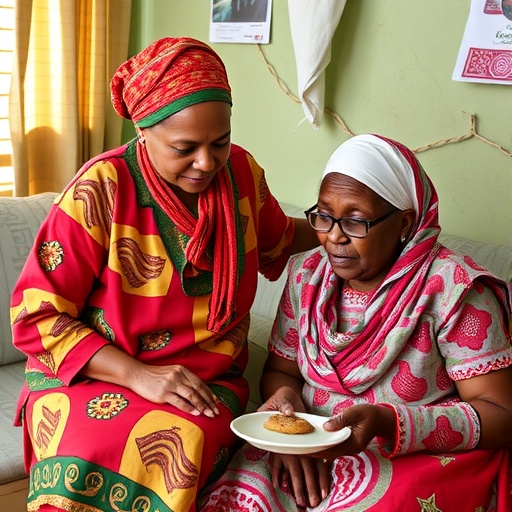
As populations age globally, the imperative of eldercare becomes more significant, particularly in developing regions where formal healthcare support is limited. Recent research conducted in Enugu State, Nigeria, sheds light on the intricate dynamics faced by family caregivers tasked with managing the care of older adults. The study, spearheaded by Ene, Onyishi, and Tanyi, offers an in-depth exploration of the psychosocial and practical challenges these caregivers encounter daily, presenting new perspectives on coping mechanisms in resource-constrained settings.
In many parts of the world, including Nigeria, the responsibility of caring for elderly family members largely falls on informal caregivers—relatives who assume the role without professional training or formal support structures. The Enugu study delves into the lived experiences of these family caregivers, revealing a tapestry of emotional resilience, cultural expectations, and systemic gaps. Through qualitative interviews and ethnographic observation, the research captures the nuances of eldercare that often go unnoticed in broader healthcare discussions.
The first layer of complexity emerges from the emotional and psychological burden borne by caregivers. The research reveals that many family members experience persistent stress, fatigue, and feelings of social isolation. The cultural context in Enugu associates caregiving with familial duty and honor, which, while commendable, occasionally suppresses caregivers’ expressions of distress. This cultural imperative can sometimes lead to internalized pressure that exacerbates mental health strains rather than alleviates them.
Physiological aspects of caregiving in Enugu’s context also pose significant challenges. Older adults often require assistance with activities of daily living (ADLs) such as bathing, feeding, and mobility. Family members, frequently juggling employment and childcare, find themselves stretched thin. This intense physical demand contributes to chronic fatigue and health deterioration among caregivers, a phenomenon well-documented in geriatric care literature but confirmed poignantly by the Nigerian participants’ testimonies.
Another critical factor underscored in the study is the economic impact of caregiving. In an area where financial resources are limited and public welfare systems are underdeveloped, caregiving can impose substantial economic hardships. Caregivers often incur out-of-pocket costs for medications, healthcare visits, and special equipment. These expenditures, coupled with lost income due to reduced work hours or job loss, underscore a cycle of financial vulnerability that exacerbates stress and limits access to optimal care for elders.
The study highlights the interaction between traditional beliefs and modern healthcare practices, illustrating how caregivers negotiate between these sometimes conflicting paradigms. Traditional remedies and spiritual care remain integral in Enugu’s eldercare, complementing or occasionally substituting formal medical interventions. This synthesis of care approaches reflects a broader trend in global gerontology research emphasizing culturally sensitive configurations of elder support.
The coping mechanisms articulated by caregivers in the study reveal remarkable ingenuity and adaptation. Social capital, defined by networks of extended family and community support, emerges as a crucial resource. Caregivers often rely on neighbors, kin, and religious groups for emotional backing and practical assistance. This communal approach buffers against total caregiver burnout and enhances elders’ access to social stimulation, which is vital for cognitive and emotional health.
Information sharing also plays a pivotal role in managing eldercare challenges. Caregivers benefit from informal learning forums where experiences and strategies are exchanged, demonstrating the essential role of peer knowledge in low-resource environments. The study’s data suggest that improving access to formal education on geriatric care could greatly empower family caregivers, reducing trial-and-error approaches that occasionally jeopardize elder wellbeing.
Healthcare infrastructure deficiencies contribute to caregiver stress documented in the research. Limited availability of geriatric specialists, insufficient diagnostic facilities, and logistical issues such as transportation difficulties to clinics compound the complexity of eldercare. These systemic barriers underscore the need for policy reforms that integrate caregiver support with healthcare delivery, increasing accessibility and quality of services for the older population.
The psychological dimensions of caregiving are further complicated by the stigma often attached to aging and frailty in some Nigerian communities. Caregivers sometimes face social exclusion or judgment, which magnifies their isolation. Addressing ageism through public education campaigns and advocacy can therefore play a transformative role, fostering inclusive attitudes that bolster both elder and caregiver dignity.
Technological innovation offers promising avenues for supporting family caregivers, yet the study reveals limited penetration of assistive devices and digital health tools in Enugu. Infrastructure challenges such as unreliable electricity and limited internet connectivity hinder the adoption of telehealth and remote monitoring devices that could revolutionize eldercare management. Strategic investment in technology infrastructure is thus a critical frontier for improving caregiving outcomes.
Mental health support mechanisms for caregivers remain a glaring gap in the Nigerian healthcare system. Psychological counseling and respite care services are largely unavailable or inaccessible, resulting in unaddressed caregiver burnout and depression. The findings call for urgent integration of mental health services within community health frameworks to provide holistic support to caregiving families.
The Enugu study also probes the gender dynamics intrinsic to caregiving roles. Women disproportionately shoulder eldercare responsibilities, reflecting societal norms that assign nurturing roles predominantly to female family members. This gendered burden limits women’s economic and social opportunities, reinforcing cycles of dependency and stress. Recognizing and addressing this disparity is essential for achieving equitable caregiving solutions.
Looking forward, the research advocates for multifaceted interventions. These include formal caregiver training programs, economic support mechanisms, community engagement strategies, and the development of age-friendly environments. Collaborative efforts involving government agencies, NGOs, and local communities are imperative to build sustainable eldercare models that recognize the complexity of caregiving within the Nigerian context.
In sum, the management and coping strategies of family caregivers for older adults in Enugu State present a compelling narrative that intertwines cultural homage, economic reality, and systemic limitations. This ground-breaking study invites global health stakeholders to rethink eldercare paradigms by centering the voices and challenges of informal caregivers in sub-Saharan Africa—a demographic crucial to the future of aging societies worldwide.
Cite Scienmag News
Ophelia Keating. (June 13, 2026). Family Caregivers’ Challenges in Nigerian Elderly Care. Scienmag. https://scienmag.com/family-caregivers-challenges-in-nigerian-elderly-care/
Ophelia Keating. "Family Caregivers’ Challenges in Nigerian Elderly Care." Scienmag, 13 June 2026, https://scienmag.com/family-caregivers-challenges-in-nigerian-elderly-care/. Accessed 4 September 2026.
Ophelia Keating. "Family Caregivers’ Challenges in Nigerian Elderly Care." Scienmag. June 13, 2026. https://scienmag.com/family-caregivers-challenges-in-nigerian-elderly-care/


