


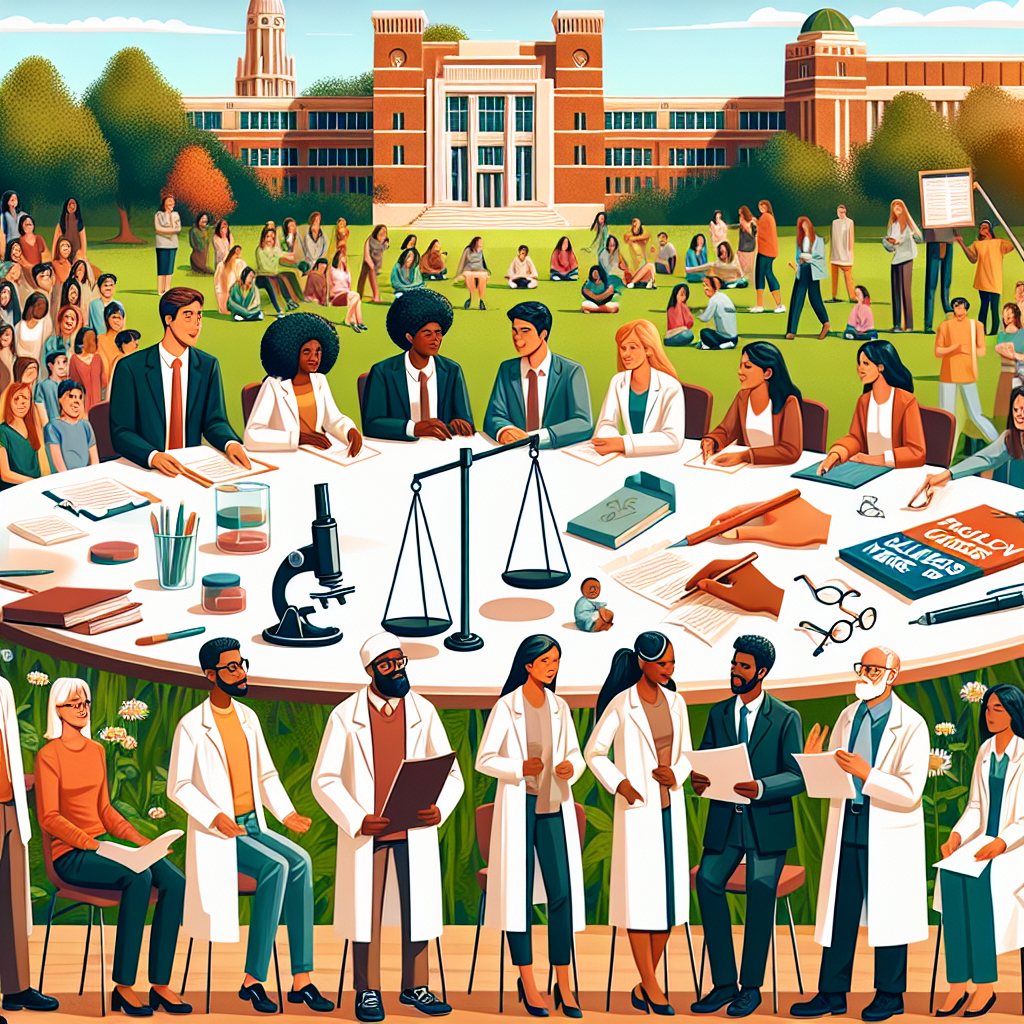
In the world of academic science, hiring new faculty members typically follows a predictable pattern: candidates apply individually and are evaluated primarily on their personal achievements. What if there was a way to build more collaborative, diverse teams of scientists from the very start? That’s exactly what the Boyce Thompson Institute (BTI) set out to do with their innovative “cluster hire” approach.
In the world of academic science, hiring new faculty members typically follows a predictable pattern: candidates apply individually and are evaluated primarily on their personal achievements. What if there was a way to build more collaborative, diverse teams of scientists from the very start? That’s exactly what the Boyce Thompson Institute (BTI) set out to do with their innovative “cluster hire” approach.
The traditional academic model often fails to recognize and reward team-oriented accomplishments, leading to a systemic bias favoring individualistic or “agentic” stereotypes of success. Recognizing the limitations and biases of this model, BTI embarked on a mission to create a hiring process that values teamwork and inclusivity.
“Our goal was to find scientists who thrive in a collaborative environment and to break down the barriers that discourage many, and disproportionately women, from joining or attempting to advance in academia,” said Professor David Stern, author of the discussion recently published in Trends in Plant Science detailing the cluster hire process, and who was BTI’s president during the initiative, which took place in 2018-2019.
Here’s how it worked: After an initial round of applications, promising candidates were invited to a symposium, where they had 15 minutes to present their research, followed by 90-minute poster sessions. The next day, they participated in brainstorming sessions, working together to develop exciting new research proposals. This approach allowed BTI to evaluate not just individual brilliance but also each candidate’s ability to work in teams and contribute to interdisciplinary ideas.
The most intriguing proposals led to a second round of interviews, where small groups of scientists presented more detailed plans. Importantly, these were not binding research commitments but rather a way to showcase how well the candidates worked together.
The results were striking. Faculty searches in biology typically attract only about 25% female applicants, whereas 45% of the shortlisted candidates in the cluster hire were women. Even more impressively, eight out of the final 13 were female. The emphasis on collaboration seemed to resonate strongly with women in science.
Another unexpected benefit was the diversity of scientific backgrounds among applicants. By focusing on building new collaborative teams rather than filling specific departmental slots, BTI attracted excellent candidates from fields adjacent to plant science, such as microbiology and structural biology. This interdisciplinary approach has the potential to spark innovative research directions.
The impact of this hiring method extends beyond BTI. Other institutions have shown interest in adapting elements of the cluster hire process. For example, Cornell University has incorporated some of these principles into its own faculty hiring initiatives.
While it’s too early to measure the long-term effects, the initial results are promising. The scientists hired through this process have maintained highly collaborative working styles, often partnering with colleagues outside their initial “cluster.” This community-oriented approach was a key goal of the initiative.
The cluster hire represents a bold reimagining of how scientific teams are built. By valuing collaboration from the very beginning, institutions may be able to create more diverse, creative, and effective research groups. As science tackles increasingly complex global challenges, from climate change to food security, these collaborative teams could be exactly what is needed to drive breakthrough discoveries.
About the Boyce Thompson Institute (BTI)
Founded in 1924 and located in Ithaca, New York, BTI is at the forefront of plant science research. Our mission is to advance, communicate, and leverage pioneering discoveries in plant sciences to develop sustainable and resilient agriculture, improve food security, protect the environment, and enhance human health. As an independent nonprofit research institute affiliated with Cornell University, we are committed to inspiring and training the next generation of scientific leaders. Learn more at BTIscience.org.
Journal
Trends in Plant Science
Method of Research
Commentary/editorial
Subject of Research
Not applicable
Article Title
Revolutionizing academic hiring: a faculty cluster hire emphasizing teamwork
Article Publication Date
8-Aug-2024
Cite Scienmag News
Courtney Benton. (August 9, 2024). Faculty cluster hire: promoting collaboration and addressing gender bias in academic hiring. Scienmag. https://scienmag.com/faculty-cluster-hire-promoting-collaboration-and-addressing-gender-bias-in-academic-hiring/
Courtney Benton. "Faculty cluster hire: promoting collaboration and addressing gender bias in academic hiring." Scienmag, 9 August 2024, https://scienmag.com/faculty-cluster-hire-promoting-collaboration-and-addressing-gender-bias-in-academic-hiring/. Accessed 4 September 2026.
Courtney Benton. "Faculty cluster hire: promoting collaboration and addressing gender bias in academic hiring." Scienmag. August 9, 2024. https://scienmag.com/faculty-cluster-hire-promoting-collaboration-and-addressing-gender-bias-in-academic-hiring/


