

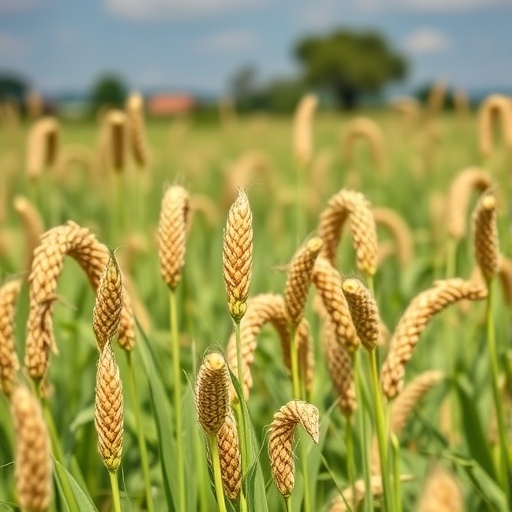
In the picturesque landscapes of Southern Ethiopia, smallholder farmers have become the backbone of the economy, particularly through the cultivation of sesame. This oilseed crop has garnered significant attention due to its high market value and nutritional benefits. However, the adoption and intensity of sesame production among these farmers are influenced by various determinants. In a groundbreaking study by Gemede and Jobir, published in the journal Discovery Agriculture, the complexities of these factors have been explicated using a double hurdle model approach, revealing profound insights about the agricultural landscape in the region.
The double hurdle model is a robust statistical framework that addresses the decision-making process of farmers when it comes to agricultural practices. This model effectively captures both the decision to adopt sesame production and the level of intensity with which it is cultivated. The first hurdle measures the adoption of sesame, while the second hurdle assesses the intensity of production among those who have adopted the crop. This analytical approach offers a detailed understanding of the multifaceted nature of agricultural production, especially in the rural context of Southern Ethiopia.
Various factors play a critical role in determining whether smallholder farmers choose to adopt sesame production. One of the key determinants identified in the study is access to information and resources. Farmers who have easier access to agricultural extension services, training programs, and information about sesame cultivation techniques are more likely to adopt the crop. This highlights the importance of education and awareness in empowering farmers to make informed decisions about their agricultural practices.
Moreover, the availability of credit facilities is another significant determinant influencing sesame adoption. Farmers often require financial support to invest in seeds, fertilizers, and other necessary inputs for sesame cultivation. Access to credit not only facilitates the initial investment but also encourages farmers to experiment with improved farming techniques, ultimately leading to increased adoption rates. The study underlines the need for financial inclusion initiatives that target smallholder farmers to bolster sesame production.
Climate conditions also emerged as a crucial factor in the adoption of sesame cultivation. Ethiopian farmers are highly dependent on rainfall; thus, variations in climate patterns can significantly impact their agricultural decisions. The study reveals that farmers who perceive climate variability as a threat are less likely to invest in sesame cultivation. This underscores the necessity for climate-resilient agricultural strategies that can safeguard farmers’ livelihoods against unpredictable weather patterns.
Additionally, market access is a determinant that cannot be ignored. The ability of farmers to sell their sesame produce at competitive prices directly influences their decision to engage in its cultivation. The study indicates that farmers who live closer to markets are more likely to adopt sesame cultivation due to the reduced transportation costs and increased buyer engagement. Developing efficient market linkages is essential for enhancing the profitability of sesame production for smallholder farmers.
The role of social networks also surfaced as a vital determinant in the study. Farmers who are part of cooperatives or community-based organizations tend to adopt sesame production more readily. Social capital not only facilitates the sharing of knowledge and resources among farmers but also provides a platform for collective bargaining in the market. This phenomenon reflects the importance of community engagement in fostering agricultural innovation and adoption.
Furthermore, the characteristics of the farmers themselves have a significant influence on adoption rates. Factors such as age, education level, and farming experience play a pivotal role in shaping farmers’ attitudes toward sesame cultivation. The study reveals that younger and more educated farmers are more open to adopting innovative agricultural practices, including the cultivation of sesame. Thus, targeted educational programs aimed at youth empowerment could be a game-changer in enhancing sesame production in the region.
Gender dynamics also play a critical role in the adoption of sesame production. The study suggests that gendered perspectives in agriculture can significantly influence the extent to which women farmers engage in sesame cultivation. Empowering women through access to resources, education, and market opportunities is vital for achieving higher adoption rates and enhancing overall agricultural productivity in Southern Ethiopia.
As the study delves deeper, it addresses the intensity of sesame production among those farmers who have already adopted it. Intensive production is influenced by factors such as the availability of high-yield seed varieties and the adoption of modern farming techniques. Farmers who invest in these improvements are likely to experience higher yields and greater profitability. This finding emphasizes the importance of agricultural research and development in providing smallholder farmers with access to innovative farming solutions.
The authors also raise the importance of sustainable agricultural practices in enhancing sesame production intensity. Practices that promote soil health, water conservation, and pest management can significantly impact the productivity and sustainability of sesame farming. The study encourages policymakers to promote sustainable agricultural practices that align with the needs and realities of smallholder farmers.
Technological advancements also surfaced as a crucial factor in driving sesame production intensity. The adoption of technologies such as precision farming, irrigation systems, and mobile applications for market information can empower farmers to increase their productivity. The study emphasizes the importance of technological access and education in ensuring that smallholder farmers reap the benefits of these advancements.
In conclusion, the research by Gemede and Jobir sheds light on the intricate dynamics of sesame production among smallholder farmers in Southern Ethiopia. Understanding the determinants of adoption and production intensity is critical for devising targeted interventions aimed at enhancing agricultural productivity and rural livelihoods. The findings highlight the work that remains to be done in fostering an enabling environment for farmers, where access to resources, information, and market opportunities can flourish. By addressing these determinants, stakeholders can play a pivotal role in securing a sustainable and prosperous future for sesame production in the region.
Subject of Research: Determinants of adoption and intensity of sesame production among smallholder farmers in Southern Ethiopia
Article Title: Determinants of adoption and intensity of sesame production among smallholder farmers in the South Ethiopia Region: a double hurdle model approach
Article References:
Gemede, K.K., Jobir, M.D. Determinants of adoption and intensity of sesame production among smallholder farmers in the South Ethiopia Region: a double hurdle model approach. Discov Agric 3, 269 (2025). https://doi.org/10.1007/s44279-025-00449-4
Image Credits: AI Generated
DOI: https://doi.org/10.1007/s44279-025-00449-4
Keywords: Sesame Production, Smallholder Farmers, Ethiopia, Double Hurdle Model, Agricultural Adoption, Market Access, Climate Change, Agricultural Practices.


