


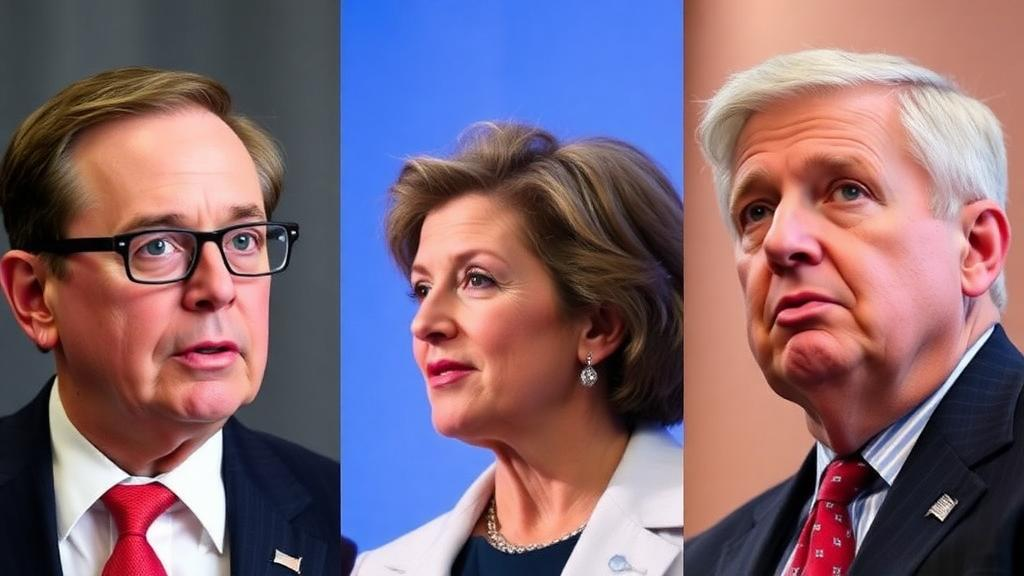
When a government official steps up to the podium to announce a new housing policy, the audience receives two streams of information at once: the words being spoken and the expression on the speaker’s face. A new study published in Humanities and Social Sciences Communications suggests that these two channels are not independent. Researchers led by Seongeun Bae and Kwangwon Ahn of Yonsei University, together with colleagues at the Massachusetts Institute of Technology and Hankuk University of Foreign Studies, report evidence that the facial sentiment of housing policy announcers and the quantitative structure of their spoken words move in harmony, both tracking the underlying policy stance being conveyed.
The research addresses a long-standing gap in how scholars and analysts interpret policy communication. Most previous work on housing policy announcements has relied either on text-based analysis, which mines transcripts for sentiment and meaning, or on the study of non-verbal cues, such as facial expressions and tone. By treating these as separate problems, such studies offer only a partial picture. A policymaker might read out a statement about loosening regulations in a neutral voice, but a subtle frown or a strained smile could signal ambivalence that the transcript alone never captures. Conversely, confident language delivered with a tense face may reveal a stance that the official text does not fully admit. The new study set out to quantify both channels simultaneously and to test whether they interact.
The methodological pipeline unfolds in three stages. First, the team applied a deep learning model to video of housing policy announcers in order to extract the sentiment embedded in their facial expressions. Deep learning approaches to facial sentiment analysis typically train neural networks on large labeled datasets of faces, allowing them to classify expressions along emotional dimensions by detecting patterns in the geometry of the mouth, eyes, eyebrows and surrounding musculature. Applied frame by frame to footage of announcers, such a model converts raw video into a time-resolved sentiment signal, quantifying how positive or negative the speaker’s face appears throughout an announcement.
Second, the researchers turned to the spoken transcript. Rather than performing a conventional keyword or dictionary-based sentiment analysis, they examined the statistical structure of the text itself. They calculated a scaling exponent for each transcript, a quantity borrowed from the statistical mechanics of language that measures how the properties of word sequences change with the length of the text being examined. In parallel, they employed a controlled growth process model to extract a measure of text cohesion. In such models, the growth of vocabulary within a document is modeled as a stochastic process, and the resulting parameters reveal how tightly connected and thematically consistent the language is as it accumulates. A transcript that repeatedly returns to a small set of coherent themes will exhibit different growth characteristics from one that wanders across loosely related topics.
Third, having extracted a facial sentiment signal from the video and quantitative features from the text, the team examined how the two relate to one another across housing policy announcements. The question is inherently macroscopic: not whether a specific smile accompanies a specific sentence, but whether the overall emotional tenor of a speaker’s face correlates with the structural properties of the words they choose when communicating a particular kind of policy stance.
The study reports three notable findings. First, the facial sentiment of policy announcers varies systematically with heterogeneity in policy stances. In other words, when announcers convey different underlying positions on housing policy, their expressions differ in measurable ways. A face is not simply a passive accompaniment to a script; it carries information that distinguishes one policy orientation from another. Second, the quantitative features of the policy transcripts, including the scaling exponent and the cohesion measures, also reflect these heterogeneous policy stances. The statistical fingerprint of the language shifts as the stance behind it shifts, confirming that the textual channel is informative on its own terms.
The third finding is the study’s central contribution: there is a macroscopic interaction between the facial sentiment of housing policy announcers and their verbal content. The two channels are in harmony. Because both the expression on the face and the structure of the speech reflect the same underlying stance, they co-vary across announcements. This alignment matters for anyone trying to read policy signals, because it implies that non-verbal cues are not noise obscuring the message. They are part of the message, and their structure is legible enough to be captured by quantitative models.
The implications extend well beyond academic curiosity about faces and words. The authors note that agents can benchmark the research framework to establish a structured approach for analyzing the far-reaching effects of housing policies. Housing is one of the most consequential domains of public policy, shaping household wealth, financial stability and urban development, and markets react keenly to signals about the direction of regulation. A framework that can quantify the stance embedded in an announcement, drawing on both what is said and how it is expressed, offers a more complete instrument for decoding those signals than either channel alone.
Policymakers themselves stand to benefit. By exploring the paths of implemented policies, they can use this approach to quantitatively assess current policy stances, turning a traditionally qualitative judgment into a measurable quantity. Market analysts can leverage the same insights to track policy consistency over time, improving their understanding of regulatory trends and sharpening their comprehension of the government’s policy trajectory. If an official’s language becomes more cautious and the facial sentiment becomes more negative at the same time, both shifts may foreshadow a change in stance that a casual reading of the press release would miss.
The study also demonstrates how techniques from machine learning and statistical physics are migrating into the social sciences. Deep learning for facial sentiment, scaling exponents for text and controlled growth process models for cohesion are tools developed in very different contexts, yet combined here they form a coherent pipeline for studying political communication. The work, published open access on 14 October 2026 with support from the National Research Foundation of Korea and university research funds, suggests that the harmony between facial sentiment and verbal content is not merely an intuition but a quantifiable, testable regularity, one that future studies of policy communication across domains can now build upon.
Subject of Research: The interaction between facial sentiment and verbal content in housing policy announcements
Article Title: Facial sentiment and verbal content in harmony: theory and evidence
Article References: Facial sentiment and verbal content in harmony: theory and evidence. (n.d.). https://doi.org/10.1038/s41599-026-09362-7
Image Credits: AI Generated
DOI: 10.1038/s41599-026-09362-7
Keywords: facial sentiment analysis, deep learning, housing policy, policy announcements, text cohesion, scaling exponent, controlled growth process, non-verbal cues, political communication, sentiment analysis, machine learning, policy stance
Cite Scienmag News
Blake Davidson. (October 14, 2026). Faces and Words Align: How Policy Announcers’ Expressions Match Their Message. Scienmag. https://scienmag.com/faces-and-words-align-how-policy-announcers-expressions-match-their-message/
Blake Davidson. "Faces and Words Align: How Policy Announcers’ Expressions Match Their Message." Scienmag, 14 October 2026, https://scienmag.com/faces-and-words-align-how-policy-announcers-expressions-match-their-message/. Accessed 14 October 2026.
Blake Davidson. "Faces and Words Align: How Policy Announcers’ Expressions Match Their Message." Scienmag. October 14, 2026. https://scienmag.com/faces-and-words-align-how-policy-announcers-expressions-match-their-message/


