


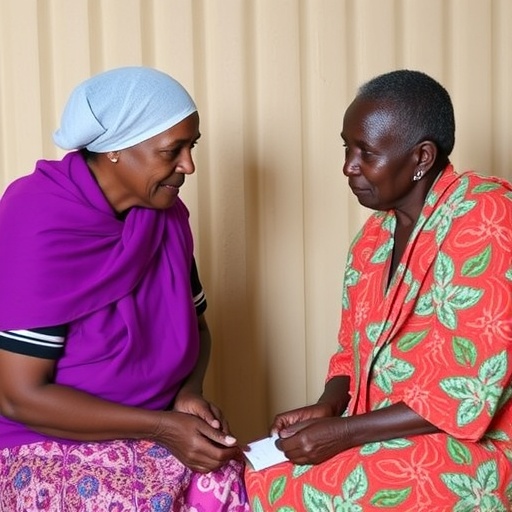
In the remote and rugged region of Karamoja, Uganda, a new study has illuminated the complex landscape of access to eye health services among older adults living with disabilities. This qualitative exploration unveils the intricate interplay of cultural, economic, and systemic factors that shape healthcare-seeking behaviors, offering critical insights that could transform eye care delivery in some of the world’s most underserved communities. As the global population ages and the prevalence of vision impairment rises, understanding these dynamics has never been more urgent.
Karamoja, a semi-arid region characterized by its pastoralist communities and limited infrastructure, has long grappled with significant healthcare disparities. Older adults with disabilities in this area face unique barriers—not only due to their age and physical impairments but also because of pervasive socio-economic challenges and deeply rooted cultural beliefs. This study, conducted by Jolley, Bechange, Atto, and colleagues, provides a rare qualitative glimpse into their lived experiences, focusing on how they successfully navigate the eye health system despite formidable obstacles.
The research methodology employed a series of in-depth interviews and focus group discussions, ensuring voices often marginalized in mainstream healthcare research are foregrounded. Participants included older adults with various disabilities, their caregivers, and local health practitioners. Through thematic analysis, the authors captured narratives that reveal both systemic failures and pockets of resilience within the local eye health landscape. This approach moves beyond quantitative metrics, exploring the nuanced realities of access and care in a region where formal services are sporadic and often difficult to reach.
One of the critical findings relates to the role of local beliefs and knowledge systems in shaping health-seeking behaviors. Many participants reported relying initially on traditional healers or home remedies, reflecting a broader mistrust or lack of familiarity with biomedical eye care. The study highlights that integrating culturally sensitive education campaigns could foster earlier engagement with professional services, potentially reducing the progression of avoidable blindness among this vulnerable population.
Moreover, economic barriers emerged as a persistent and pervasive challenge. Many older adults in Karamoja live in extreme poverty, making the costs associated with transportation, treatment, and medications prohibitive. The authors emphasize the need for policy interventions that subsidize or fully cover these expenses, especially given the disproportionate impact of vision loss on independence and quality of life among the elderly disabled. Addressing these financial hurdles is crucial for equitable eye care access.
Infrastructure and human resource limitations within the regional healthcare system were also underscored. The scarcity of specialized eye care professionals and the absence of adequately equipped facilities in rural areas compel many to travel long distances, often on foot or via unreliable transport. This reality not only delays care but also imposes physical strain on already vulnerable patients. Expanding decentralized services and training community health workers in basic eye care could mitigate these issues substantially.
Interestingly, the study documents instances where successful care-seeking was facilitated by strong social networks and community support systems. Family members, neighbors, and local leaders often played instrumental roles in encouraging and assisting older adults to seek treatment. This finding suggests that leveraging existing social capital can be a powerful strategy in improving healthcare utilization, especially when formal systems falter.
The integration of disability-inclusive practices within eye health services also surfaced as a critical factor. Participants emphasized that facilities accommodating their mobility challenges and communication needs enhanced their willingness and ability to engage with care providers. Such inclusivity entails not only physical accessibility but also respectful, patient-centered communication. Training health workers to recognize and address the unique needs of older adults with disabilities is vital for fostering trust and encouraging sustained care engagement.
This investigation also draws attention to the psychological dimensions of vision impairment and disability. Feelings of stigma, fear, and fatalism often deter individuals from seeking help or adhering to treatment regimens. The authors argue that mental health support and counseling should be integrated into eye care programs to address these psychosocial barriers comprehensively. Such holistic approaches could improve treatment outcomes and enhance overall well-being.
Another notable aspect is the role of government and non-governmental organizations in shaping service availability and quality. The study reveals that collaborative efforts between local authorities, NGOs, and international donors have facilitated outreach campaigns and mobile clinics, extending care to otherwise unreachable populations. However, sustainability remains a challenge, with many initiatives dependent on short-term funding cycles. Strengthening institutional commitment and building local capacity are essential for long-term progress.
Technological innovations also hold promise for overcoming geographic and resource constraints documented in the Karamoja context. Teleophthalmology, for example, could connect remote patients to specialists, delivering timely diagnoses and follow-up care. Although infrastructure gaps currently limit such technologies, the rapid expansion of mobile networks in sub-Saharan Africa suggests future opportunities for digital health interventions aimed at improving accessibility.
The study’s findings have profound implications for global health equity. Vision impairment disproportionately affects disadvantaged populations, amplifying existing inequalities. By foregrounding the experiences of older people with disabilities in Karamoja, this research underscores the moral imperative and practical necessity of designing eye health services that are inclusive, accessible, and responsive to local realities. Such efforts align with the United Nations Sustainable Development Goal 3, which advocates for universal health coverage and the elimination of health disparities.
Furthermore, the research methodology itself sets a precedent for health systems research in marginalized settings. Employing qualitative methods to capture rich, contextualized data allows for a deeper understanding of how structural and interpersonal factors intertwine to shape health behaviors. As policymakers and practitioners seek to address vision loss globally, embedding such patient-centered approaches in program design and evaluation will be critical.
This study also points to the importance of multi-sectoral collaborations in tackling complex health challenges. Improving eye health in Karamoja requires not only medical interventions but also attention to education, transportation, social protection, and community empowerment. The integration of these sectors can create synergies that amplify the impact of targeted health programs.
The authors conclude with a call for increased investment in eye health as a fundamental component of aging well in diverse cultural and socio-economic contexts. With the global population of older adults set to double by 2050, the burden of preventable blindness and visual impairment will escalate unless proactive measures are taken. The Karamoja experience offers valuable lessons on how to reach those most left behind.
In sum, Jolley, Bechange, Atto, and their colleagues have contributed a landmark study that blends epidemiological insight with profound empathy. Their work highlights the interwoven threads of culture, economics, health systems, and social relations that determine access to eye health services in one of Uganda’s most remote regions. As the international community pursues greater health equity, these lessons from Karamoja can inform policies and programs worldwide, ensuring that no one is deprived of the clear vision that is so essential to dignity and quality of life.
Cite Scienmag News
Courtney Benton. (October 14, 2025). Eye Care Access for Disabled Elders in Karamoja. Scienmag. https://scienmag.com/eye-care-access-for-disabled-elders-in-karamoja/
Courtney Benton. "Eye Care Access for Disabled Elders in Karamoja." Scienmag, 14 October 2025, https://scienmag.com/eye-care-access-for-disabled-elders-in-karamoja/. Accessed 3 September 2026.
Courtney Benton. "Eye Care Access for Disabled Elders in Karamoja." Scienmag. October 14, 2025. https://scienmag.com/eye-care-access-for-disabled-elders-in-karamoja/


