

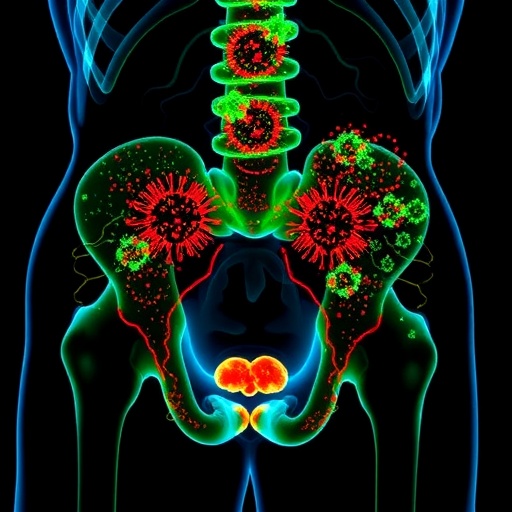
In recent years, extrachromosomal DNA (ecDNA) has surged to the forefront of cancer biology, emerging as a pivotal factor driving genomic instability and tumour evolution. Nowhere is this more evident than in urothelial carcinoma, a form of bladder cancer notorious for its aggressive behavior and resistance to conventional therapies. New research uncovers how ecDNA rewires cancer cells at the molecular level, enhancing their ability to adapt, proliferate, and evade immune detection. This breakthrough offers a fresh lens through which we can understand the formidable heterogeneity of urothelial carcinoma and points to innovative clinical avenues for diagnosis and treatment monitoring.
At its core, ecDNA comprises circular DNA fragments that exist outside the canonical chromosomal structures within cancer cells. Unlike linear chromosomes securely housed in the nucleus, ecDNA is free-floating and capable of rapid amplification. This configuration confers a significant evolutionary advantage to cancer cells, enabling swift genetic alterations that fuel oncogene overexpression. In urothelial carcinoma, ecDNA goes beyond simply copying oncogenes—it orchestrates complex changes to the three-dimensional organization of chromatin, essentially reprogramming the nuclear landscape to favor malignant progression.
The ramifications of this chromatin remodeling are profound. By reshaping three-dimensional interactions within the cell nucleus, ecDNA facilitates aberrant transcriptional programs that drive tumorigenic properties. Such spatial reorganization means oncogenes and other regulatory elements can engage in new, often potent, interactions, promoting transcriptional activation that accelerates tumour growth. This architectural plasticity is a linchpin in how ecDNA mediates both cellular and molecular heterogeneity within urothelial carcinoma lesions.
Moreover, ecDNA’s influence extends into the realm of the tumour microenvironment, modulating the intricate interplay between cancer cells and the immune system. The tumor-immune interface is a battlefield where evasion tactics can determine patient outcomes. ecDNA reshapes this interface by altering gene expression patterns related to immune modulation, potentially dampening immune surveillance mechanisms and enabling tumour cells to evade immune destruction. This immune reprogramming mirrors the aggressive clinical course observed in many urothelial carcinoma cases harbouring ecDNA amplifications.
One particularly striking aspect of ecDNA’s role in urothelial carcinoma is its contribution to genomic instability through accelerating APOBEC3-associated mutational processes. The APOBEC3 family of cytidine deaminases are enzymes that edit DNA, and while they normally function in antiviral responses, their dysregulation introduces a distinctive mutational signature within cancer genomes. The presence of ecDNA exacerbates these mutagenic events, driving an accelerated pace of genetic diversification that fuels tumour evolution and subclonal heterogeneity.
This intratumoural heterogeneity represents one of the foremost challenges in cancer treatment. Tumours composed of genetically diverse cancer cell populations are more likely to develop resistance to therapies, including chemotherapy, targeted agents, and immunotherapies. The role of ecDNA in promoting such plasticity offers an explanation for the frequent clinical observation of therapeutic failure and disease relapse in urothelial carcinoma patients.
Technological advancements have been instrumental in unravelling the mysteries of ecDNA. Cutting-edge sequencing modalities, coupled with sophisticated imaging techniques, have illuminated the prevalence, structure, and functional impact of ecDNA in malignant tissues. Techniques such as long-read sequencing and chromatin conformation capture have enabled researchers to map the rearrangements and three-dimensional networks ecDNA participates in, painting a comprehensive picture of its oncogenic capacity.
Importantly, the potential of ecDNA extends beyond basic research; it heralds new possibilities in clinical diagnostics and patient management. Unlike traditional biomarkers that require invasive tissue biopsies, ecDNA can be detected conveniently via liquid biopsies, including both plasma and urine samples. Given the anatomy of urothelial carcinoma, urine-based assays are particularly appealing, offering a non-invasive window into tumor genomic alterations, which could greatly enhance early detection and real-time monitoring.
Digital pathology further expands the diagnostic repertoire by enabling ecDNA inference from standard histopathological slides. Utilizing advanced algorithms and machine learning, pathologists can identify cellular features suggestive of ecDNA presence without additional invasive procedures. This convergence of molecular biology and computational pathology embodies the precision medicine ethos, streamlining patient stratification and treatment decisions.
The clinical implications are substantial. Incorporation of ecDNA-based biomarkers into standard workflows could revolutionize the management of urothelial carcinoma. Early detection workflows may capture tumours at stages more amenable to curative intervention. Monitoring treatment response and disease progression could become more dynamic and responsive, as ecDNA levels reflect genomic evolution and therapeutic resistance in real-time.
Furthermore, understanding the mechanisms underpinning ecDNA formation and maintenance opens new therapeutic frontiers. Targeting the biogenesis or replication dynamics of ecDNA might blunt oncogene amplification and tumour heterogeneity, sensitizing cancer cells to existing modalities. Emerging inhibitors that disrupt DNA repair pathways or chromatin remodeling proteins integral to ecDNA stability hold promise as adjunct therapies.
Conceptually, ecDNA challenges the dogma of linear chromosomal inheritance as the sole driver of cancer evolution. Its presence underscores the adaptability of tumour genomes, operating through unconventional genetic architectures that accelerate malignancy. This paradigm shift compels researchers and clinicians alike to rethink strategies for combating cancers that exploit ecDNA-driven plasticity.
Future investigations are poised to deepen our mechanistic understanding of how ecDNA interfaces with broader genomic and epigenomic landscapes in urothelial carcinoma. Elucidating the triggers for ecDNA genesis, the cellular machinery involved in its replication and segregation, and its interaction with signalling networks remain critical research frontiers. Translationally, large-scale clinical trials integrating ecDNA biomarker assessments will be key to validating their prognostic and therapeutic utility.
In summation, the discovery of ecDNA’s multifaceted role in urothelial carcinoma marks a watershed moment in oncology. By fundamentally altering chromatin architecture, gene expression, immune interactions, and mutational dynamics, ecDNA fuels the hallmark genomic chaos that defines aggressive cancers. As tools to detect and target ecDNA mature, they hold the promise to transform clinical outcomes for patients facing the formidable challenge of urothelial carcinoma.
Subject of Research: Extrachromosomal DNA (ecDNA) and its roles in urothelial carcinoma progression and clinical applications.
Article Title: Extrachromosomal DNA in urothelial carcinoma: mechanisms and clinical applications.
Article References:
Li, C., Hu, Z., Zhang, W. et al. Extrachromosomal DNA in urothelial carcinoma: mechanisms and clinical applications. Nat Rev Urol (2026). https://doi.org/10.1038/s41585-026-01134-x
Image Credits: AI Generated


