


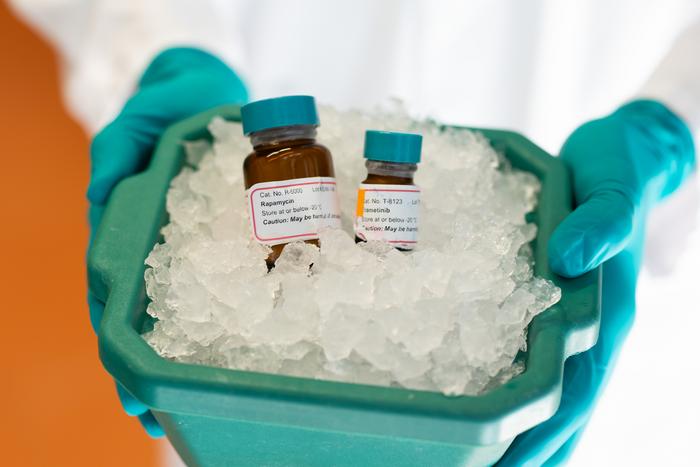
A groundbreaking study from the Max Planck Institute for Biology of Ageing has unveiled compelling evidence that the combined administration of two cancer drugs, Rapamycin and Trametinib, significantly extends both the lifespan and healthspan of mice. This novel combination therapy exerts a synergistic effect surpassing the benefits observed when either drug is used alone, opening promising avenues for the development of new geroprotective interventions aimed at combating ageing and age-related diseases.
Rapamycin, a well-characterized mTOR (mechanistic target of rapamycin) inhibitor, has long been recognized for its powerful geroprotective properties across multiple animal models. By suppressing mTOR signaling, Rapamycin effectively slows metabolic activity associated with ageing, reduces cellular senescence, and bolsters autophagy, thereby enhancing tissue maintenance and longevity. On the other hand, Trametinib operates through selective inhibition of MEK1 and MEK2 kinases within the Ras/MEK/ERK signaling axis, a critical pathway implicated in cell proliferation and survival. While previously demonstrated to extend lifespan in model organisms such as Drosophila, Trametinib’s geroprotective effects in mammals had not been established until now.
In this comprehensive experimental study, researchers administered these drugs individually and in combination to laboratory mice, meticulously monitoring their health parameters and survival outcomes over time. Notably, Trametinib alone extended median lifespan by approximately 5 to 10 percent, whereas Rapamycin alone yielded a 15 to 20 percent increase. Strikingly, the dual therapy boosted lifespan by around 30 percent, indicating an additive or potentially synergistic interaction that elevates the efficacy of geroprotection beyond simple dose escalation.
Beyond longevity, the intervention demonstrated significant improvements in health metrics associated with ageing. Chronically inflamed tissues—a hallmark of ageing—showed markedly reduced inflammatory markers following combination treatment. This attenuation of systemic inflammation was apparent not only in peripheral organs but also within the central nervous system, suggesting neuroprotective benefits. Moreover, the onset and progression of spontaneous cancers, a major cause of morbidity and mortality in aged mice, were notably delayed, providing additional evidence that this therapeutic strategy can forestall common age-related pathologies.
At the molecular level, the study revealed intriguing mechanistic insights into how these compounds interact to modulate ageing networks. Rapamycin and Trametinib target intersecting nodes within the Ras/Insulin/TOR signaling nexus, which orchestrates cellular growth, metabolism, and stress responses. Crucially, gene expression analysis across various tissues demonstrated that the combination therapy produces unique transcriptional changes not merely attributable to increased drug dosage or additive effects. These distinct gene regulation patterns hint at emergent biological phenomena arising from simultaneous modulation of multiple signaling cascades involved in lifespan regulation.
This discovery challenges conventional perspectives that evaluate geroprotective agents solely based on their individual efficacies. Instead, it underscores the potential of rational polypharmacy—strategically combining drugs affecting complementary pathways—to amplify health and longevity benefits. The lack of additional adverse side effects in the combination group further encourages the translational potential of this approach.
Given that Trametinib is already clinically approved for oncological applications, the progression from preclinical mouse studies to human trials could be relatively expeditious. Nonetheless, optimizing dosage regimens and administration routes remains paramount to maximize benefits while minimizing toxicity. Future research will focus on refining these parameters and verifying efficacy in diverse mammalian models to pave the way for clinical geroprotector development.
Senior researchers emphasize cautious optimism; while the extraordinary 30 percent lifespan extension observed in mice may not directly extrapolate to humans, the fundamental mechanisms targeted are conserved. The overarching goal is to extend the duration of healthy life, delaying the onset of chronic diseases and maintaining function in later years rather than merely increasing total lifespan.
This study also exemplifies the growing recognition that targeting ageing processes systemically can yield multi-organsystem benefits, fundamentally different from conventional therapies aimed at individual diseases. By attenuating chronic inflammation, modulating metabolism, and delaying oncogenesis simultaneously, such interventions could profoundly reshape preventive medicine and geriatric care.
Moreover, the identification of specific gene expression signatures unique to the combined therapy opens new research pathways to explore biomarkers predicting treatment responsiveness and to dissect the complex molecular interplay underpinning ageing modulation.
The research, published in Nature Aging, represents a landmark contribution to longevity science underpinned by rigorous experimental design and comprehensive molecular evaluation. Funding from the European Research Council and collaboration with the CECAD Cluster of Excellence at the University of Cologne highlights the strong interdisciplinary and international commitment to advancing understanding of ageing biology.
As the scientific community eagerly awaits clinical translation, this discovery propels excitement about the feasibility of targeting conserved signaling networks pharmacologically to enhance life quality and length. It exemplifies how re-purposing and combining existing drugs can yield unexpected and transformative benefits, accelerating the journey toward effective age-combatting therapies.
In conclusion, the synergistic use of Rapamycin and Trametinib heralds a new horizon for geroprotection, establishing that simultaneously modulating distinct but interconnected pathways involved in ageing can lead to unprecedented improvements in healthspan and survival. This pivotal study deepens our grasp of molecular ageing processes and charts a promising course toward clinically applicable interventions that may one day allow humans to enjoy longer, healthier lives, free from the burden of age-related decline.
Cite Scienmag News
Beatrice Stafford. (May 28, 2025). Extend Your Lifespan: New Insights Revealed. Scienmag. https://scienmag.com/extend-your-lifespan-new-insights-revealed/
Beatrice Stafford. "Extend Your Lifespan: New Insights Revealed." Scienmag, 28 May 2025, https://scienmag.com/extend-your-lifespan-new-insights-revealed/. Accessed 3 September 2026.
Beatrice Stafford. "Extend Your Lifespan: New Insights Revealed." Scienmag. May 28, 2025. https://scienmag.com/extend-your-lifespan-new-insights-revealed/


