


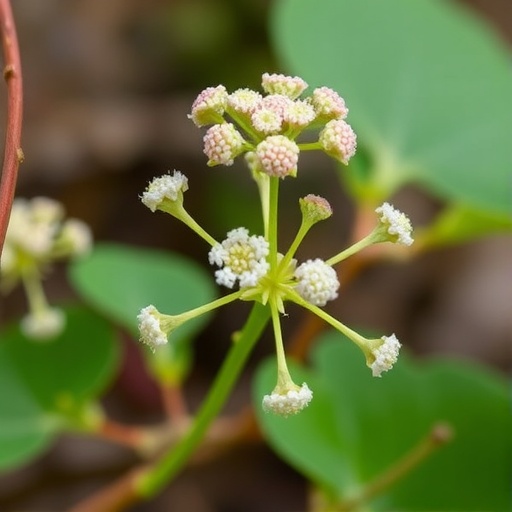
Recent advancements in oncology have increasingly spotlighted the therapeutic promise of natural products, particularly those derived from traditional medicine systems. A groundbreaking review published in Oncology Advances elucidates the multifaceted anticancer properties of Scleromitrion diffusum (Willd.), a herb long revered in Traditional Chinese Medicine (TCM) for its oncological benefits. Focused primarily on gastric cancer—one of the most lethal malignancies worldwide—this comprehensive study integrates centuries-old TCM wisdom with contemporary pharmacological discoveries, illustrating how S. diffusum leverages complex bioactive compounds to combat tumor progression through an array of molecular mechanisms.
Gastric cancer remains an ominous health challenge globally, marked by high mortality rates and generally poor prognoses due to insufficient efficacy of current therapeutic modalities. Conventional approaches, including surgical resection and chemotherapy, often yield inconsistent outcomes and expose patients to substantial adverse effects. Against this backdrop, S. diffusum emerges as a potent botanical candidate, exhibiting remarkable efficacy both in experimental models and initial clinical settings. The herb’s therapeutic potential is underscored by its rich phytochemical composition, such as flavonoids, anthraquinones, terpenoids, sterols, and polysaccharides, each contributing uniquely to anticancer activity.
Central to S. diffusum’s pharmacological prowess are flavonoids like quercetin and kaempferol, whose molecular activities extend beyond mere cytotoxicity. Quercetin, for instance, initiates programmed cell death by activating caspase family enzymes—caspase-3 and caspase-9—thereby triggering intrinsic apoptotic pathways. Simultaneously, it modulates critical metabolic signaling networks including AMPK/mTOR and PI3K/AKT axes, which govern cell growth and survival. Kaempferol complements these effects by downregulating human telomerase reverse transcriptase (hTERT), effectively inhibiting telomerase activity and promoting apoptosis in malignant cells, a novel strategy that taps into cancer cell immortality mechanisms.
Emerging research further unveils a fascinating new mechanism of action involving ferroptosis, a regulated form of cell death distinct from apoptosis. Quercetin has been shown to induce ferroptosis by amplifying lipid peroxidation and curbing the NRF2/XCT antioxidant pathway. This oxidative stress-driven pathway represents a paradigm shift in targeting gastric cancer, offering an alternative route to overcome apoptosis resistance frequently observed in tumors. By engaging multiple cell death modalities, S. diffusum affirms its versatile and robust anticancer efficacy.
Another critical facet of S. diffusum’s therapeutic profile is its capacity to halt uncontrolled cellular proliferation. Active compounds, including oleanolic acid and quercetin, exert cell cycle arrest by inhibiting key regulators such as cyclin D1, CDK4, and MYC oncogene expression. Arresting the cell cycle at G0/G1 or G2/M phase effectively curtails the rapid division of cancer cells, disrupting tumor growth and enhancing sensitivity to adjunctive treatments.
Metastasis inhibition represents a crucial frontier in gastric cancer management, and S. diffusum’s bioactives effectively impair this process by targeting epithelial-mesenchymal transition (EMT). By upregulating epithelial markers like E-cadherin and concurrently downregulating mesenchymal markers vimentin and N-cadherin, the herb reverses the EMT process that enables cancer cells to invade and migrate. Quercetin’s additional interference with the urokinase-type plasminogen activator (uPA)/uPAR system and nuclear factor kappa B (NF-κB) signaling disrupts metastasis-related pathways, further suppressing cancer dissemination.
Angiogenesis is pivotal for tumor survival and expansion, providing malignant cells with necessary nutrients via new blood vessel formation. The flavonoids within S. diffusum have demonstrated efficacy in downregulating vascular endothelial growth factor (VEGF) expression and its downstream signaling cascades. This anti-angiogenic activity starves tumors, limiting their growth potential and ability to metastasize.
Importantly, S. diffusum also modulates the immune system, orchestrating a multifaceted immune response to target gastric cancer. Polysaccharides and terpenoids contained within the herb activate key immune effector cells—including dendritic cells and natural killer (NK) cells—while promoting cytokine production, thereby enhancing the host’s antitumor immunity. This immunomodulatory effect complements direct cytotoxicity, creating a hostile tumor microenvironment that impedes cancer progression.
Despite these promising findings, translational hurdles remain, primarily concerning the pharmacokinetics of the herb’s active constituents. Flavonoids such as quercetin and terpenoids like ursolic acid suffer from low solubility and bioavailability, limiting their clinical utility. Addressing these limitations, current research aims to optimize compound efficacy through structural modifications, improving stability and therapeutic index.
Innovative delivery platforms are also under development. Nanoformulations and liposome-based systems promise enhanced bioavailability and targeted tissue delivery, which could amplify S. diffusum’s anticancer effects while minimizing systemic toxicity. Such advances represent a critical step toward integrating TCM-derived compounds into modern clinical oncology practice.
Furthermore, exploring synergistic drug combinations provides fertile ground for expanding S. diffusum’s clinical application. Integrating its bioactive compounds with established immunotherapies or chemotherapeutic agents may potentiate therapeutic responses, overcome resistance mechanisms, and tailor precision medicine approaches to individual patient profiles in gastric cancer treatment.
The comprehensive mechanistic insights presented in this review not only validate the traditional use of Scleromitrion diffusum in cancer therapy but also set the stage for precision herbal oncology—a framework blending the holistic principles of traditional medicine with targeted molecular interventions. This integration exemplifies the potential to discover novel treatment avenues through multidisciplinary collaboration, encompassing phytochemistry, molecular biology, immunology, and clinical sciences.
Ultimately, Scleromitrion diffusum stands as a beacon of natural product-based innovation in oncology, showcasing the value of harnessing complex botanical matrices to combat multifactorial diseases like cancer. Ongoing translational studies and clinical trials will be essential to fully realize and validate its therapeutic promise, potentially revolutionizing current gastric cancer management paradigms with safer, more effective, and precisely tailored treatments.
News Publication Date: 31-Jul-2025
Web References:
Oncology Advances Journal
DOI: 10.14218/OnA.2025.00011
Cite Scienmag News
Nathaniel Bowman. (October 30, 2025). Exploring the Pharmacological Potential of Scleromitrion diffusum (Willd.) in Gastric Cancer: Key Active Compounds and Mechanistic Pathways Revealed. Scienmag. https://scienmag.com/exploring-the-pharmacological-potential-of-scleromitrion-diffusum-willd-in-gastric-cancer-key-active-compounds-and-mechanistic-pathways-revealed/
Nathaniel Bowman. "Exploring the Pharmacological Potential of Scleromitrion diffusum (Willd.) in Gastric Cancer: Key Active Compounds and Mechanistic Pathways Revealed." Scienmag, 30 October 2025, https://scienmag.com/exploring-the-pharmacological-potential-of-scleromitrion-diffusum-willd-in-gastric-cancer-key-active-compounds-and-mechanistic-pathways-revealed/. Accessed 3 September 2026.
Nathaniel Bowman. "Exploring the Pharmacological Potential of Scleromitrion diffusum (Willd.) in Gastric Cancer: Key Active Compounds and Mechanistic Pathways Revealed." Scienmag. October 30, 2025. https://scienmag.com/exploring-the-pharmacological-potential-of-scleromitrion-diffusum-willd-in-gastric-cancer-key-active-compounds-and-mechanistic-pathways-revealed/


