


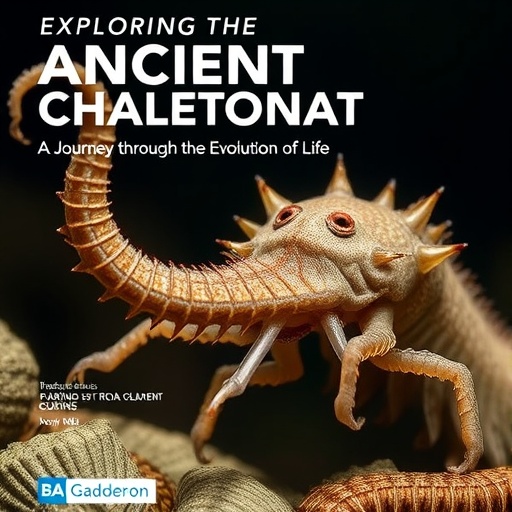
One of the most enigmatic organisms of the animal kingdom is the chaetognath, a small, torpedo-shaped predator commonly found in marine environments. These creatures, colloquially referred to as arrow worms, possess a unique morphology characterized by grasping spines made of chitin that encircle their mouths. Despite their prevalence in the ocean, the evolutionary history of chaetognaths has perplexed scientists for centuries. Their distinct anatomical features draw the eyes of biologists and ecologists alike, but prompt questions about their classification, lineage, and the functional significance of their genetic makeup.
The evolutionary origin of chaetognaths remains murky, a point noted by none other than Charles Darwin, who highlighted their “obscurity of affinities” in his writings over 175 years ago. An essential part of the challenge in deciphering their origins lies in the organism’s position at the intersection of two primary evolutionary groups: protostomes and deuterostomes. Protostomes include prominent invertebrate groups such as mollusks and annelids, whereas deuterostomes encompass organisms with a spinal cord, including vertebrates. This duality raises fundamental questions about their phylogenetic relationships, especially given that these ancestral branches are believed to have diverged approximately 600 million years ago during the Ediacaran era.
Recently, a groundbreaking study published in the prestigious journal Nature has shed light on the genomic and cellular architecture of chaetognaths, specifically focusing on a species known as Paraspadella gotoi. Researchers from University College London, the Goto Laboratory at Mie University, and the Okinawa Institute of Science and Technology collaborated on this project, which demonstrates the complexities and wonders of chaetognath biology. Paraspadella gotoi was selected for this pioneering genomic analysis because it is the only chaetognath species that has been successfully cultured in laboratory environments, allowing scientists to study its genetic material in detail.
Through advanced techniques such as single-cell RNA sequencing, the research team made significant strides in understanding the genomic alterations that have occurred in chaetognaths over millions of years. Despite their apparent morphological stability since the Cambrian period, the chaetognath genome has demonstrated an accelerative evolutionary pace. The researchers discovered an extraordinary reshuffling of genes within the chaetognath DNA, leading to the formation of novel genes associated with specialized sensory cells. These cells play a crucial role in the chaetognath’s predatory behavior, allowing them to accurately perceive movement in their aquatic environments.
Dr. Ferdinand Marlétaz, the senior author of the study and a researcher at UCL, elaborated on the implications of these findings. He emphasized that while many animal species have retained similar gene sets inherited from their common ancestors, chaetognaths have diverged significantly. Their rapid genomic evolution has equipped them with unique sensory adaptations, which serve to enhance their survival and predation efficiency. The findings also challenge existing notions about how various animal groups have diverged on a molecular level, highlighting the chaetognath genome as a fascinating case study in evolutionary biology.
Furthermore, the study revealed that chaetognaths have developed their unique method of chromosomal organization. Generally, genes responsible for the formation of centromeres – critical regions of chromosomes that ensure accurate genome transmission during cell division – are prevalent across most known animal species. Remarkably, the genomic analysis found a lack of these genes in chaetognaths, revealing an uncharted territory in chromosomal architecture. Their ability to possess centromeres without the standard compilation of necessary genes could suggest an ingenious evolutionary adaptation not seen in closely related organisms.
In addition to detailing the genetic underpinnings of chaetognaths, the team’s research robustly supports their classification as early spiralians. This classification positions chaetognaths among other significant groups, including mollusks, annelids, and flatworms, thereby offering fresh insight into their evolutionary history and relationships. Professor Noriyuki Satoh from the Marine Genomics Unit at OIST highlighted the groundbreaking nature of employing genomic methodologies typically reserved for model organisms such as fruit flies and nematodes. The implications of their research extend not only to chaetognaths but also to understanding the genomic evolution of the entire animal kingdom.
One of the key aspects of this study is its contribution to the field of functional genomics. The research team demonstrated how specific genomic features correlate to unique cellular types crucial for the survival of chaetognaths in their natural habitats. By mapping these genetic attributes to cell types, scientists can begin to piece together the functional ramifications of genes involved in cellular morphology, sensory perception, and predatory efficiency in chaetognaths.
As we further explore the implications of genomic data, the findings serve as a beacon for future studies in evolutionary biology, placing chaotic genomic rearrangements into a coherent framework that could revolutionize our understanding of life’s complexity. The methodology established in this study could pave the way for researching other lesser-known organisms, thereby offering deeper insights into life’s evolutionary tapestry.
In conclusion, chaetognaths stand as remarkable case studies that illustrate not only the intricacies of genomic evolution but also highlight the importance of interdisciplinary research in unraveling the mysteries of life on Earth. Even though they are overshadowed by more prominent marine creatures, the data generated from studies like these could redefine our understanding of evolutionary trajectories among diverse animal forms.
Keywords
Genomics, Functional genomics, Genome annotation, Genomes, Epigenetics, Zooplankton, Cell morphology, Centromeres, Methylation, Cambrian explosion, Phylogenetics, Adaptive evolution.
Cite Scienmag News
Gavin Prescott. (August 19, 2025). Exploring the Ancient Chaetognath: A Journey Through the Evolution of Life. Scienmag. https://scienmag.com/exploring-the-ancient-chaetognath-a-journey-through-the-evolution-of-life/
Gavin Prescott. "Exploring the Ancient Chaetognath: A Journey Through the Evolution of Life." Scienmag, 19 August 2025, https://scienmag.com/exploring-the-ancient-chaetognath-a-journey-through-the-evolution-of-life/. Accessed 3 September 2026.
Gavin Prescott. "Exploring the Ancient Chaetognath: A Journey Through the Evolution of Life." Scienmag. August 19, 2025. https://scienmag.com/exploring-the-ancient-chaetognath-a-journey-through-the-evolution-of-life/


