


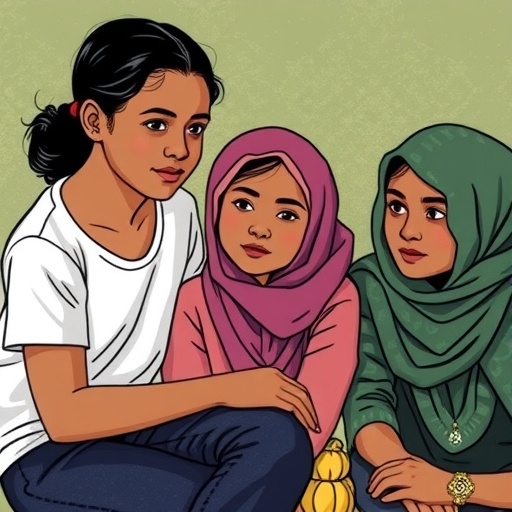
In a comprehensive exploration of the challenges faced by young refugees, a recent scoping review sheds light on the critical roles that sensory experiences and narrative processes play in fostering wellbeing and a sense of belonging. Led by researchers Gilleard, Marino, and Smith, the review encapsulates a wide array of studies that interlace the psychological and cultural dimensions of refugee experiences, making a compelling case for how these elements contribute to better integration into host societies. This work highlights not only the struggles refugees endure but also the innovative approaches that can be employed to enhance their adjustment.
The experiences of young refugees are intricately tied to a spectrum of sensory inputs that include sight, sound, texture, and even smell. Such sensory experiences can evoke profound emotional responses and mitigate feelings of isolation that are often prevalent in this demographic. By utilizing sensory stimuli, the researchers argue, it is possible to create environments that promote comfort and familiarity, thereby easing the transition for young refugees into new societal frameworks. This assertion calls for educational and community spaces that are not only welcoming in nature but are also enriched with sensory stimuli that resonate with the experiences of these young individuals.
Beyond sensory experiences, narratives and storytelling practices serve as potent tools for young refugees to express their identities and share their unique histories. The review emphasizes that personal narratives can facilitate a deeper connection between refugees and members of the host society, fostering mutual understanding. By voicing their stories, young refugees can reclaim agency over their experiences while also providing insights to their peers and their new community members. This storytelling aspect acts as a bridge, not only preserving cultural heritage but also enabling a platform for dialogue that can challenge stereotypes and misconceptions surrounding refugees.
Moreover, the scoping review meticulously examines various intervention strategies that incorporate sensory and narrative methodologies. For instance, art therapy, community storytelling projects, and immersive cultural experiences are highlighted as pathways through which young refugees can explore their identities while engaging with their new environments. Such interventions show promise in enhancing emotional resilience and psychological wellbeing among refugee youth.
The integration of sensory and narrative processes in the context of refugee wellbeing also resonates with broader social theories regarding identity formation and community belonging. The review indicates that the collaborative nature of these processes can give rise to a shared sense of belonging, which is crucial for social cohesion. Such findings point towards the potential for creating inclusive communities that not only support young refugees but also enrich the social fabric of host societies.
A significant focus of the researchers has been on the psychological implications of feeling disconnected from one’s cultural roots due to forced displacement. They argue that sensory experiences can act as anchors, helping young refugees to maintain a connection to their original homes while also acclimatizing to new environments. Furthermore, when these sensory experiences are woven into narratives, they serve as compelling touchpoints that shape identity, assisting individuals in reconciling their past with their present.
The authors of the scoping review also underscore the importance of interdisciplinary approaches that bring together psychology, sociology, and anthropology. The intersection of these fields allows for a richer understanding of how young refugees can straddle multiple identities. Their experiences are not homogeneous; rather, they are shaped by individual histories, traumas, and the particularities of the communities they are trying to integrate into. This nuance is essential for developing effective support mechanisms that cater specifically to the diverse needs of young refugees.
Policy implications arising from this review are far-reaching. As governments and organizations devise strategies for refugee support, understanding the role of sensory and narrative processes can lead to more effective programs. This could involve training educators and community workers in facilitating environments that prioritize sensory engagement and encourage the sharing of personal stories among refugees. When such methodologies are integrated into existing frameworks, they can foster environments of empathy and understanding.
Given the extensive statistics surrounding the refugee crisis, the urgency for implementing these findings cannot be overstated. With millions of young people displaced every year, the need for targeted approaches to their wellbeing is critical. Harnessing sensory and narrative processes has the potential to not only aid individual healing but also contribute to the collective fortification of communities that embrace diversity.
In conclusion, the scoping review conducted by Gilleard, Marino, and Smith unveils a paradigm shift in the understanding of refugee integration. Sensory and narrative processes are not mere adjuncts to the refugee experience; they are fundamental to cultivating a sense of belonging and enhancing wellbeing. As societies continue to grapple with ongoing displacement crises, it is imperative that these findings inform policy, practice, and public discourse. By embracing the sensory and storytelling dimensions of refugee lives, we can play a pivotal role in shaping inclusive futures for young people who have endured unimaginable hardships.
This transformative research urges all stakeholders to look beyond traditional assistance measures and consider innovative, holistic approaches that foster resilience and connection for young refugees. Building a new narrative surrounding refugee experiences based on empathy and sensory understanding can lead to profound changes, not just for the individuals involved but for society as a whole. As we push forward, the courage of young refugees and their stories deserves not only to be heard but to shape the conversation about identity, integration, and belonging in our ever-evolving world.
Gilleard, A., Marino, L.V., Smith, T. et al. A Scoping Review of the Role of Sensory and Narrative Processes in the Wellbeing and Belonging of Young Refugees.
J Child Fam Stud 34, 2684–2697 (2025). https://doi.org/10.1007/s10826-025-03145-5
Cite Scienmag News
Courtney Benton. (October 20, 2025). Exploring Sensory Narratives: Young Refugees’ Wellbeing Insights. Scienmag. https://scienmag.com/exploring-sensory-narratives-young-refugees-wellbeing-insights/
Courtney Benton. "Exploring Sensory Narratives: Young Refugees’ Wellbeing Insights." Scienmag, 20 October 2025, https://scienmag.com/exploring-sensory-narratives-young-refugees-wellbeing-insights/. Accessed 4 September 2026.
Courtney Benton. "Exploring Sensory Narratives: Young Refugees’ Wellbeing Insights." Scienmag. October 20, 2025. https://scienmag.com/exploring-sensory-narratives-young-refugees-wellbeing-insights/


