

Monday, August 31, 2026
Science
No Result
View All Result
  • Login
  • HOME
  • SCIENCE NEWS
  • CONTACT US
  • HOME
  • SCIENCE NEWS
  • CONTACT US
No Result
View All Result
Scienmag
No Result
View All Result
Home Science News Archaeology

Exploring Pottery Insights from Grotte Di Sant’angelo

January 24, 2026
in Archaeology
Courtney Benton
By Courtney Benton Scienmag Editorial Profile - Science and Technology Policy
Reading Time: 4 mins read
0
Exploring Pottery Insights from Grotte Di Sant’angelo
65
SHARES
595
VIEWS
Share on FacebookShare on Twitter
ADVERTISEMENT

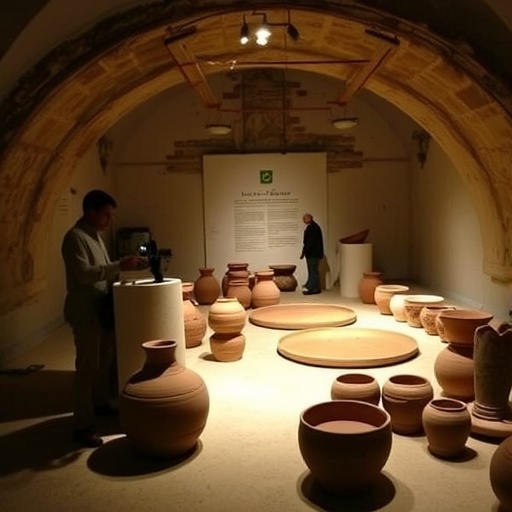
In the complex tapestry of human history, pottery stands out as one of the most significant artifacts, offering profound insights into the cultural practices and daily lives of ancient societies. Deep within European archaeological sites, particularly in cave environments such as the Grotte di Sant’Angelo Cave Complex in Calabria, Italy, researchers are leveraging advanced techniques to analyze pottery in unprecedented detail. This research promises to redefine our understanding of prehistoric societies, revealing the intricate relationships between culture, time, and material production.

The innovative research spearheaded by a team of archaeologists, including Carloni, Larocca, and Attema, outlines a framework for conducting in-depth chrono-cultural and functional analysis of pottery. This approach is driven by the need to move beyond traditional archaeological methodologies, which often fail to capture the nuanced meanings associated with pottery production and use. The method integrates chronological, cultural, and functional dimensions, providing a multifaceted perspective on these artifacts that is crucial for comprehending their role in ancient societies.

One of the primary focuses of this research is the Grotte di Sant’Angelo Cave Complex, a site that offers a wealth of archaeological data. Situated in Cassano allo Ionio, this prehistoric cave system has yielded a rich trove of artifacts and organic remains, creating a unique opportunity for researchers to probe the socio-economic dynamics of ancient inhabitants. The researchers meticulously excavated pottery fragments, each offering a glimpse into the lives of the individuals who once occupied these caves, including their cooking practices, social interactions, and even trade relations with neighboring groups.

To achieve a comprehensive understanding of the pottery, the researchers employed cutting-edge techniques in chrono-cultural analysis. This method emphasizes the correlation between pottery styles and the time periods from which they originated. By cross-referencing ceramic typologies with stratigraphic data, the team established a clearer chronological framework for the artifacts. This process not only aids in dating the pottery but also uncovers the evolution of styles over time, reflecting shifts in cultural practices and interactions among different groups.

Functional analysis, another integral component of the team’s research methodology, focuses on the practical uses of pottery in everyday life. By examining surface residues and conducting use-wear analysis, the researchers could infer the specific functions these items served. For instance, the residue from food preparation or storage can reveal dietary habits and subsistence strategies, while the wear patterns can indicate the frequency and nature of their use. Such insights illuminate the complex interplay between people and their environment.

The researchers further enriched their findings by comparing the data from the Grotte di Sant’Angelo with other contemporaneous sites across Europe. This comparative analysis highlighted regional variations in pottery styles and functions, shedding light on broader cultural trends. It emphasizes that pottery is not merely functional but also a canvas for cultural expression, allowing for the transmission of identity and tradition across generations.

Moreover, the significance of this research extends beyond pottery itself; it offers a reflection on the interconnectivity of prehistoric cultures. The findings underscore how technological advancements in pottery production facilitated trade and communication among disparate groups, thus fostering the exchange of ideas and practices that shaped cultural evolution. It exemplifies how seemingly mundane artifacts carry stories of cooperation, competition, and innovation, illustrating the complexity of human societal development.

As the study unfolds, the researchers anticipate that their work will prompt further investigations into other archaeological sites across Europe. Each site presents its own unique context, challenges, and opportunities for understanding human history through material culture. There is great potential for this approach to contribute to a more nuanced understanding of the prehistoric world, as archaeologists align their findings to construct a more cohesive narrative of human development.

The implications of this research are particularly significant in the context of ongoing discussions surrounding archaeological practices and preservation. Pottery, often viewed merely as debris in excavation sites, is now recognized as a vital source of knowledge. This shift in perspective has the potential to change how future archaeological work is conducted, encouraging a focus on the careful analysis of artifacts rather than simple cataloging.

In conclusion, the investigation into the chrono-cultural and functional analysis of pottery in European cave archaeology, exemplified by the detailed study conducted at the Grotte di Sant’Angelo, brings forth a new paradigm in archaeological research. By merging various analytical techniques and drawing from a vast pool of data, researchers are revealing the profound stories embedded in pottery. As they delve deeper into the past, these archaeologists illuminate the rich tapestry of human existence, unveiling how materials can tell us not just about what people did, but who they were as social beings.

This groundbreaking research marks a significant stride in the field of archaeology, challenging traditional narratives and opening avenues for future explorations. As we strive to understand the multifaceted dimensions of human history, studies like this remind us that the remnants of the past—whether pots, tools, or art—serve as valuable connections to our shared heritage, reminding us of the complexity of the human experience across time and space.


Subject of Research: Pottery analysis in European cave archaeology
Article Title: Evaluating the potential of in-depth chrono-cultural and functional analysis of pottery in European cave archaeology: a case study from the prehistoric Grotte Di Sant’angelo Cave Complex (Cassano allo Ionio – Calabria, Italy).
Article References: Carloni, D., Larocca, F., Attema, P.A.J. et al. Evaluating the potential of in-depth chrono-cultural and functional analysis of pottery in European cave archaeology: a case study from the prehistoric Grotte Di Sant’angelo Cave Complex (Cassano allo Ionio – Calabria, Italy). Archaeol Anthropol Sci 18, 30 (2026). https://doi.org/10.1007/s12520-025-02332-1
Image Credits: AI Generated
DOI: https://doi.org/10.1007/s12520-025-02332-1
Keywords: Pottery, Archaeology, Grotte Di Sant’Angelo, Chrono-Cultural Analysis, Functional Analysis, Prehistoric Societies, Italy.

Article Title: Exploring Pottery Insights from Grotte Di Sant’angelo

Article References: Carloni, D., Larocca, F., Attema, P. A. J., De Luca, G., Breglia, F., Pacciarelli, M., & De Benedetto, G. E. (2026). Evaluating the potential of in-depth chrono-cultural and functional analysis of pottery in European cave archaeology: a case study from the prehistoric Grotte Di Sant’angelo Cave Complex (Cassano allo Ionio – Calabria, Italy). Archaeological and Anthropological Sciences, 18(2), Article 30. https://doi.org/10.1007/s12520-025-02332-1

Image Credits: AI Generated

DOI: 10.1007/s12520-025-02332-1

Keywords: Calabria archaeological sites, cave archaeology in Italy, chrono-cultural analysis of artifacts, cultural practices in ancient societies, functional analysis of pottery, Grotte di Sant'Angelo insights, innovative methods in archaeology, interdisciplinary approaches in archaeology, pottery analysis in archaeology, prehistoric pottery significance, relationships between culture and pottery, understanding ancient material culture

Cite Scienmag News

Courtney Benton. (January 24, 2026). Exploring Pottery Insights from Grotte Di Sant’angelo. Scienmag. https://scienmag.com/exploring-pottery-insights-from-grotte-di-santangelo/

Courtney Benton. "Exploring Pottery Insights from Grotte Di Sant’angelo." Scienmag, 24 January 2026, https://scienmag.com/exploring-pottery-insights-from-grotte-di-santangelo/. Accessed 31 August 2026.

Courtney Benton. "Exploring Pottery Insights from Grotte Di Sant’angelo." Scienmag. January 24, 2026. https://scienmag.com/exploring-pottery-insights-from-grotte-di-santangelo/


Tags: Calabria archaeological sitescave archaeology in Italychrono-cultural analysis of artifactscultural practices in ancient societiesfunctional analysis of potteryGrotte di Sant'Angelo insightsinnovative methods in archaeologyinterdisciplinary approaches in archaeologypottery analysis in archaeologyprehistoric pottery significancerelationships between culture and potteryunderstanding ancient material culture
Share26Tweet16
Previous Post

DNA Methylome and Transcriptome Insights in Hybrid Pigs

Next Post

Altered Auditory Connectivity in Specified Psychotic Disorders

Related Posts

Bones and isotopes reveal ranked diets in Liao–Jin royal mobile camps
Archaeology

Bones and isotopes reveal ranked diets in Liao–Jin royal mobile camps

August 30, 2026
Wear analysis reveals Neolithic Sudan stone tools dug wood and soil
Archaeology

Wear analysis reveals Neolithic Sudan stone tools dug wood and soil

August 30, 2026
Carnivores and humans both left marks on small prey at Teixoneres cave
Archaeology

Carnivores and humans both left marks on small prey at Teixoneres cave

August 29, 2026
Preliminary Surveys Reveal New Findings at Mauritania’s Tagant Escarpment
Archaeology

Preliminary Surveys Reveal New Findings at Mauritania’s Tagant Escarpment

August 29, 2026
Early-to-Mid-Holocene Continuity and Change Revealed at Strathalan Cave Excavations
Archaeology

Early-to-Mid-Holocene Continuity and Change Revealed at Strathalan Cave Excavations

August 28, 2026
Mississippians May Have Consumed Cacao at 12th-Century Feasts in Georgia
Archaeology

Mississippians May Have Consumed Cacao at 12th-Century Feasts in Georgia

August 28, 2026
Next Post
Altered Auditory Connectivity in Specified Psychotic Disorders

Altered Auditory Connectivity in Specified Psychotic Disorders

  • Mothers who receive childcare support from maternal grandparents show more optimized

    Mothers who receive childcare support from maternal grandparents show more parental warmth, finds NTU Singapore study

    27656 shares
    Share 11059 Tweet 6912
  • University of Seville Breaks 120-Year-Old Mystery, Revises a Key Einstein Concept

    1061 shares
    Share 424 Tweet 265
  • Bee body mass, pathogens and local climate influence heat tolerance

    682 shares
    Share 273 Tweet 171
  • Researchers record first-ever images and data of a shark experiencing a boat strike

    546 shares
    Share 218 Tweet 137
  • Groundbreaking Clinical Trial Reveals Lubiprostone Enhances Kidney Function

    531 shares
    Share 212 Tweet 133
Science

Embark on a thrilling journey of discovery with Scienmag.com—your ultimate source for cutting-edge breakthroughs. Immerse yourself in a world where curiosity knows no limits and tomorrow’s possibilities become today’s reality!

RECENT NEWS

  • Most Australian women wearing shoes that don’t match their feet, study finds
  • Ant colonies show varied disease susceptibility and grooming across social levels
  • Leptospira bacteria detected in cattle and rodents across Papua New Guinea provinces
  • Do Parents and Teachers Agree on Preschool Dual Language Learners’ Social Skills?

Categories

  • Agriculture
  • Anthropology
  • Archaeology
  • Athmospheric
  • Biology
  • Biotechnology
  • Blog
  • Bussines
  • Cancer
  • Chemistry
  • Climate
  • Earth Science
  • Editorial Policy
  • Marine
  • Mathematics
  • Medicine
  • Pediatry
  • Policy
  • Psychology & Psychiatry
  • Science Education
  • Social Science
  • Space
  • Technology and Engineering

Subscribe to Blog via Email

Success! An email was just sent to confirm your subscription. Please find the email now and click 'Confirm Follow' to start subscribing.

Join 5,150 other subscribers

© 2025 Scienmag - Science Magazine

Welcome Back!

Login to your account below

Forgotten Password?

Retrieve your password

Please enter your username or email address to reset your password.

Log In
No Result
View All Result
  • HOME
  • SCIENCE NEWS
  • CONTACT US

© 2025 Scienmag - Science Magazine